


The city of Rome feels like an open air museum. Ancient ruins, Baroque fountains, Renaissance piazzas, and world-famous churches fill the city and scatter across the winding streets. Though this adds to the infinite fascination of Rome it also makes it complicated to manoeuvre around when you have only 24 hours to see Rome.
You will find several big attractions gathered in the historic centre of the Eternal City, while the rest of them scatter around and demand a bit of planning to make the most of them. If you waste time and effort in buses or queueing at taxis you will lose a considerable amount of time that you could have used in the site.
This is the reason why the knowledge of the means of transport available in Rome is important to maximize your one-day stay. A good combination of walking, riding the metro and quick transits is sure to get you around without feeling overly rushed and still enjoying the sense of the city. In this guide we will explore the easy ways of travelling in Rome making one day enough to see the main attractions.
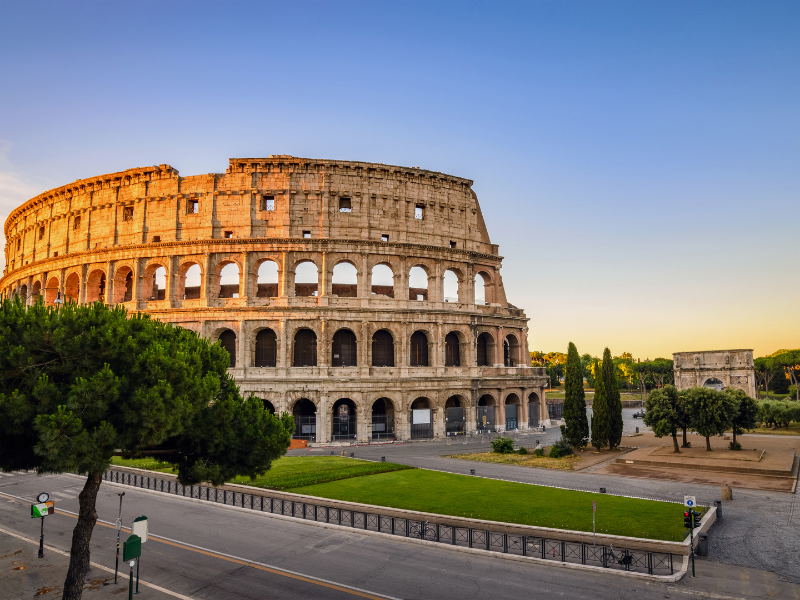
Walking in Rome
There is probably no city in the world, where walking is part of the experience, as it happens in Rome. The historic center is small enough so that much of it is easily walked between the key monuments, and around every corner there is something amazing to be seen- an ancient column, a lost piazza, or a gelateria begging to be visited.
When touring the heart of city of Rome, then walking would be the preferred mode of transport: destinations such as the Colosseum, Roman Forum, Piazza Venezia, Trevi Fountain, Pantheon, and Piazza Navona are within reachable distances of each other. Transfer between sites takes just 5 -15 minutes.
Metro
Rome has a Metro network which is the fastest transportation means of doing longer distances within a short period of time. The metro will help you out employing you towards parts of Vatican, the Colosseum and the Spanish way in a solitary day.
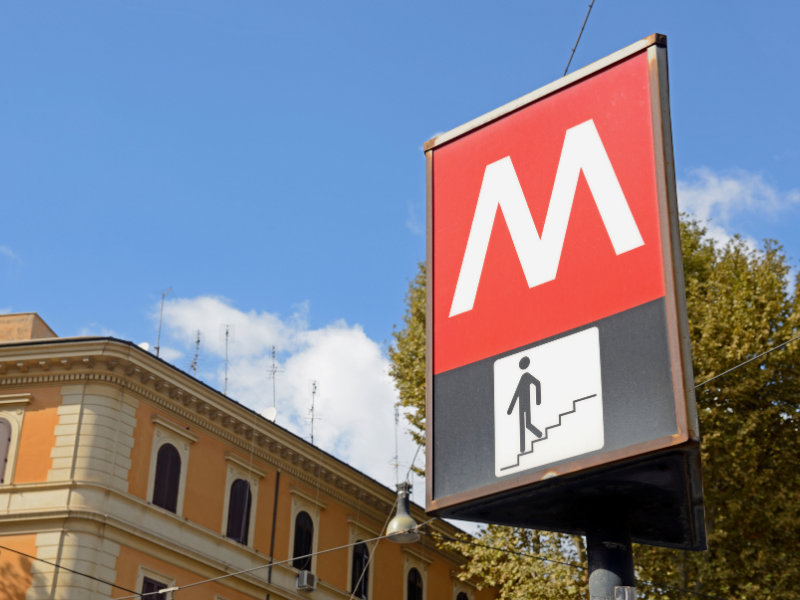
An Overlook of the Metro System of Rome
Romes metro is limited in size in connection to other European capitals but very handy to the visitor. It now operates three lines.
It is line A (orange) that goes northwest to southeast and necessary to the access to Vatican Museums (station of Ottaviano), Spanish Steps (station of Spagna) and Termini, central hub of the Rome train junctions.
Line B (blue) runs in an east- west direction. This is the line that brings you to the Colosseum (Colosseo station), the Roman Forum, Circus Maximus. It also links up to Termini with transfers.
Line C (green): newer and less pertinent to one-day visitors, because it mostly covers residential areas.
Stations are well defined with the red M sign and maps are provided within each station and carriage.
In the areas where Metro makes the biggest difference
- Colosseum and Roman Forum: Ride Line B to the station of Colosseo.
- Vatican City: Line A to Ottaviano or Cipro brings you within 5 min walking distance.
- Spanish Steps & Trevi Fountain: get onto Line A to Spagna. It is a 10-minute walk away to Trevi Fountain.
- Termini Station: All the three lines meet here and hence it is the major terminus station.
These couple of stations will not only cover a good part of the Rome highlights but save time.
Tickets, Passes
- Single Ticket: The ticket costs EUR 1.50 and approximation to 100 minutes on metro, buses, and trams (a metro ride only).
- ROMA 24H: 7 euro and you travel on all means of transport within 24 hours that may come in handy on a day trip.
- ROMA 48H/72H Passes: These options are also available. Prices are 12.5 and 18 euros.
OMNIA Card:
Access to the Vatican Museums, Sistine Chapel (when it is open), St. John in Lateran Basilica, Mamertine Prison, the Vox City audio tour as well as a 3-day hop-on hop-off bus tour
Roma Pass:
Free access to 2 of 5 major attractions (Colosseum and Forum/Palatine, Capitoline Museums, Castel SantAngelo, Borghese Gallery, Circo Massimo Experience) and discounts to 30 other attractions as well as a travelcard on all public transport
Bonus items: A guidebook, city map and the Vatican & Rome audio guide
The OMNIA Card Benefits (In addition to buying individual tickets)
- Fast track / Skip the line access
Long queues at popular attractions, such as the Vatican Museums, Sistine Chapel and the Colosseum can be avoided. This is of great convenience particularly in busy months and it helps to get the most out of sightseeing. - Easy accessibility and Multi-purpose tool
One ticket provides access to key tourist destinations, hop-on hop-off tour, road transport, audio-guides, and maps, so that there is no need to purchase dozens of tickets separately. - Time savings
A review highlighted the largest advantage is not necessarily money saved but time saved in line which can be spent in popular attractions with several hours. - It is cost-effective (in most cases)
Depending on your itinerary in the city, several sources indicate that the pass is worth the establishment of savings when considering transport and skip-the-line benefits when you plan to visit several major attractions in a short duration of time. - Validity flexibility
The 72‑hour pass activates immediately after the first use-so you can time your first use of the product when you want the pass to last. It also benefits as it is valid within 12 months after purchase which adds flexibility of plans. - Support and usability
Its easy booking can be done through email or app and we can get help. Digital vouchers can be displayed on your phone- no printouts required
Trams and Buses
Although the most convenient transportation method in Rome is the metro, it does not reach all the areas. Some of the most well known places like the Piazza Navona, Campo de fiori or Trastevere are not accessible by the metro. That is where the vast bus and tram transport of Rome comes in. The buses and trams with more than 350 lines are useful in the case of one-day itinerary as they will bring tighter to you than the metro.
Topics on which to take a decision between trams or buses
Historic Center: Most of the Centro Storico (historic center), including Campo de Fiori, Piazza Venezia and Largo di Torre Argentina is bypassed by the metro so these sites are best reached by bus.
Trastevere: Trastevere is one of the most attractive, although practically it is not as accessible as the rest of the city because it lacks metro lines.
Night transport: Once the metro closes at about 11:30 p.m. (or 1:30 in the morning, on weekend nights), night buses (notturni) continue their work, so that you could get a ride home at odd hours.
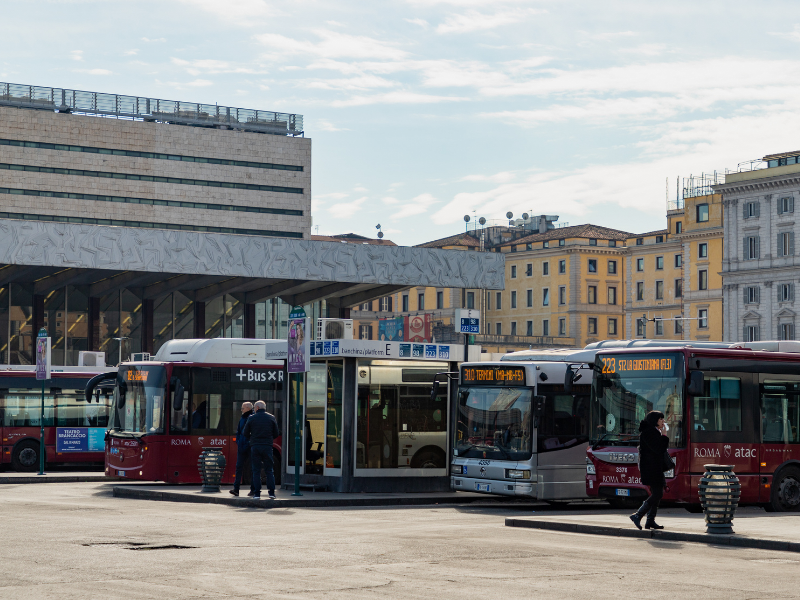
Frequently travelled bus and tram routes by tourists.
- Bus 40 (Express): a ride between Termini with Piazza Venezia with stops near to Piazza Navona and Campo de Fiori. A speedy form of commuting to the city centre.
- Bus 64: It is a connection between Termini and the Vatican (St. Peter Square). It is touristy but useful.
- Bus 81: It travels the Colosseum and the Vatican with piazza Venezia and piazza Navona. Super at hitting several points of interest in a single trip.
- Tram 8: Tram 8 can be taken to Piazza Venezia to Trastevere. Perfect to conclude a day in which you may have explored one of the most enchanting quarters of the Eternal City.
Taxis and Ride Sharing
Even with the most thought-out itinerary, you might need to rush urgently- to get to you Vatican tour on time, with your luggage in tow, or when you are simply too fatigued to resort to a complicated bus route. Taxi and Ride-sharing services may prove an efficient alternative in such instances.
Official Taxis
The official taxis of Rome are white vehicles bearing a sign on the roof which reads TAXI and having city emblem on the door. They are located at taxi stands in strategic points such as bordering major landmarks, train stations and piazzas. Unlike elsewhere, in most cities, it is not a common practice to just hail a taxi in the street although you do this by going to a taxi rank or call one using an authorized cab app.
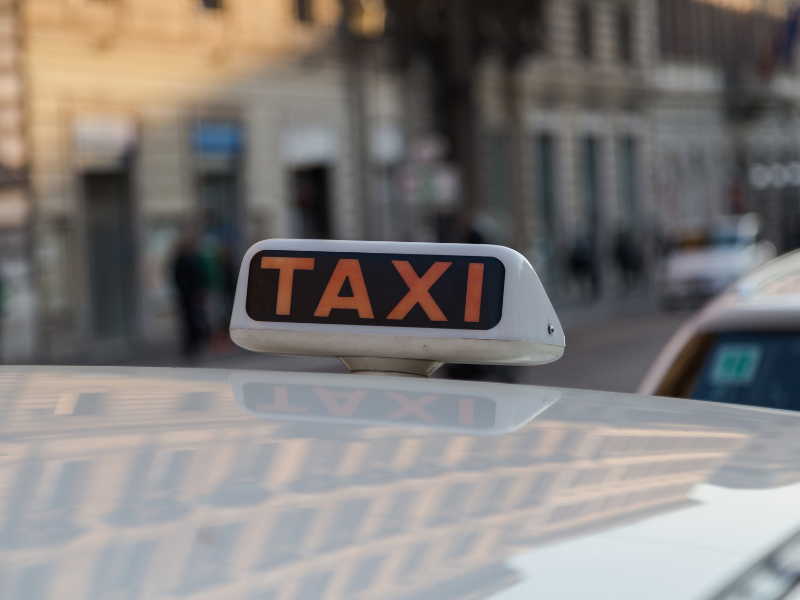
Rates:
- Base fare: varies between around 3-4 Euros during day time, and 6.50 Euros at night.
- Per kilometer: Approximately 1.10 Euro.
- Airport transfers: There are set rates in this regard (e.g., 8 Euros between the Fiumicino Airport and central city).
Ride-Sharing Apps
The conventional ride-sharing such as Uber may be found in Rome, yet it is not as popular as in other places. ItTaxi, Free Now etc.
They are even more reliable than making an attempt to find a taxi stand when it comes to lesser touristy areas and late into the night.
How to use Ride sharing/ Taxi in a One-Day Schedule
- Between neighbouring sites with no direct metro/bus connection. An example, is going to Vatican and Colosseum without much time on hand.
- Late night ride to the hotel when there are limited sources of public transportation.
- In case you come in a group, the price can make a taxi cheaper than buying individual metro tickets.
e-Scooters and Bikes
Over the past few years, Rome has seen the introduction of modern and Eco-friendly modes of transport such as E-scooters and bike-sharing programs that have gained popularity amongst residents and visitors of the city. When one only has enough time in a day to wander around, these substitutes can be an effective and enjoyable means of getting around, particularly in the parts of a city where getting around is less convenient by transit.
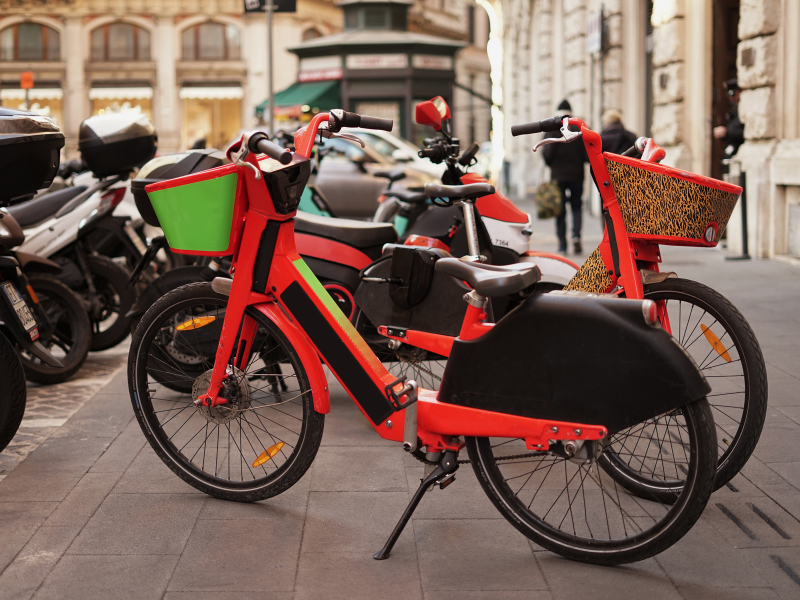
Availability
These bike- sharing and scooter-sharing services companies operate in Rome, among others: Lime, Bird, Dott and Helbiz. You will find their scooters around the city especially in central squares, stairs out of the metro and in touristy areas.
How to use: Download the application, scan the QR code on the vehicle, hop on.
Price: Tends to cost around a euro to unlock with around 0.20-0.25 cents a minute. The daily passes can be purchased at times
How to get them: Those close to major attractions such as Piazza Venezia, Termini, the Vatican and Trastevere.
When these Save Time
Short links: Great between site for travelling between points that are too distant to walk to in comfort, but too short for a bus. Such as working the round trip of the Pantheon to the Vatican.
Exploring neighborhoods: Neighborhoods like Villa Borghese Gardens or Trastevere are basically explorable neighborhoods by feet since you cover a lot of space and can tour the area without getting really tired.
Comfort: There is no possibility of being late because the buses are crowded, slow, etc. Scooters evenings: riding bikes and scooters through the night it is also possible to see the beautiful Rome lit up at night.
Why Scooters and Bikes are worth to consider
Whether on a one day visit, scooters and bikes are not necessary, but a bonus, when you use them smartly. As an example, you might make the Colosseum / Forum visit by foot in the morning, ride the metro to the Vatican, and then use an e-scooter to zip back across to the Pantheon or Piazza Navona later in the day.
Instead, the bikes should be seen as an augmentation to your alternative means of transportation: use them when you want to see more of Rome within a shorter amount of time but feel it would be fun to get around on a bicycle.


FAQ – Frequently Asked Questions
Yes, it is important that you validate your ticket to evade fines. The ticket is automatically swiped on entering the turnstiles at the metro stations, which imprints the expiry time on the back. In the buses and trams you have to have to validate your ticket on your own through the yellow machines at the front and/or the back side of the vehicle. With the case of multi day passes, you just need to validate once during your initial journey.
The centre of Rome is quite walkable. Most of the main attractions such as the Colosseum and Trevi Fountain are within a distance of about 1.6 km (1 mile) and could be covered in 20-25 minutes on foot. The historic center is fairly small; with a radius of approximately 2.5 km (1.5 miles) between the Colosseum and Piazza di Spagna. By walking, you will get to know the adorable streets, cafes, as well as secrets on the way. But wear comfortable shoes Rome has Cobble-streets and some hilly places.
The sale of tickets is possible in tobacco shops (tabacchi) with the black and white letter T on it, in the newspapers, in the vending machines of metro stations, and in certain bars. You cannot normally purchase the tickets in the buses themselves and therefore buy them first.
The metro is running every single day between 5:30 am and 11:30 pm during weekdays. Fridays and Saturdays service goes up to 1:30 am. The buses and trams are available between 5:30 am and midnight daily with a reduced night bus service that is available after midnight. The rush hours (7:30-9:00 am and 6:00-8:00 pm) should also be avoided because the public transport is overcrowded at such times.