


This day-long tour will move you off the well-trodden path in Rome and see the city as it is lived in: in tiny cobblestone-paved lanes, piazza squares, and real-life experiences that you have never had.
- Morning (8:00-12:00)
- Aventine hill and the Orange garden (08:00)
- Basilica of San Clemente (09:00-10:00)
- Celio Hill Walk (10:15-11:00)
- Lunch (11:30-12:30)
- Afternoon (13:00-17:30)
- Basilica San Giovanni in Laterano (13:00 – 13:45)
- Appian Way (Via Appia Antica) (14:00-16:00)
- Coppede District (16:30-17:30)
- Evening (18:00-21:30)
- FAQ – Frequently Asked Questions
Morning (8:00-12:00)
Most people come to the Colosseum before sunrise, but this is the opposite course we are making this morning we are beating around the lower strata in Rome, where the natives are still in the majority, and the city shows itself better in its more human side. These attractions will show you another aspect of Rome which is rewarding to explore: an accretion of history, startling perspectives, and the sort of experience that will stay with you even after you go.
Aventine hill and the Orange garden (08:00)
Begin early in this, and the city will not be filled with noise. The Aventine hill is a secret a hill among the seven of Rome, but in some sense out of the way of the press. The air changes upon the walking of the narrow cobblestone streets, and the noise of the people below disappears.
The Giardino degli Aranci (Orange Garden) isloated at the summit and it is peaceful in a manner that borders on being a crime in such a big city. Imagine this: the stone benches in the bitter orange tree, with the scent of their bloom in the morning air, heavy blooming, falling down on old paving stones. Local people still refer to this as their secret place, of old Romans reading newspapers on benches, a few other travelers, who came here by word of mouth, instead of guidebooks.
Knights of Malta Keyhole Moment
Before you go walk into the Piazza dei Cavalieri di Malta. Here is the entrance to the villa of the Knights of Malta, and in their keyhole of the 18 th century when you stand in exactly the right place you will see the dome of St. Peter’s Basilica in a perfect frame. It is tiny, narrow, almost personal: one of the most known monuments of Rome seen through a prism that nobody imagined. This is the type of incident that reminds you as to what causes people to visit Rome in the first place.
Basilica of San Clemente (09:00-10:00)
Turn back at Aventine, and go down and east to San Clemente. The style is intimate and close that you will walk past laundry hanging between houses and the scent of espresso emanating through a local coffee shop. This is Rome as Romans know it.
Next you come to the basilica, and time is torn apart.
San Clemente does not appear very appealing. However, once you pass through its bronze doors, you are entering a building with three different layers of history that appear to be laid over each other as geological time. It is the archaeology that became real, spirituality that became visible.
The Three Layers
begin with the best, the basilica itself, twelve centuries old, and its jewell-box mosaics gleaming in the light, the frescoes of the Middle Ages, and the soundless prayers. It is beautiful, all right, but there is something under it.
Go down the stone steps, worn smooth by eight hundred years of feet and you are in the church of the 4th century, which has been covered in with earth. Here the air changes. It’s cooler, damper, older. Pieces of frescoes seem to be wall memories. This is the place, where early Christians were congregated, where belief was not so much assured but probably more passionate.
Go further, and you are in a 1 st -century Roman house with a Mithraic temple.
Celio Hill Walk (10:15-11:00)
The time of San Clemente is over, and you have come to one of the quietest of the many hills of Rome, Celio hill (Colle Celio), and why it is our favorite I will tell you later.
These streets are winding and twisting. Ivy climbs terracotta walls. Somewhere there is a monastery bell ringing. You are passing by the shadow of the Colosseum. It feels like it is closing in on you a few hundred meters. Yet these back-streets are seldom penetrated. The majority of tourists hurry by and go to the primary attraction. Their loss.
What to Notice
Go round to the corners, and look up. You will see strata of history in the very walls of the buildings: in the Roman block of stone laid there masonry presence Roman walls, a fresco in the 5th century can still be seen through an opening in the window, a little fountain whose water still pours out of an ancient aqueduct. This neighbourhood seems to be a palimpsest, one layer on top of another, each bearing a fragment of the history of Rome in its tale.
Monasteries with walled gardens, small churches with battered doors, locals whose families have been living in these streets since time immemorial, are all crammed into these streets. I accidentally had to discover this area during a long walk and got a little lost, only to realize that I had discovered something better than I was seeking.
Villa Celimontana: A Shade
In the center of Celio, there is Villa Celimontana, a shaded park that seems to be out of the city altogether. The grown trees were dipping shadow over grass that was smooth and had been worn out by centuries of use. There are Roman columns and pieces of them all around here a statue without its head, and there a pedestal fallen off as though the ruins were carelessly scattered into the landscape.
Lunch (11:30-12:30)
You have already strolled over three periods of Rome, and you deserve a decent meal.

Afternoon (13:00-17:30)
By afternoon the crowds are at full blast in the Colosseum-and it is just then that you are supposed to escape the tourist sightseeing.
Basilica San Giovanni in Laterano (13:00 – 13:45)
Enter the Basilica di San Giovanni in Laterano and you are almost choked by the burden of almost two millennia resting on your shoulders. This is not any church, it is the oldest basilica in the Western world even centuries older than St. Peter. But oddly enough it is one of the least visited sacred places in Rome, a treasure that tourists do not get to see due to their desire to take pictures of the Sistine Chapel.
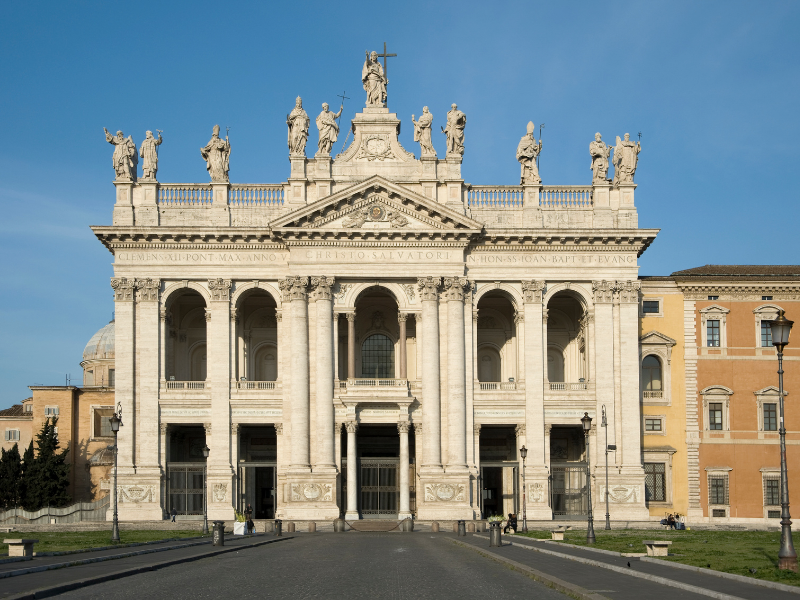
Once you step over the door, the mood changes. The light of afternoon is coming through the high windows and lightens the mosaics which appear to move and breathe with every moment. There is that uncompromising fragrance of old stone and candlelight that steals the centuries-old prayer, that pervades the air. See the 5th-century mosaic pictures of Christ in throne.
The best part? Entry is completely free. No ticket queues, no turnstiles, no other thing than you, and footsteps of pilgrims echoing. It is 30-45 minutes here and you will see why Romans refer to this as the spiritual heart though the rest of the world is not aware of the name.
Appian Way (Via Appia Antica) (14:00-16:00)
Quit the basilica and approach one of the most haunting scenes in the whole of Rome the Appian Way. It is at this point that history does not whisper it cries. More than 2,300 years have passed and through this very road passed the burden of empires, armies.
The Via Appia Antica is a ribbon in the country, along the south southeastern side of Rome, bordered with grey marble columns, the ruins of ancient tombs, and a silence bordering it that is almost sacral. The road surface, which centuries of traffic has given a smooth surface, speaks for itself. To the right and left pieces of funerary monuments seem to be forgotten sentinels family tombs in which Romans used to cut epitaphs to eternity. The atmosphere is fresh and dry and smells of wild herbs and cypress trees.
In case you feel up to it you can hire a bike and travel further, visiting the catacombs.
Coppede District (16:30-17:30)
The Coppede District is an enchanted study area that ought not to be found in a city of classic order and Renaissance geometry, however here it is. It is a surrealist masterpiece of Art Nouveau frivolity.
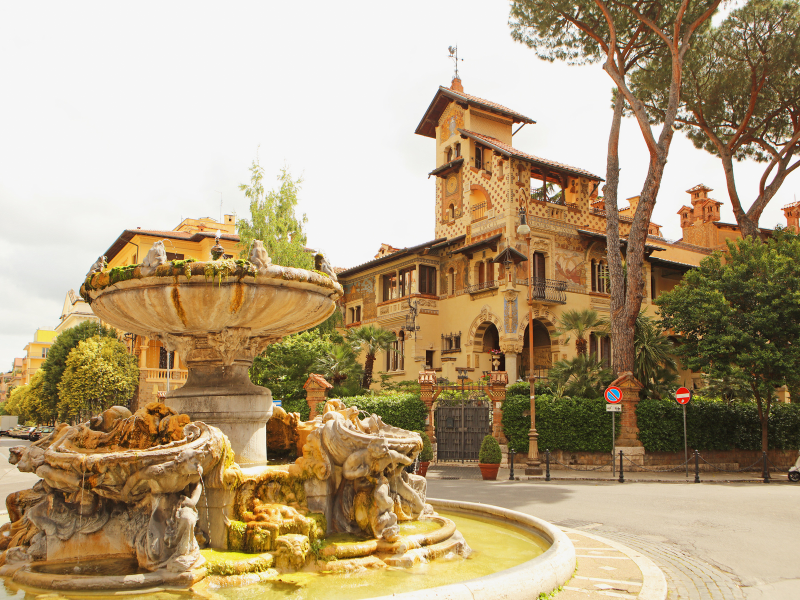
Enter Piazza Mincio. Splendid structures turn spiraled as turrets and arches that are lifted out of a fairy tale. Balconies of wrought-iron are wound impossibly. Mythological creatures are looking down at you through pastel walls. This architecture was built between 1913 and 1927 by an architect Gino Coppede who made a fantasy world to the richest people of Rome. It is almost unchanged, it is a backyard garden of surrealism secretly located within a short distance (metro ride) of the city center.
Evening (18:00-21:30)
The city changes as the Roman sun softens to amber and the tourist buses start making their way back towards the edges.
Trastevere Backstreets (18:00-20:00)
The mobs mobbing Piazza Santa Maria boom get thinned out, and the neighbourhood subsides into something like a rhythm of its own. These are the back streets in which locals are living. There will be laundry that is hung between terracotta-coloured facades, ivy clipping over ancient walls and the aroma of garlic and rosemary floating through open kitchen windows.
The sound landscapes change with the time of the day when it is near evening: there are fewer tourists, more locals going home and occasional street musicians who play someplace in the corner on a guitar. You could hear free live-music pouring out of a cafe, or the spontaneous, and unconscious chorus of a quarter subsiding to evening.
Gianicolo Hill (20:15-21:30)
Now, at the hour of 20:15, you start climbing, or making your way to Gianicolo Hill the most bounteous open place of the people of Rome.
Gianicola gives us something that we hardly find in Rome, the true undispersed beauty of a quietness uninterrupted by the flow of people in the Colosseum or the tumult of the Trevi Fountain. You can see all the city in front of you, the Tiber winding off below, and in the west the dome of St. Peter flaming, and the domes and spires of all the neighborhoods in a prayer.
Scenes on the hill and attract locals, couples, photographers, as well as an occasional musician. And you may hear some accordion music in the wind.