


Florence is a town in which you can actually take a walk down the street and in the process stumble over beauty. We have created an itinerary of a practical and walkable one-day experience that highlights the best of the free in Florence.
- Morning (8:00-12:00)
- Piazza del Duomo (8:00-9:00)
- Piazza della Signoria (9:00-10:00)
- Ponte Vecchio (10:15-10:45)
- Piazza Santa Trinita (11:00-12:00)
- Lunch & Market Culture (12:00-13:30)
- Afternoon (13:30-17:30)
- Basilica di Santa Croce (13:30-14:15)
- Piazza della Repubblica (14:30-15:00)
- Piazza Santo Spirito (15:15-16:00)
- Giardino delle Rose (16:15-17:30)
- Evening (17:30-21:30)
- FAQs – Frequently Asked Questions
Let’s get started.
Morning (8:00-12:00)
Piazza del Duomo (8:00-9:00)
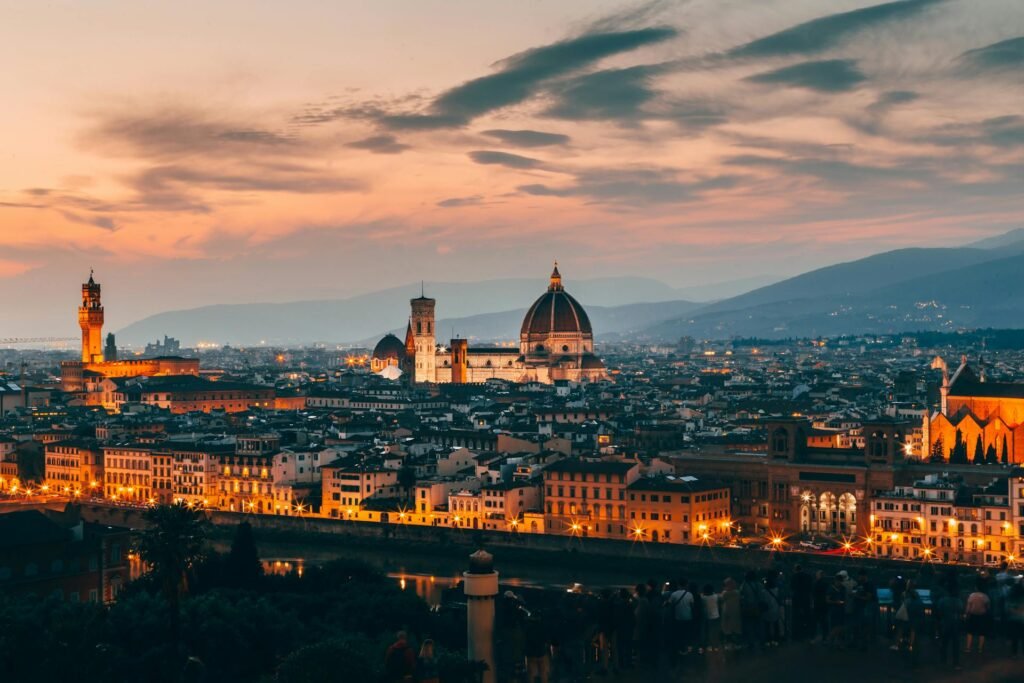
The Duomo itself is an artwork of geometric perfection. The cathedral was finally finished in 1436 and completed in over a hundred years; the marble-clad facade of the building in white, green and pink marble was designed by Filippo Brunelleschi, the same architect of the dome of the cathedral that offers a skyline to Florence.
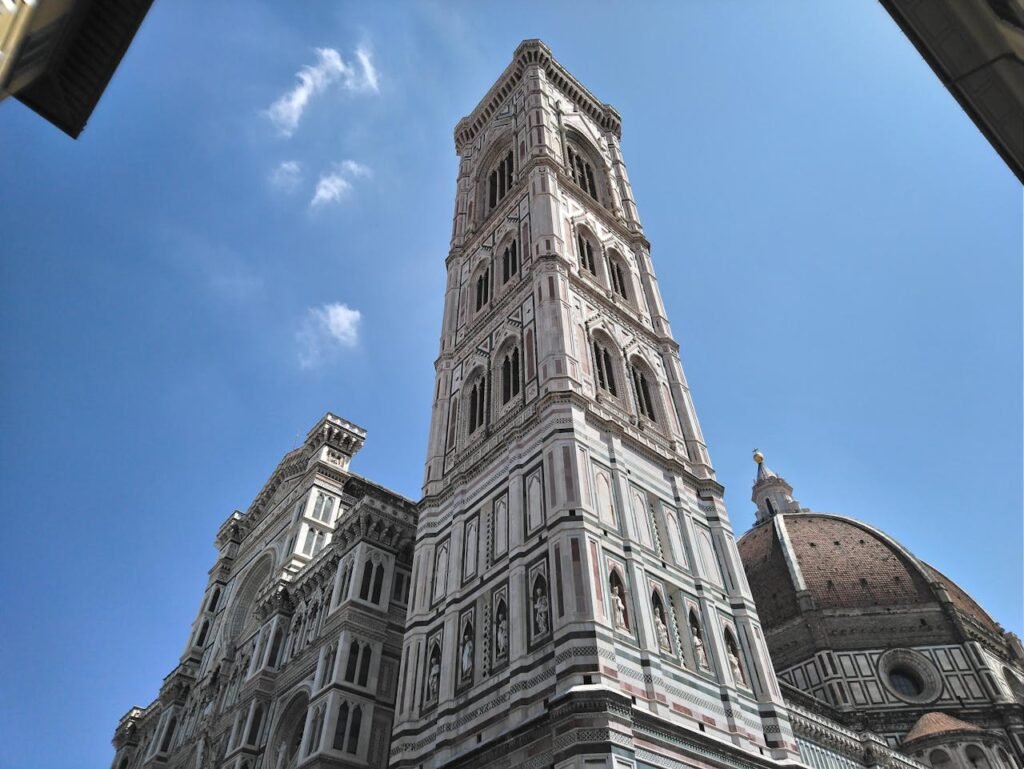
Next to it is the Bell Tower of Giotto, a graceful column of marble which ascends up like a decorated column. The painter and architect of the 14 th century, Giotto, made it a practical bell tower, as well as a visual compliment to the cathedral. Even the geometric designs in its stones are so fine as to appear nearly current testimony that when Renaissance design was being developed, it was more a matter of mathematics than of art.
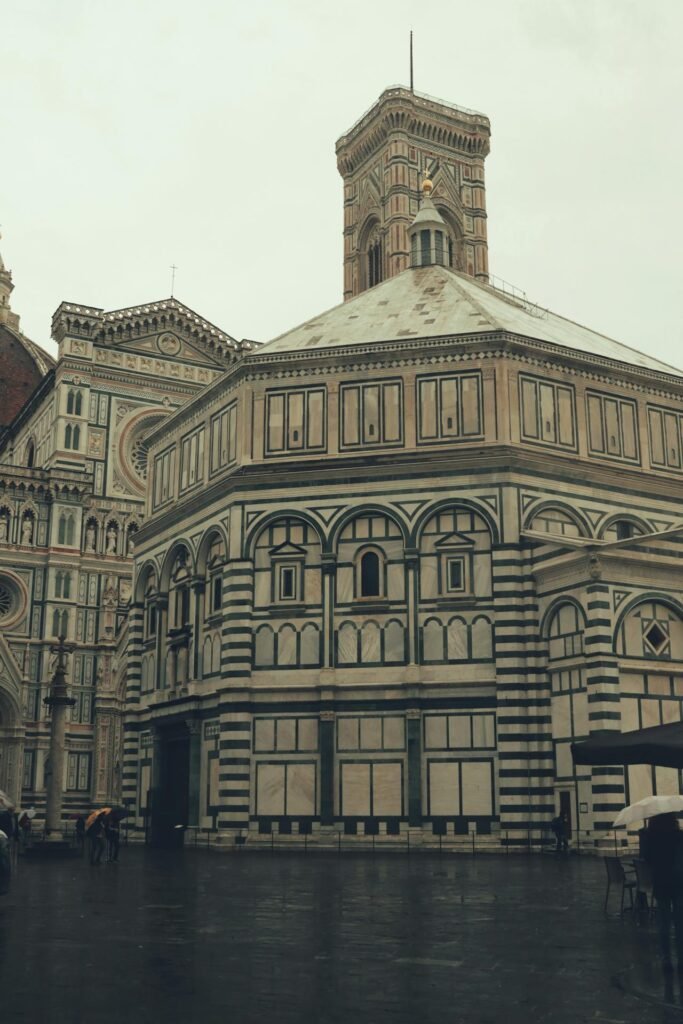
In front of it stands the Baptistery which is even older. It was constructed during the 11th century and it is among the oldest buildings in Florence and its bronze doors especially that of Lorenzo Ghiberti are legendary. The biblical scenes carved by Ghiberti on his panels required 20 years to be accomplished and Michelangelo even described them as worthy of heaven.
Piazza della Signoria (9:00-10:00)
It is practically a free-to-enter sculpture museum that stretches over one of the most architecturally consistent squares in Europe.
This is the place where the government of Florence has convened since the 14 th century when the Palazzo Vecchio (the fortress-like palazzo overlooking the square) was initially the seat of government. The square was the arena of the most important triumphs and traumas of the city, here Savonarola was hanged in 1498, here once stood the original version of the David of Michelangelo (which was replaced by a copy), here is the symbolic heart of the civic life of the city.
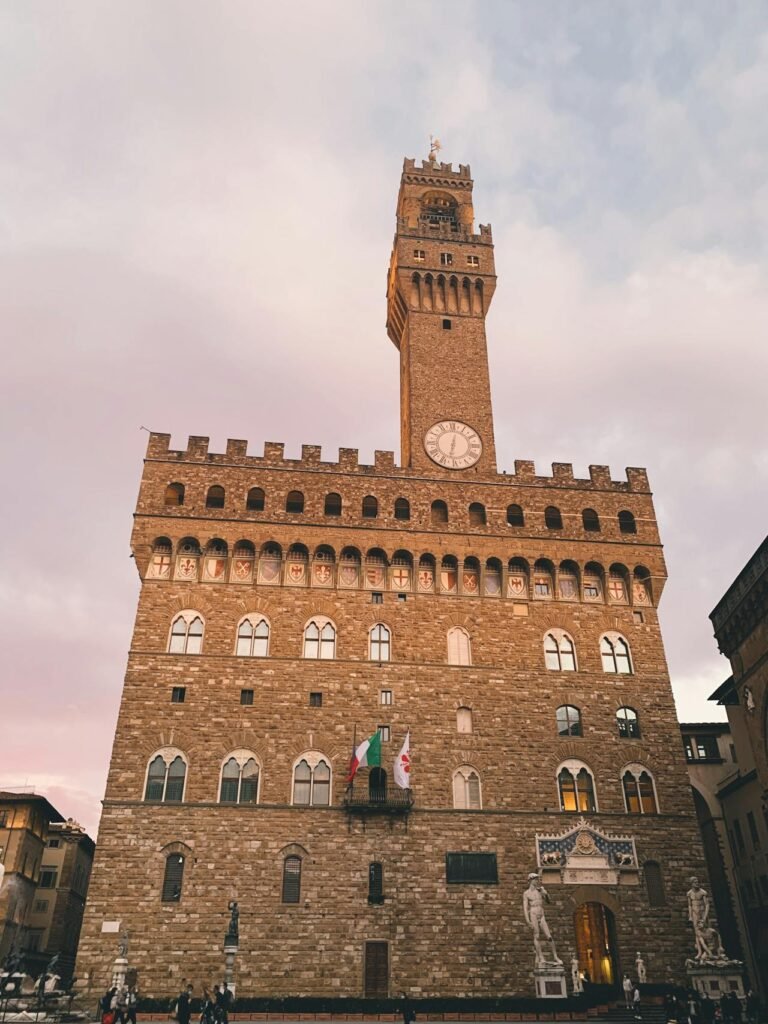
The sculptures are the thing that is captivating today. The replica of the statue of David is placed exactly where the original one was only slightly less than 400 years ago, a bronze imitation of the masterpiece by Michelangelo. Close by, the Perseus of Benvenuto Cellini with the Head of Medusa is no less engrossing: the bronze reflects light in various ways according to the position you are in, and the tragedy of the scene Perseus in his hand holding the head with the serpent-hair never ends.
And there is Hercules and Cacus, by Bandinelli, out of marble, and a dozen others scattered about. But my favorite discovery? The square is bordered on its eastern end by a covered gallery called the Loggia degli Lanzi. Constructed in the 14 th century as an assembling place to hold official ceremonies, it is to-day reclining Renaissance statues and reliefs through its exquisite arches.
Ponte Vecchio (10:15-10:45)
Ponte Vecchio is probably the most photographed monument of Florence. It is currently in its present form, which was built after it was destroyed by a flood in 1345. The interesting thing is that unlike most of the bridges that existed in the middle ages, Ponte Vecchio has never lacked buildings on it.

Butchers used to work here in medieval times (the odor infamously caused Medici family to build an individual passageway above this one). The Vasari Corridor lest they should pass through it). The butchers have been taken over by jewelers in the 16 th century and they have stayed since.
Piazza Santa Trinita (11:00-12:00)
Florence made the merchants of Strozzi, Tornabuoni, Spini, to build the Renaissance palaces that line this street. These aren’t modest homes. Palazzo Strozzi, located midway down the road, is a masterpiece in power architecture of the 15 th century.

Its rough, deliberately unfinished-looking surface (its rusticated stone facade) was designed to express its unchanging, unswerving strength and permanence. It was constructed by Strozzi family to compete with the Medici it had taken 50 years to finish. It has become an art museum, but what the outside tells.
Palazzo Spini Feroni, just as impressive, is of fortress-like character, and its towers, towering above the roofline. These were not mere houses. These palaces were declarations.
Lunch & Market Culture (12:00-13:30)
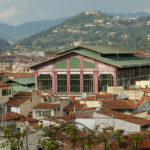
San Lorenzo and Mercato Centrale
Go to Mercato di San Lorenzo or Mercato Centrale (they are practically next door with each being a five-minute walk away along the Basilica di San Lorenzo).
Afternoon (13:30-17:30)
Basilica di Santa Croce (13:30-14:15)
It is only after picking your way through the narrow streets around the Duomo that you are suddenly in Piazza Santa Croce and behold, it is all geometric green and white marble, a perfect geometric dream printed on stone.
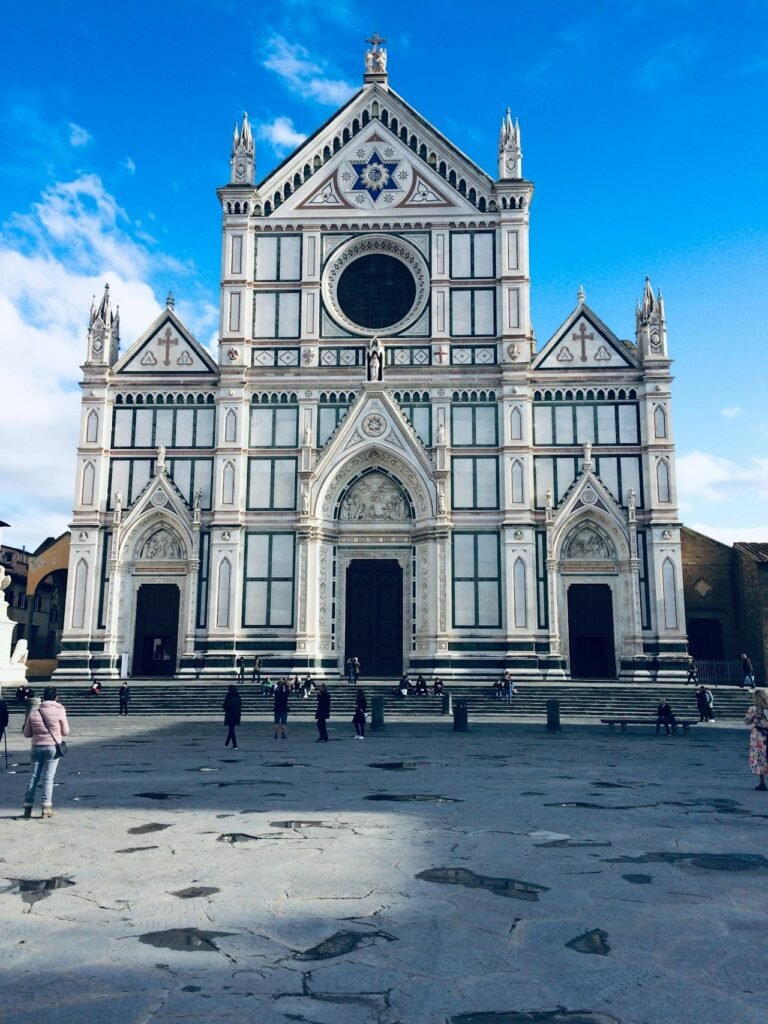
The Franciscan pantheon of Florence, a church upon which the history is not carved upon the walls, but is dug out of your feet. Michelangelo is here. So is Galileo.
Piazza della Repubblica (14:30-15:00)
The Piazza della Repubblica in an afternoon is very specific. This is the core of Florence of daily life not the tourist core, but the human one.
This square, a part of one of those urban renewal initiatives that attempted to modernize the historic center, replaced a medieval ghetto, and was built in the late 19 th century. What appeared was noble, and open and somehow too deep Florentine. The Arcone archway which is unique curvy portico has been the meeting point of more than a century.
Piazza Santo Spirito (15:15-16:00)
To find this, you go across the Arno using Ponte Vecchio bridge with gold merchants, a required obstacle to make it to Oltrarno, the artisan and artistic quarter of Florence on the south bank.
The living room of the neighborhood is piazza Santo Spirito. You will find students, residents, street musicians and merchants there. During weekends a small antique market is sometimes present. The dynamism is somber, yet vibrant.
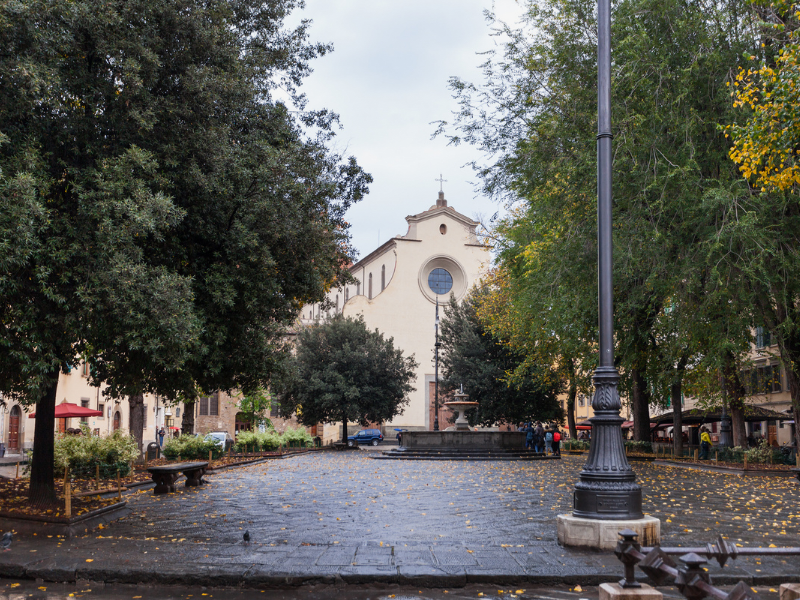
Even Santo Spirito is a masterpiece of the Renaissance restraint, and was designed by Filippo Brunelleschi (the same man who designed the dome of the Duomo). There is no entrance fee and the church shuts down at about 5 PM.
Giardino delle Rose (16:15-17:30)
The roses are in May to October there should be a color riot in the garden, just this time of the year you are there. Nevertheless, it is spectacular even out of the season when flowers are in blossom. Florentines come here to meditate, draw, have their partner, read, to exist. Scattered around, the sculptures, the works of Jean-Michel Folon, a Belgian painter who was famous due to his strange human figures, give it a dreamlike touch.
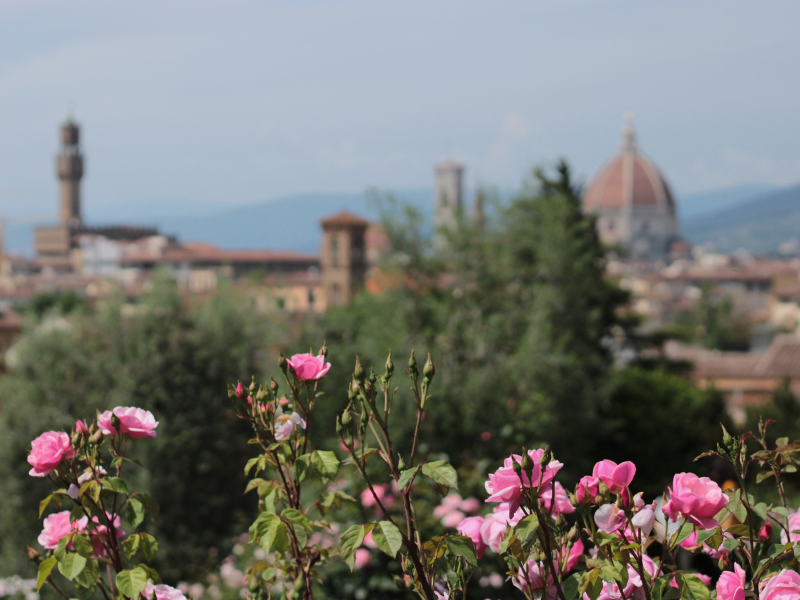
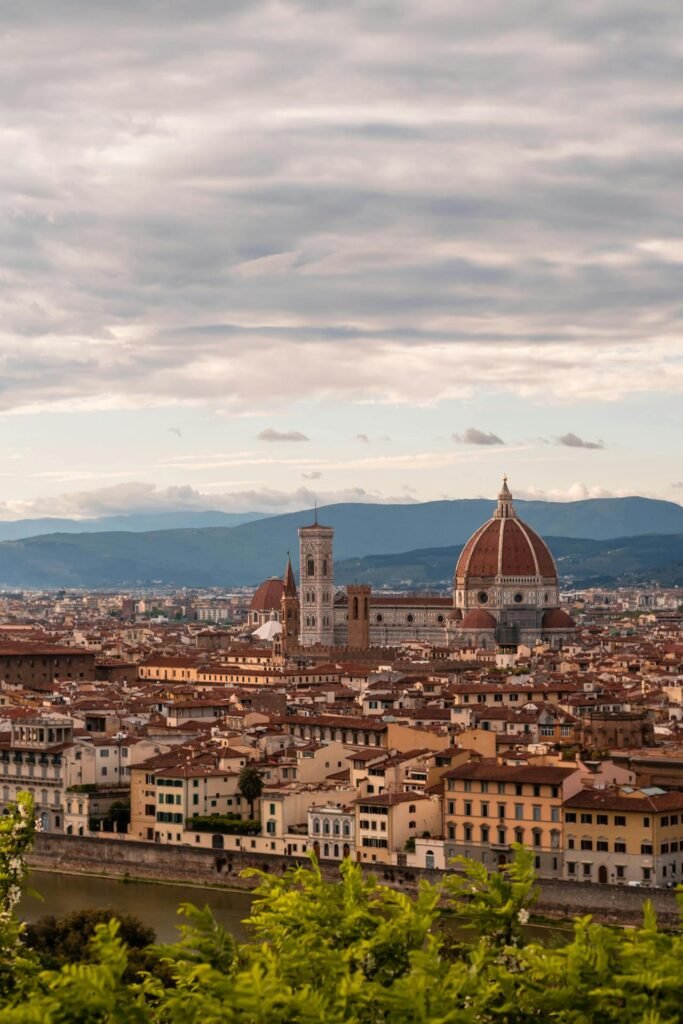
But the real draw is the view. It is the view of all Florence that you have out of this, the dome of the Duomo, the tower of the Palazzo Vecchio, the Arno going down the valley, the hills beyond.
Evening (17:30-21:30)
Piazzale Michelangelo (17:30-19:00)
The perspectives are truly impressive. Buses 12 or 13 go straight in the city center to Piazzale Micheliangelo (approximately 15 minutes). Or, with the sight to make, you can make the picturesque 25 minutes uphill trek, on winding streets, of Oltrarno, beginning at Ponte Vecchio.
Walk in the Arno (19:30-21:00)
In 1345, the Ponte Vecchio was erected by medieval traders on the waters forming a covered marketplace, which remains to this day. In 1966, when the river overtopped 23 feet, the city was almost destroyed but Florence was rebuilt. Every stone in this bank of the river is robust.
Begin at Ponte Vecchio, or Ponte Santa Trinita (one of the most beautiful bridges in Florence, rebuilt, carefully, after the World War II).