


This capital of France spans across twenty arrondissements across the Seine River, and it has been influencing the Western culture, art, and gastronomy over two millennia. Nowadays Paris is home to more than 2 million people in the city proper and 12 million people in the greater metropolitan region making Paris what it has always been: a world capital of fashion, cuisine, literature and art. Let’s start our journey for a day.
Breakfast (08:00-09:00)
Cafe du Trocadero (8 Place du Trocadero) or Carette (4 Place du Trocadero) are both preferrable. Croissants with their crust crunching buttery and leaving golden flakes on your fingers, pain au chocolat with the dark chocolate batons still slightly melting and tartine of crusty baguette with Normandy butter and homemade jam.
Order a cafe creme. Espresso diluted in steamed milk, in a real cup (never a paper one).
Eiffel Tower (09:00-10:00)
The first golden rays of daybreak are trapped in the iron lattice and you realize how Parisians refer to it as la dame de fer the Iron Lady. The Trocadero Gardens are serene at 9 AM with a fresh chill in the air.
In 1889, Paris was the place of construction of a 300-meter tower by Gustave Eiffel, which the locals despised. Artists and writers were placing signatures denouncing it as a metal monstrosity and a disgrace to Paris.
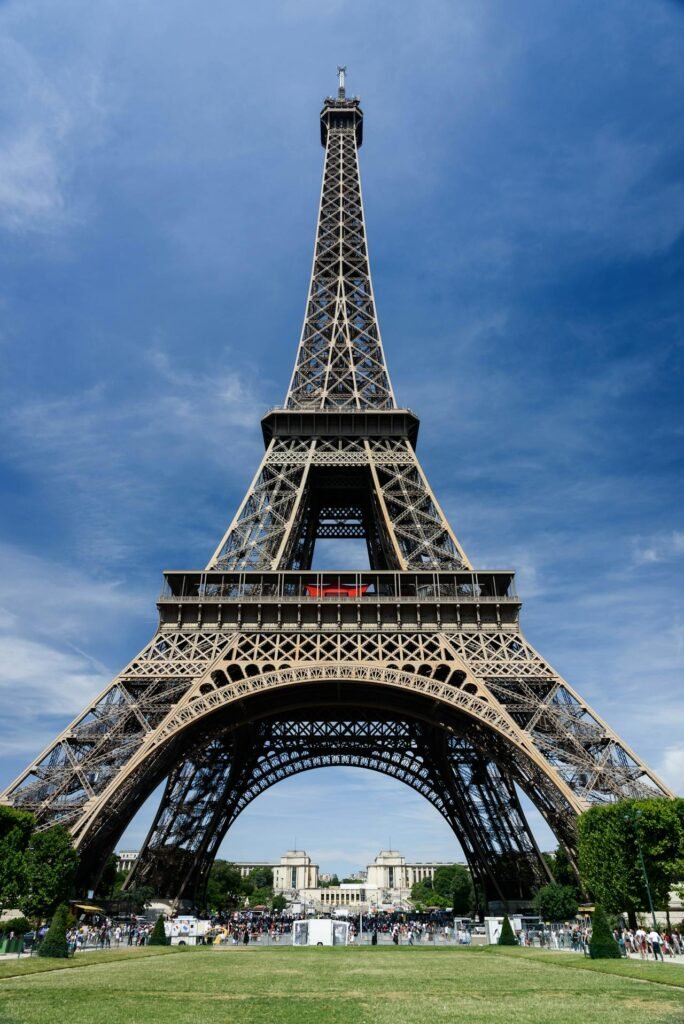
It was supposed to be erected to last only 20 years. However, when Eiffel put a radio antenna on top and it was shown useful in telecommunications, the city gave it a reprieve. It is considered the most visited monument in the world today with 7 million visitors annually.
Sixteen thousand three hundred and eight metal parts comprising the tower were assembled using 2.5 million rivets, which is why the tower became the tallest building in the world until 1930. It blows a little in the wind, swells in the summer heat and is repainted after every seven years.
The most dramatic views of Paris are experienced in the second floor (115 meters). You can see the layout of the city but you can almost see individual landmarks because you are high enough to see the city layout. The peak (276 meters) offers views but it is often very windy.
The Louvre Museum (10:30-12:00)
The Louvre originated as a fortress in 1190 when it was constructed by the King Philippe Auguste as a defense against the Vikings who were attacking Paris. There are also the traces of the ancient fortress walls in the basement Sully Wing. Throughout centuries it became a royal palace out of the defensive stronghold. It was the abode of French monarchs such as Charles v to Louis XIV who later on left it in favour of Versailles.
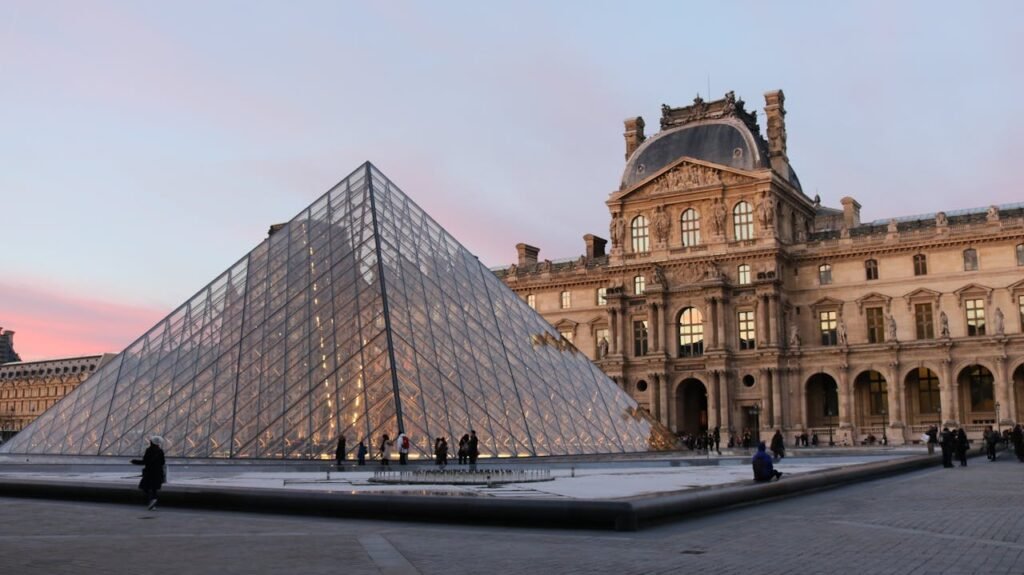
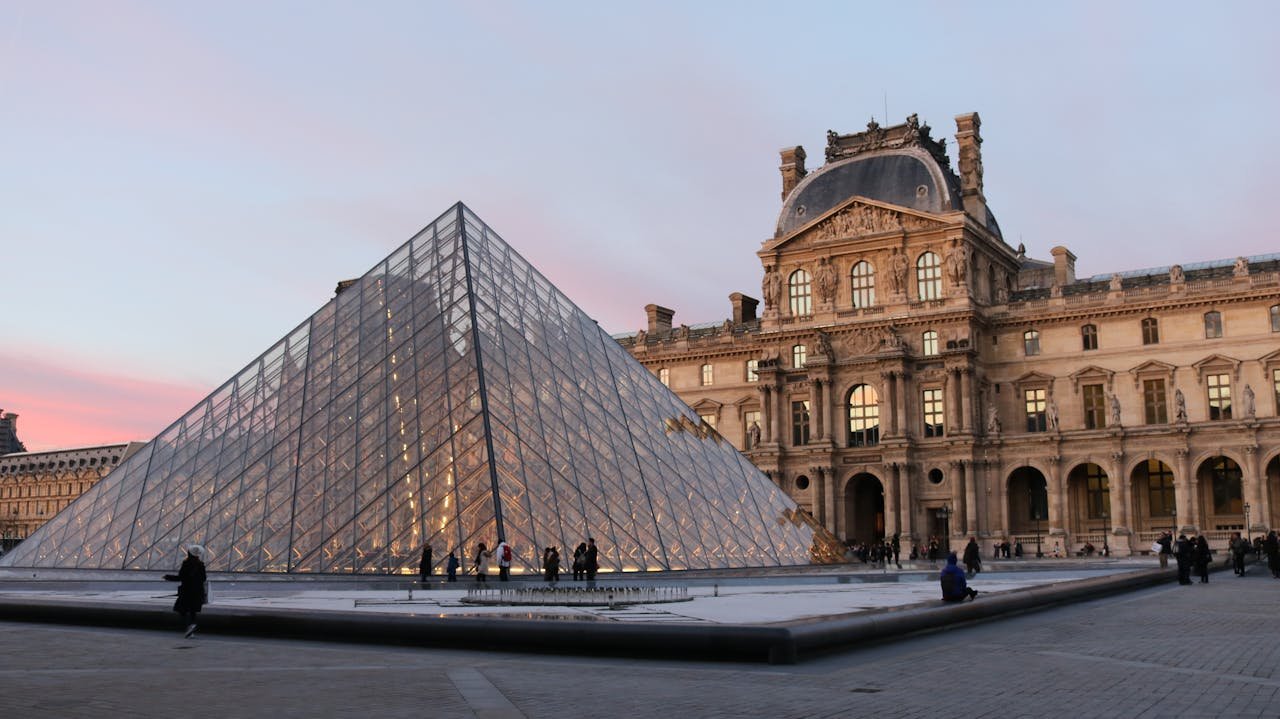
The French Revolution made it all different. In 1793 the revolutionary government opened the royal collections to ordinary citizens by proclaiming the Louvre to be a public museum. It was a radical utterance: art which had been property to kings was the property of the people.
During his conquests, Napoleon increased the collection on an epic scale (most of it was returned later, much of it was not), and later French governments added wings and galleries. The glass pyramid entrance, which was completed in 1989, was controversial and as such, elicited the same outrage as the Eiffel Tower. It is iconic today just as the palace is.
The Louvre is the most-visited museum in the world with an average of over 9 million visitors per year in the museum. It has a collection of 9,000 years of human invention.
Seine Walk (12:00-12:30)
Get out of the Louvre, by the Pyramid, and cross the cour Napoleon to the Pont des Arts, the pedestrian bridge.
Head west on the Right Bank (Quai Francois Mitterrand) of the Louvre towards Pont des Arts. Here is the bridging of post cards, the Ile de la Cite and Pont Neuf on the left, the Eiffel tower in the distance on the right, the whole panorama of Haussmanian Paris before you.
Take the Left Bank and go down Quai Malaquais. It is bouquiniste country the old green book-stalls which have covered the Seine since the sixteenth century. Previously, these sellers were selling banned and subversive books, now it is old posters, postcards and paperbacks. It is negotiable on prices, zany on quality, but it is free to window shop and pure Paris.
At 12.30 PM you are well in time to have lunch and you are at the right place at the next venue of your dream Parisian day.
Lunch (13:00-14:30)
Saint-Germain-des-Pres
The name comes after the Abbey of Saint-Germain-des-Pres which was established in 558 CE and is among the oldest Parisian churches (the tower of the Abbey is built in Romanesque style in the 11th century). It was the left bank intellectual centre, the seat of the university, publishing houses and interminable cigettes and coffee-filled cafes to discuss ideas.
The hub of French existentialism was made in Saint-Germain after World War II. Being and nothingness by Jean-Paul Sartre was written in Cafe de Flore. The second sex was written by Simone de Beauvoir at Les Deux Magots. All of these corners were haunted by Albert Camus, Boris Vian, and Miles Davis, which have become a legend and continue to attract guests in our time.
Gentrification has taken place in the neighborhood. Radical bookshops have been substituted by Hermes and Dior. Nonetheless, the cafe culture is here to stay, and the food is still good, provided that one makes a good choice.
What to Order Like a Local
Steak-frites: The national meal. There is a point that is medium-rare, a point that is saignant, and a point that is bien cuit (and that will make you looks). The frites are to be twice-fried and golden and salted. The side of a green salad is the norm.
French onion soup, Soupe a l’oignon gratinee, was a dish originating with the peasants who used to make it with onions, stock, and stale bread. The bistros of Paris gave it a lift up with wine, Cognac, and a crust of melting Gruyere cheese. Get it ordered in case it is cold outside. It is refreshing, hearty, and very savory.
Quiche Lorraine: This is a simple masterpiece of the Lorraine region of the area bordering Germany with pastry made of eggs, cream, bacon (lardons), and nutmeg. The cafe versions consistently are good, in warm state and accompanied with a side salad. Do not eat quiches which contain unnecessary vegetables or cheese.
Croque monsieur: Buttered ham and sandwich French. Bechamel sauce, nutmeg, Gruyere cheese, ham, all griddled till golden. Garnish with a fried egg and it makes a croque madame.
Notre-Dame Cathedral & Ile de la Cite (15:00-16:00)
On April 15, 2019, the world was the witness of the burning of Notre-Dame. The oak spire fell down in flames, the roof fell down and it seemed to take hours before Paris should not lose its Gothic heart. But the stone held. The towers survived. The rose windows miraculously did not break.
Following damage sustained to the building in 2019, Notre-Dame was still closed to the public still fully covered by scaffold, with barriers around it to prevent reconstruction.
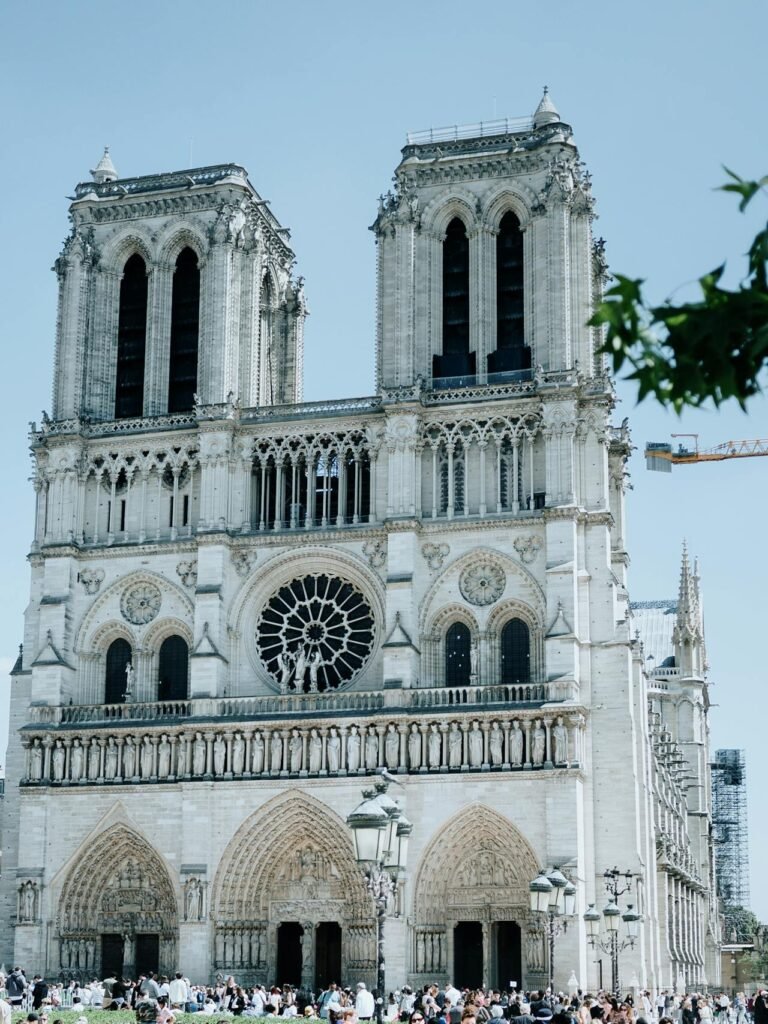
The flying buttresses which revolutionized the Gothic architecture, the Gallery of Kings containing 28 statues (originals had been beheaded during the French Revolution) and the western facade rose window, a 13th century masterpiece of stained glass which somehow passed through both the Revolution and the fire, can be observed through the parvis (the square in front of the cathedral).
Eight Centuries on an Island
Notre-Dame de Paris is located on the Ile de la Cite which is the location where Paris originated. Here, Roman Lutetia was established in the 1 st century BCE. It was the first Christian church which came into sight in the 4 th century. Bishop Maurice de Sully commissioned a new cathedral fit to serve the expanding city in 1163, and during the following 200 years carpenters, glaziers, and stonemasons constructed it, higher and higher, until it was the masterpiece of the French Gothic style.
The cathedral has been worn, revolutionized and neglected over centuries. It was desecrated in the French Revolution. Sculptures were being destroyed, objects dispersed, the structure was almost blown down. Napoleon had rescued it in 1804 by declaring himself emperor here.
A preservation movement was triggered by a 1931 novel by Victor Hugo, The Hunchback of Notre-Dame. Hugo presented the images of Quasimodo ringing the bells and Esmeralda dancing in the shadows to remind the Parisians what was being lost. A massive restoration of the late 19th century was led by architect Eugene Viollet-le-Duc and added the spire which was later burnt but nonetheless very popular.
Notre-Dame has also seen royal wedding, Te Deums, upon military victories, and the release of Paris in 1944. It has been scene and theme, image and refuge.
Montmartre & Sacre-Coeur (16:30-18:00)
Montmartre is a 130-meter hill on top of which, in the 18 th arrondissement, a neighborhood that stayed a village despite the changes made by Baron Haussmann, the rest of the city was brought together.
Basilica on the Hill
Sacre-Coeur Basilica is the most prominent structure in Paris after the Eiffel tower. Its white domes that are Romano Byzantine shines on the horizon, which is seen nearly anywhere in the city. Sacre-Coeur was built in 1875 and completed only in 1914, and it is scarcely older than the Metro.
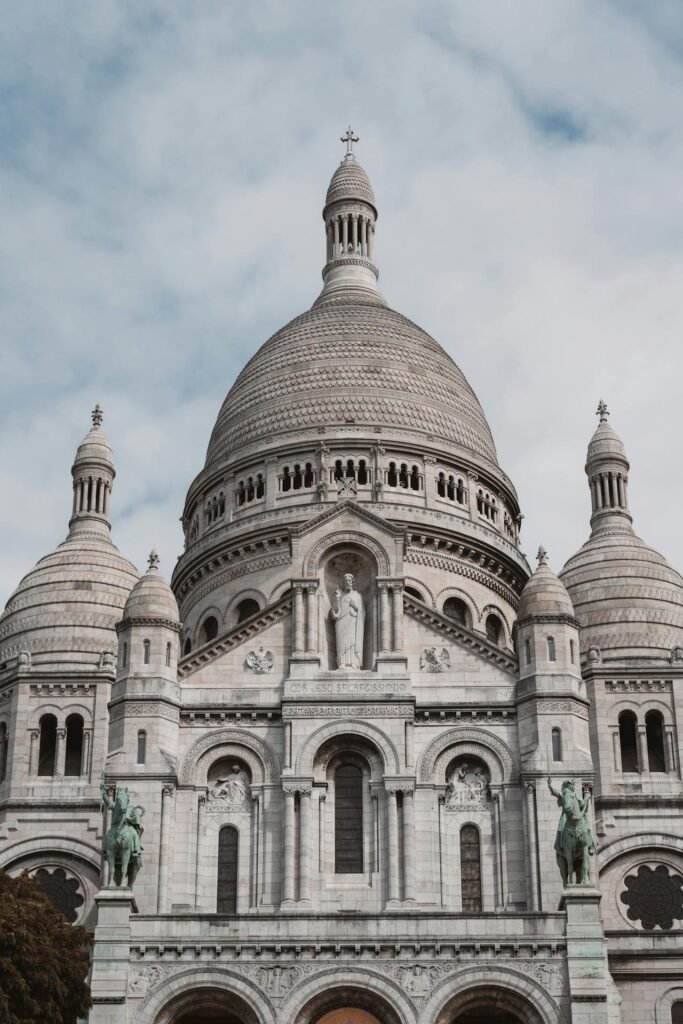
Following the humiliating defeat of France in the Franco-Prussian War of 1870-71, and the bloody Paris Commune uprising that came thereafter, the Catholic conservatives suggested a national redemption monument. The location was symbolic.
The architect Paul Abadie was building Sacre-Coeur on a Romano-Byzantine style instead of Gothic to consciously imitate the early Christian period. The travertine is white stone of Chateau-Landon, as it has been selected because at the touch of water it oozes calcite, that is to say the more it rains the whiter the building becomes. A self-cleaning church.