


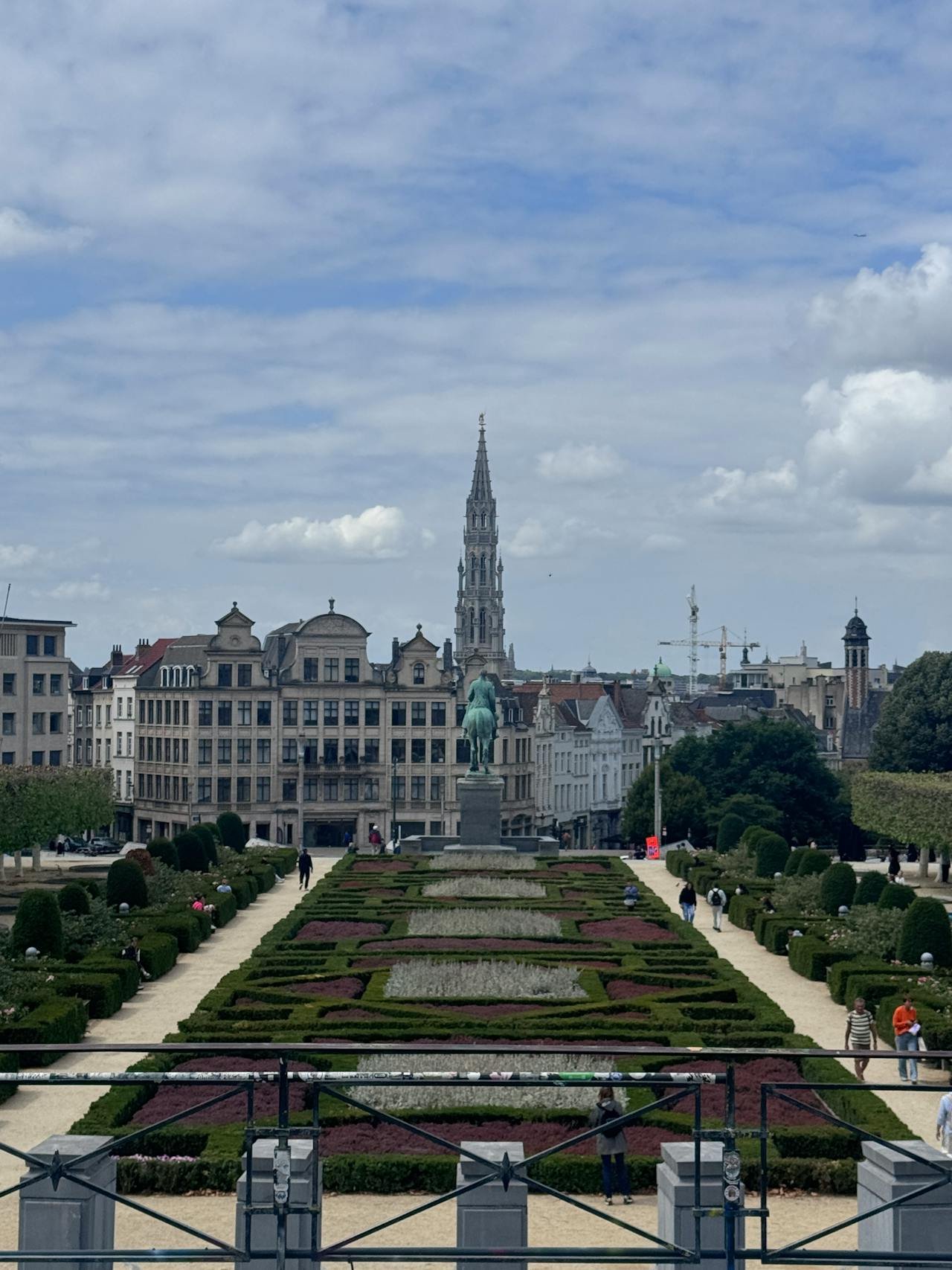
Only have one day in Brussels? Don’t worry. And you can still see the best of Belgium capital within only 24 hours. This small city is able to cram an unbelievable amount of stuff into its walkable core: a UNESCO-protected medieval square which leaves you breathless, Art Nouveau facades winding and twisting along the tree-lined boulevards, comic book murals which are splashed against building walls, and chocolate shops on virtually every block tempting you with their window dresses.
The best thing about Brussels as a whirlwind trip is the fact that it is very easily accessible. The airport is only 20 minutes by train to the city center and in case you are coming in Paris, London, or Amsterdam, you can get out of the high-speed train right in the central action at Brussels Central Station. The key attractions are within a 30-minute walk distance of one another and the metro network is very efficient that it completes any missing link.
Let’s make every hour count.
Breakfast in Sablon (08:00-09:00)
Start your Brussels day in the sophisticated place of the weekend mornings of the locals the Grand Sablon square. This district comprising of antique dealers is on elevated land than the city centre and square has had an almost village-like feeling even though it is just minutes away to the downtown.
Grand Place (09:00-10:30)
Victor Hugo termed it the prettiest square in the world. This world heritage is basically a staging ground of gilded Baroque facades which compete with each other to be heard. It started to be built in 1402 and according to local legend when the architect noticed that the entrance was not in the middle, he threw himself down the tower.
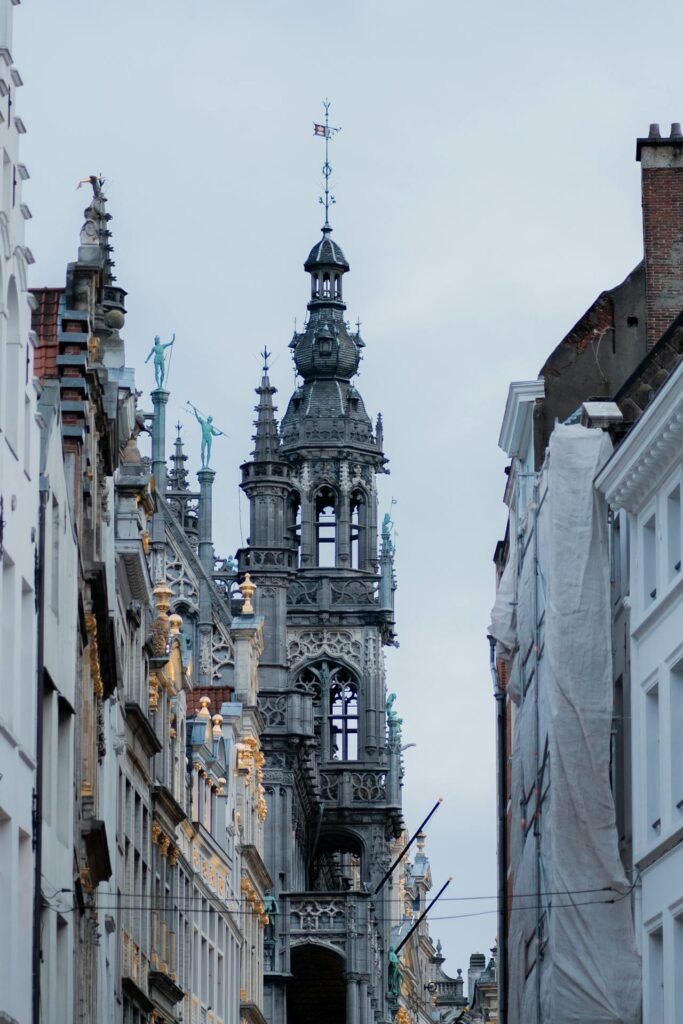
The square is encircled by the Guildhalls, constructed by the trade guilds of Brussels when the French forces had bombed the city in 1695 and left most of the old buildings in ruins. Every house symbolizes another trade bakers, brewers, boatmen and their exteriors are also adorned with golden details, statues, and animals. One side is pinned down by the Maison du Roi (King House), a house where no king lived, and here the Brussels City Museum, where you may find hundreds of the costumes donated to the Manneken Pis.
This is the place where Brussels has been celebrating, protesting, and executing people in history. This is the space that has been occupied by markets since the 12th century, and on each other August, the square is covered with begonias more than 700,000 flowers that are plotted in fine designs.
Manneken Pis and Galeries Royales (10:30-12:00)
Having served as a Brussels icon since 1619, this bronze statue of urinating boy is 61 centimeters in height, although myths date it to its predecessors hundreds of years earlier. Some have it that he was the son of a nobleman who had lost his way in a parade, and was caught by relieving himself on a corner of the street. Several times the statue has been stolen, wearing more than 1,000 costumes (which the statue changes depending on the holiday and occasion), and become the unsuspecting representative of Brussels in the world. Is it worth the visit? It is, frankly, so small, and is generally so crowded, that you may well ask yourself why you went there yet you would regret to miss the most Brussels thing in Brussels.

Five minutes of walk northward to the Galeries Royales Saint-Hubert. Go through the entrance arch, and you find yourself in 1847, with a glass ceiling that is more than 200 meters long and arched. King Leopold I also had architect Jean- Pierre Cluysenaar design the first covered shopping arcade in Europe and it influenced the glass-roofed passages that were soon to be built in Paris, Milan, and London.
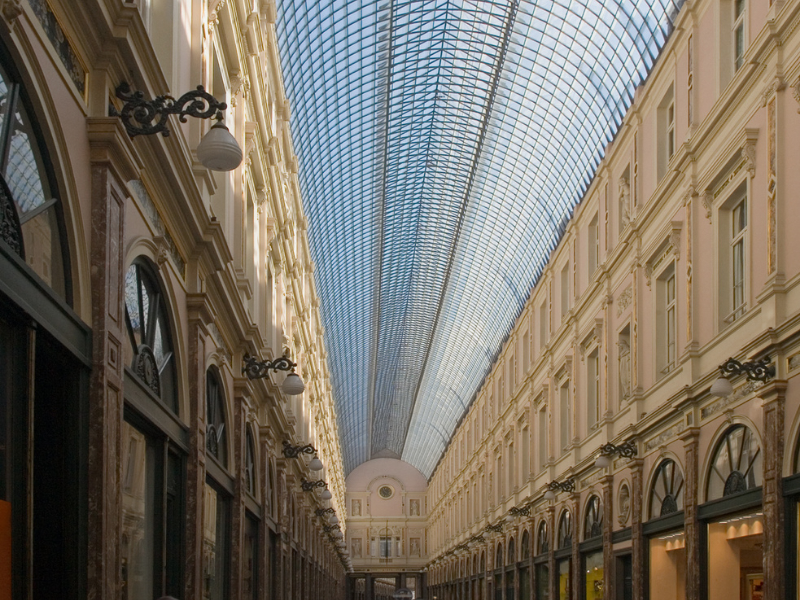
The galleries will be subdivided into three parts Galerie du Roi, Galerie de la Reine and Galerie des Princes all adorned with shopfronts keeping the original 19 th -century beauty. It is the land of the best chocolatiers in Brussels, such as Neuhaus (creator of the praline in 1912) and posh boutiques, antiquarian bookstores, and the small Theatre Royal des Galeries.
Lunch (12:00-13:30)
Mont des Arts & Magritte Museum (13:30-15:00)
Have lunch and then walk back to the city center and begin climbing. The city of hills, Brussels is endowed with the Mont des Arts (Mountain of the Arts) which in turn compensates the uphill hike with one of the most Instagram friendly views in the city.
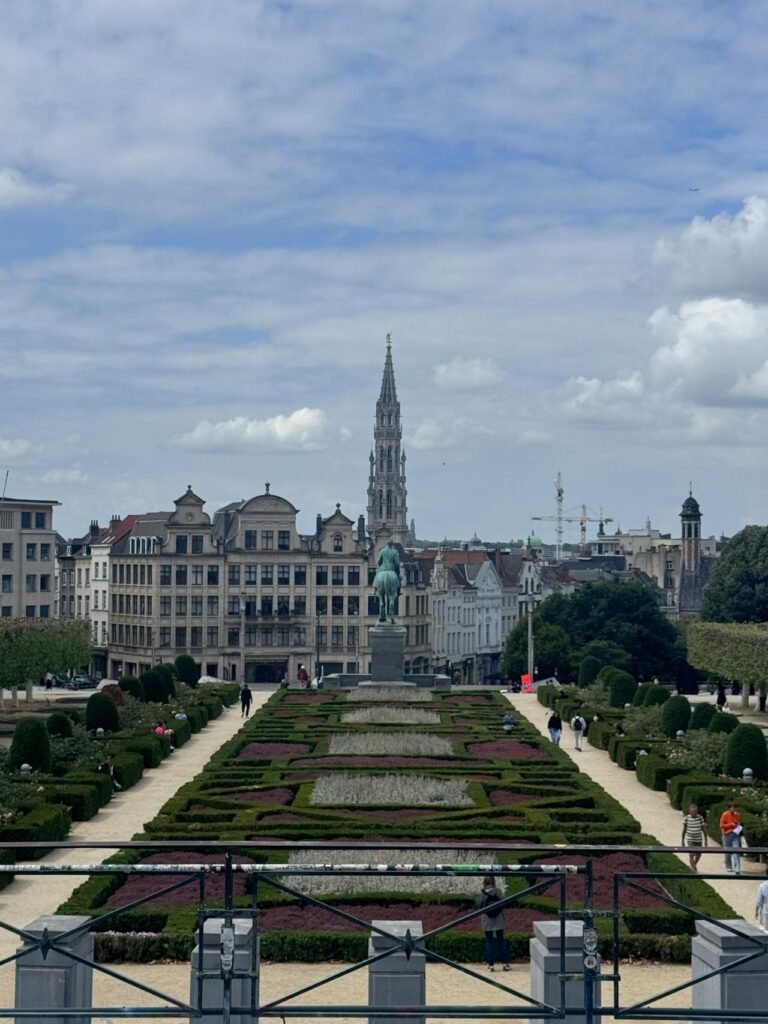
Look back and you have the cultural institutions which make this district what its name indicates: the Royal Library, the Royal Museums of Fine Arts, and the Magritte Museum.
It may be the most renowned artist in Belgium, although Belgium did not pay much attention to Rene Magritte in his time. The entire life he lived was to paint in a humble home in Jette neighborhood producing a visual image that challenged even reality itself. In 2009, the museum was opened and contains the largest collection of his work in the world, some 200 paintings, sculptures, and photographs chronologically displayed on five floors.
Chocolate Experience (15:00-16:30)
By the midafternoon you have deserved something sweet, and Brussels is serving one of the best desserts in the world: chocolate that is so good that it spoiled you on all you will get at home. Go back to the area of Sablon where you began your morning. This is the Brussels chocolate headquarters and afternoon is the right time to tour of its legendary chocolatiers.
It was in 1912 that Belgian chocolate gained fame throughout the world when a pharmacist Jean Neuhaus came up with the new praline, a hollow chocolate shell that was stuffed with cream or ganache or flavored paste.
The Atomium (16:30-18.30)
During the 1958 World Expo known as Expo 58, which was being hosted in Belgium, the country desired an iconic image as ambitious as the Eiffel Tower in Paris which was constructed in 1889 in time to welcome the world fair. The Atomium was designed by an engineer Andre Waterkeyn, which symbolized the atomic structure of an iron crystal, linking the nine atoms together by tubes filled with escalators and stairs. It was all pure Cold War optimism, atomic energy would be used to make the future peaceful and prosperous. The Atomium remained which became more representative of Brussels than the Manneken Pis or Grand Place.
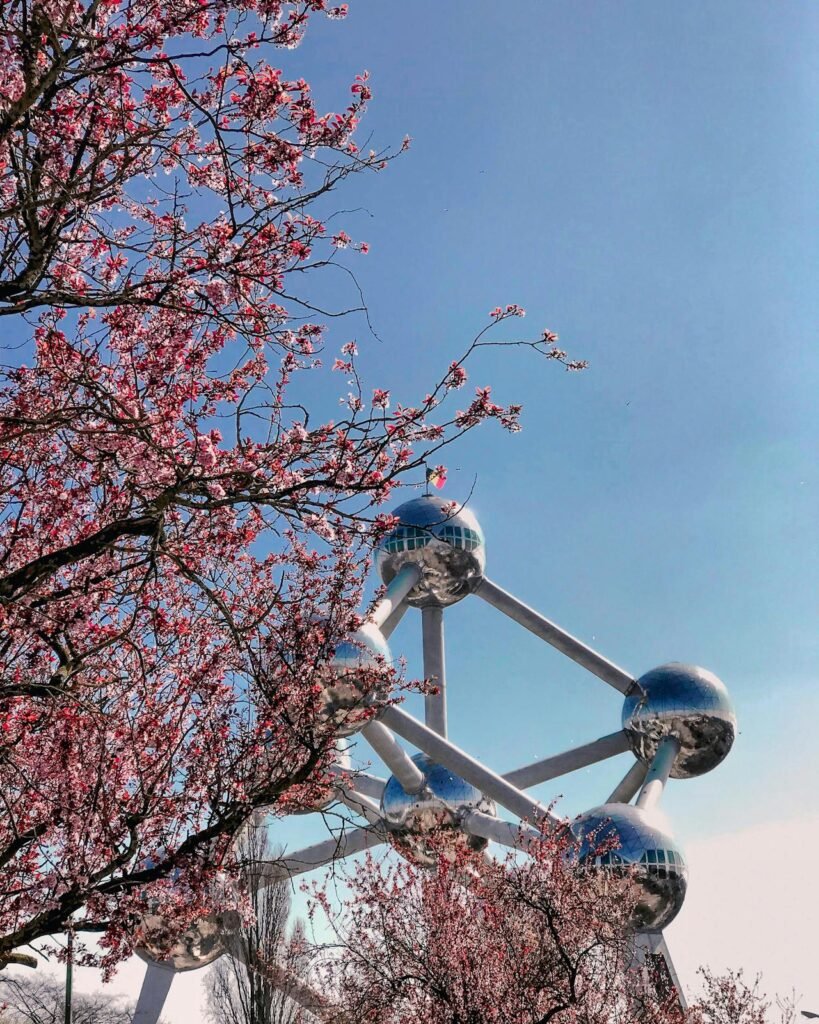
At a closer look, the scale will become apparent. The spheres measure 18 meters in diameter or about five stories. In 2006, the stainless steel cladding was introduced, and the aluminum previously on it was oxidized and faded.
The vistas of the top are panoramic in every direction: the town center with the spire of the Town Hall visible clearly on the sunny days, the port of Antwerp to the north and the Royal Palace of Laeken to the east where the royal family of Belgium really resides. You should walk around the outside before departing to have a look at the Atomium in various perspectives.
Optional: Mini-Europe Park
With more energy and time or when you are on the road with children, who have been patient enough to visit museums and chocolate shop Mini-Europe is located right next to the Atomium, which is located within a five-minute walk of the Bruparck complex. This is an outdoor park that shows 350 miniature images of European landmarks at 1:25 scale: the Eiffel Tower is three meters high, there is a Big Ben by the Acropolis, and the Grand Canal in Venice is winding on a territory the size of a tennis court.
FAQs – Frequently Asked Questions
Yes! Using a clever timetable, you will be able to see the primary sights, sample local dishes and appreciate Belgian chocolate. All in one day.
Be close to Grand Place or Central Station to be able to reach attractions.
Strolling towards the city center, metro towards the Atomium.