


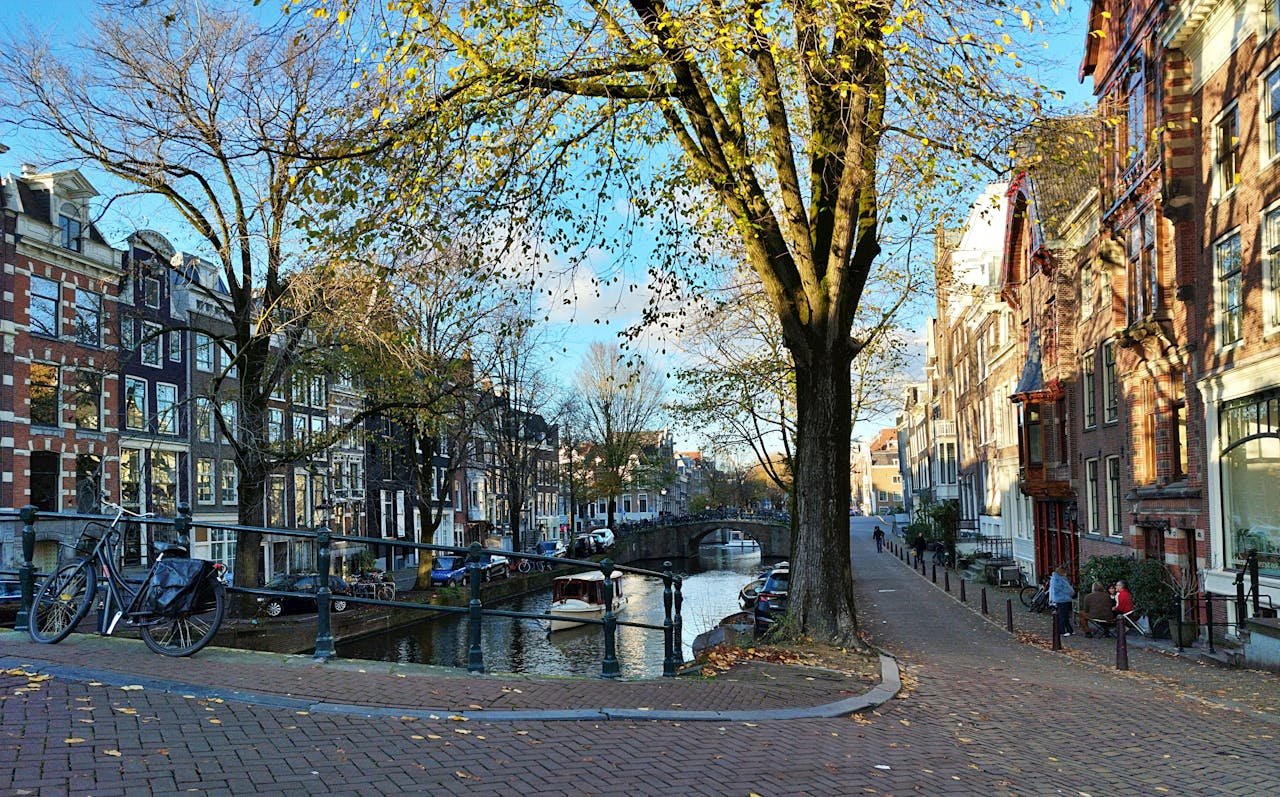
Amsterdam is the European capital that is both big and small. Having a historic center that is slightly over two square kilometers, you can traverse the Central Station to the museum district in less than half an hour, traversing centuries of architecture, dozens of bridges, and enough canals to get you to recalling why they call this the Venice of the North. It is an urban center that can be explored either on foot or by bicycle.
Amsterdam is an ideal destination in a one-day visit because it is small. In Amsterdam, unlike in sprawling capitals where you might need to spend half a day in only one museum, the heavyweight attractions of the Anne Frank House, the Rijksmuseum, the canal belt are all in a walking range.
Breakfast (08:00-09:00)
The Dutch pancake (pannenkoek) is like it is in between a crepe and an American flapjack. Smaller than the latter and stronger than the former, it was served on a plate the size of a dinner-plate, and with sweet and savory dishes. The cheese and bacon variant is an eye opener to those who only eat pancakes as desserts.
Canal Cruise (09:00-10:30)
Amsterdam can only be best seen in water. The 165 canals constructed by the Dutch Golden Age in the 17 th century are not only picturesque but are the reason why we have Amsterdam as a trading power. What began as convenient waterways by merchant ships has become the prototype of one of the most beautiful cities in Europe today, a UNESCO World Heritage site.
The majority of cruises take about 60-75 minutes and by booking online the night before for saving.
Wander Jordaan & Nine Streets (10:30-12:00)
Get out of your boat and walk into the Jordaan, the most picturesque district of Amsterdam. It used to be a working-class area of craftsmen and immigrants, but it has retained its origins as it now is the creative center of the city. There still will be brown cafes (typical Dutch pubs) beside concept shops, and butchers that served the neighborhood since time immemorial.
Starting in the early 1600s, the Jordaan was originally residential accommodation to the workers constructing the canal ring around Amsterdam.
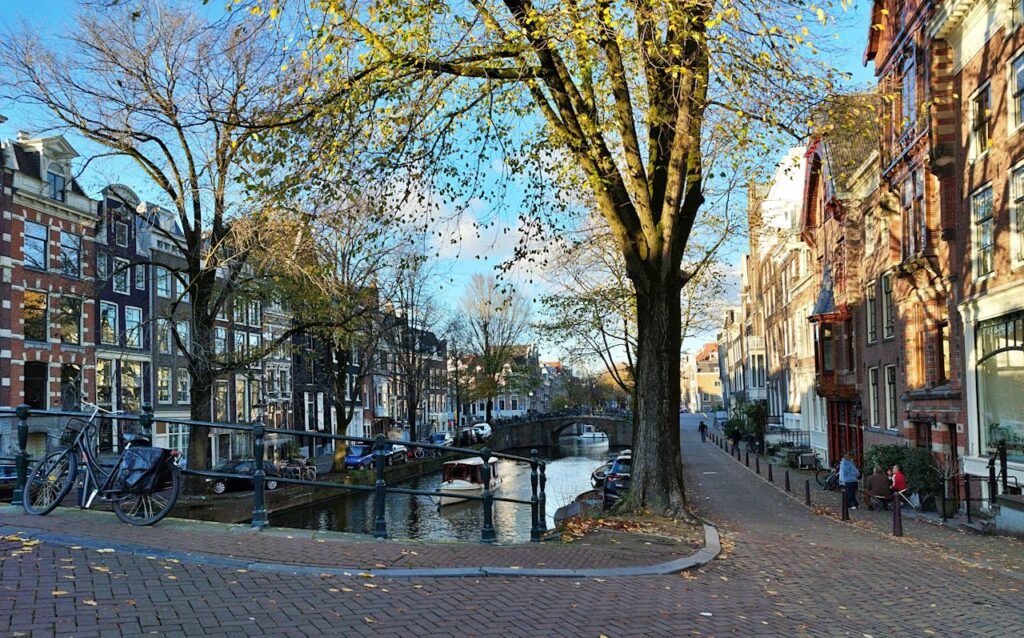
Nine Streets (De Negen Straatjes): The huge canals are linked with Raadhuisstraat to Leidsegracht. It is not a shopping street, but rather an assortment of single-store boutiques, vintage shops, and unique shops that you will not come across elsewhere.
Anne Frank House (12:00-13:00)
It is not a museum in the classical sense of the word. It is the real-life house that the 13-year-old Anne Frank and her family and four other people lived in to evade Nazi deportation in the course of two years of World War II. The father of the family Otto Frank and father of Anne, created the museum to save the physical place and the general message that Anne left in her diary.
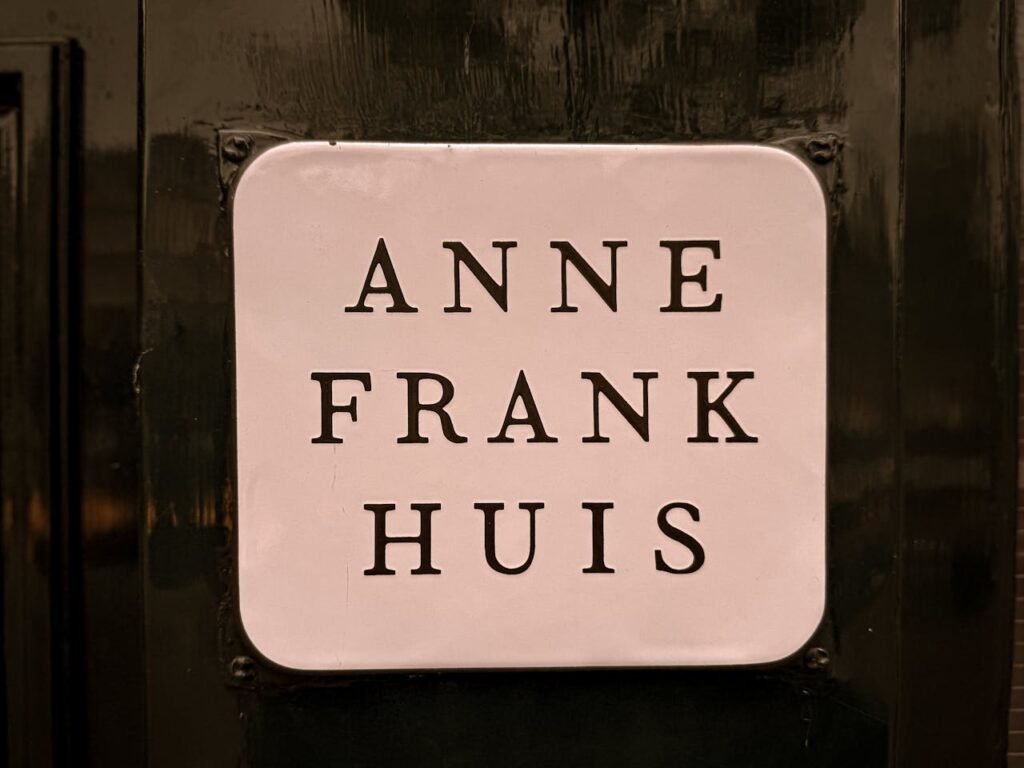
The Secret Annex was located at the back of Otto Frank, a spice company in Prinsengracht 263-267. Tourists walk up the stairs to the concealed chambers, by the famous bookcase which hid the door. The rooms are unfurnished, as Otto Frank wants them to be, yet the space tells a lot. You read the movie star pictures that Anne has pasted to her bedroom wall, the marks that the height of the children was made, the window where she caught a glimpse of a chestnut tree and a patch of blue sky.
It is the ordinariness of the house that gives it power. These are not great historical rooms; they are small ones that eight individuals had spent 761 days in fear before being betrayed and arrested in August 1944. Anne was killed in the Bergen-Belsen concentration camp a few weeks before the freedom of the camp in early 1945. Only Otto survived.
Lunch (13:00-14:00)

Afternoon: Museums (14:00-17:00)
It is time to leave the canals and neighborhoods behind and go into the cultural center of Amsterdam by mid-afternoon. Museum Quarter or Museumkwartier is 15-20 minutes south of the city center and it is one of the densest art areas per square meter of Europe. The district is a green area that developed in the late 19 th century when the Amsterdam city planners chose to make a cultural campus which would be based on monumental museum buildings to compete with Paris and Vienna.
The outcome is a neighborhood, which has three world-class museums facing each other. On one side of Museumplein is the Rijksmuseum Gothic Revival palace and the Van Gogh Museum modernist building on the side and the contemporary MOCO Museum taking up a townhouse on the edge of the square. You might be here a week, and yet not see it all, but you do not have a week. You have a noon and a decision to take.
This is the truth of visiting one day in Amsterdam; you have to select a single museum. Attempting to look at two things simultaneously is tantamount to passing through both and forgetting one. All these institutions should be given a minimum of two hours of attention.
Rijksmuseum
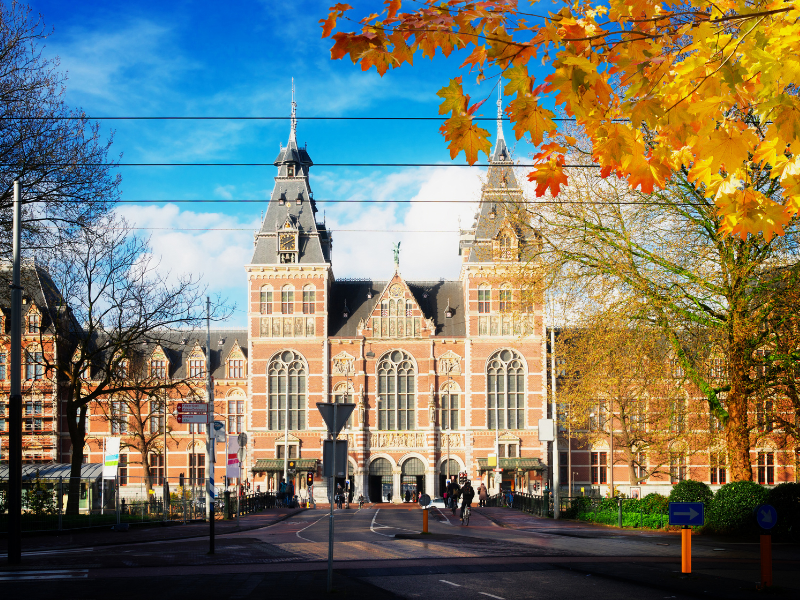
The Rijksmuseum is not merely a museum but a monument of national identity of the Dutch. The building was built to an overstated Gothic style when it was opened in 1885 after years of building and was criticized as being excessive and retrogressive. The architecture of Pierre Cuypers had been built as art instead of a blank gallery area, spires, stained glass and ornamental tilework were adorned with Dutch history between the Middle Ages and the Golden Age. It is that very maximalist architecture that has transformed the building into one of the most memorable things today compared to the masterpieces that are being housed in the building.
Here the Dutch Golden Age is brought to life. The Dutch Republic evolved into a trading empire around the world in the period between 1588 and 1672. Amsterdam became a rich city in Europe and the richness financed an artistic outburst. The artists were commissioned by the merchants to adorn their canal houses, civic organizations sought to use artists to commemorate their members.
In contrast with the Italian renaissance, which was dominated by religious and mythological subjects, the Dutch Golden Age painting glorified the mundane: still life of bread and cheese, domestic scenes, winter scenes, and portraits of ordinary people who were lucky enough to be made very wealthy.
The museum has a collection of 8,000 objects in 80 galleries, although in 2 hours you are supposed to go over the Gallery of Honour on the second floor. This corridor of interconnected rooms takes you in a chronological manner through the entire Dutch painting, towards the centerpiece of the museum: Rembrandt’s “The Night Watch.”
In addition to Rembrandt, do not overlook Vermeer, and his Milkmaid, a small picture, which attracts crowds with some reason. Vermeer did not create a lot of paintings in his life, only 37 pieces, and this domestic picture of a kitchen maid that pours milk and drinks it shows his skill in light and texture.
The Rijksmuseum has also a very good collection of Delftware which was the best collection of blue and white pottery that became a symbol of the Dutch craftsmanship.
Van Gogh Museum
Although Vincent van Gogh had a short life span of ten years prior to his death in 1890, when he was 37 years old, he had more than 2,100 paintings in the decade.
In 1973, Gerrit Rietveld created a museum which has the largest collection of Van Gogh work in the world. The permanent collection traces the line of the artistic development of Van Gogh chronologically over four floors of the gallery where you can see his style evolve in response to darker and more earthly artworks of Dutch peasant life, to the brighter and more emotionally charged landscapes of Provinence France.
MOCO Museum
In case Old Masters and the oil paintings of 19 th century do not appeal to you, MOCO museum is something totally different. This modern art museum was inaugurated in 2016, in a former townhouse on Museumplein, and it aims to be the less elitist. Its name translates to “Modern Contemporary, and the museum offers just that street art, pop art, installations made with technology, and experiences that will appeal to the smartphone generation.
Vondelpark (17:00-18:00)
This 47-hectare urban oasis, named after the Dutch poet Joost van den Vondel, was inaugurated in 1865 as a privately owned park so that the affluent inhabitants of the growing southern districts could enjoy themselves with vigorous and extended strolls in the park. The city assumed control by 1953, and Vondelpark has become literally a public space, democratic in nature.
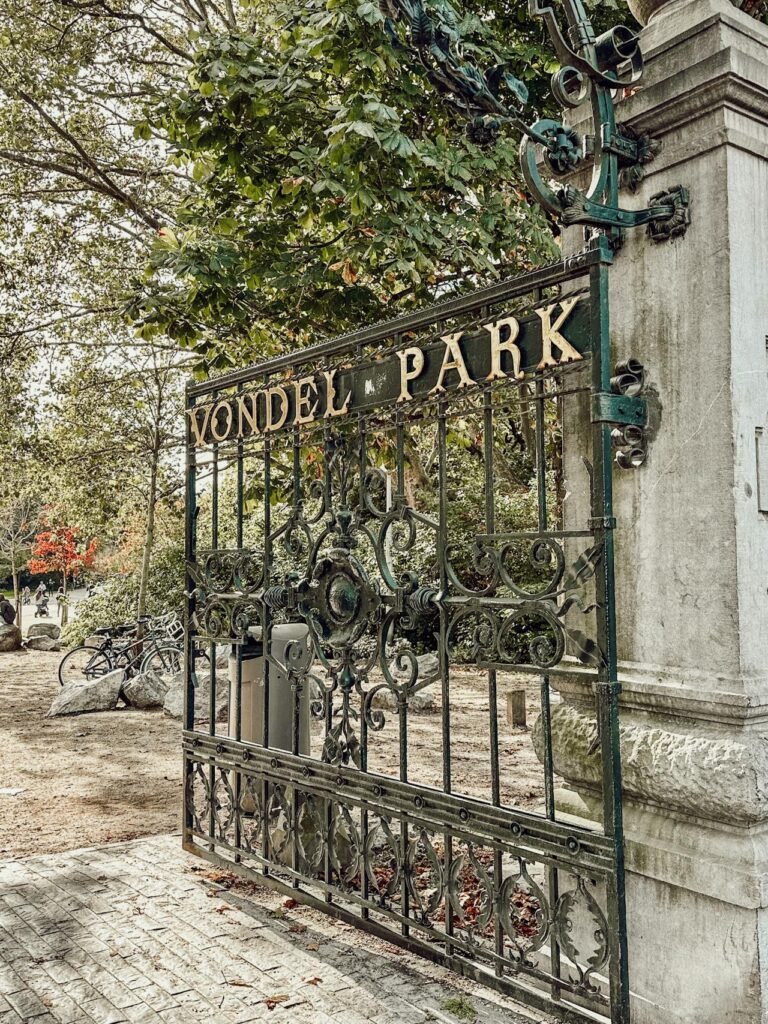
The history of the park reflects the development of Amsterdam. It became a meeting point of hippies and counter cultures in the sixties and seventies. Nowadays you can find Dutch families picnicking on check blankets, joggers on evening loops and musicians arranging performances in the streets.