



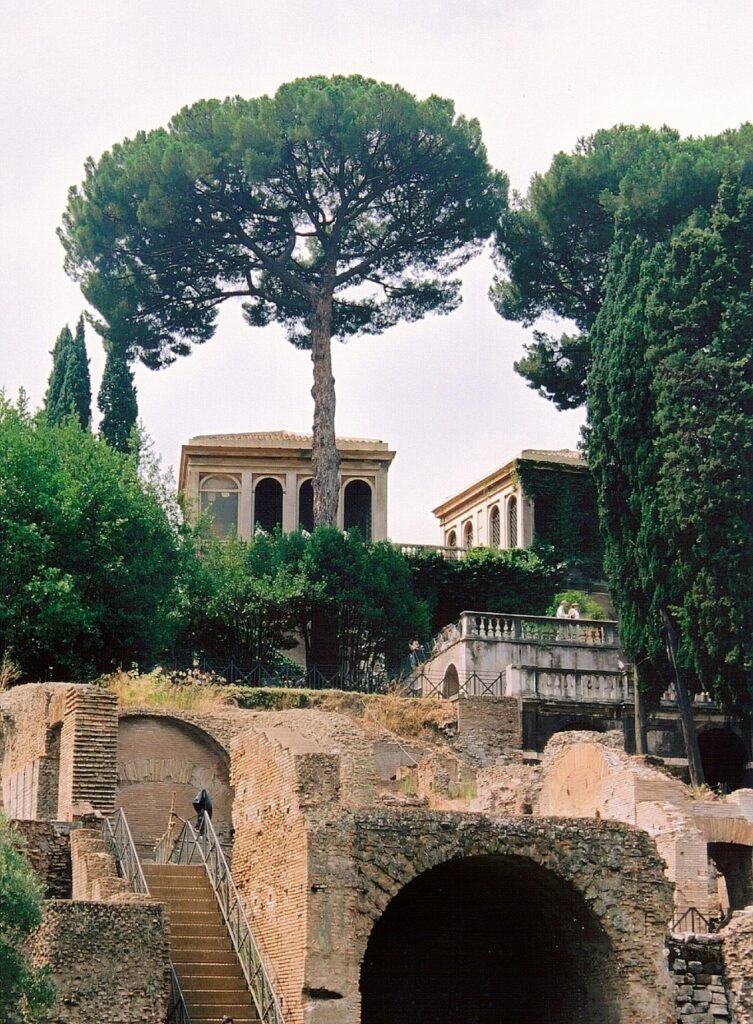
Palatine Hill is one of the most important archaeological sites in Rome, which is the mythical cradle of the Eternal city and the luxurious dwelling of the Roman emperors throughout centuries. It is a part of the famous trinity of Ancient Rome that also consists of the Roman Forum and Colosseum and serves as the destination of millions of tourists annually. This all-inclusive plan is a must-have guide to those travelers who have the entire day to spend visiting Imperial palaces, archaeological gardens, and panoramic terraces.
Map
History
In the Roman legend, Palatine hill is the place where the shepherd Faustulus had found two twins, Romulus and Remus, in 753 BC, and on this hill the legendary city of Rome was established. Archaeological data show that the hill was indeed utilized as early as the 10 th century BC and thus it is among the oldest permanently inhabited places in the city. The Palatine hill was later of the Roman republic, the most desirable part of the city in which the richest aristocrats and the most elite families built luxurious villas commanding the views of the forum underneath.
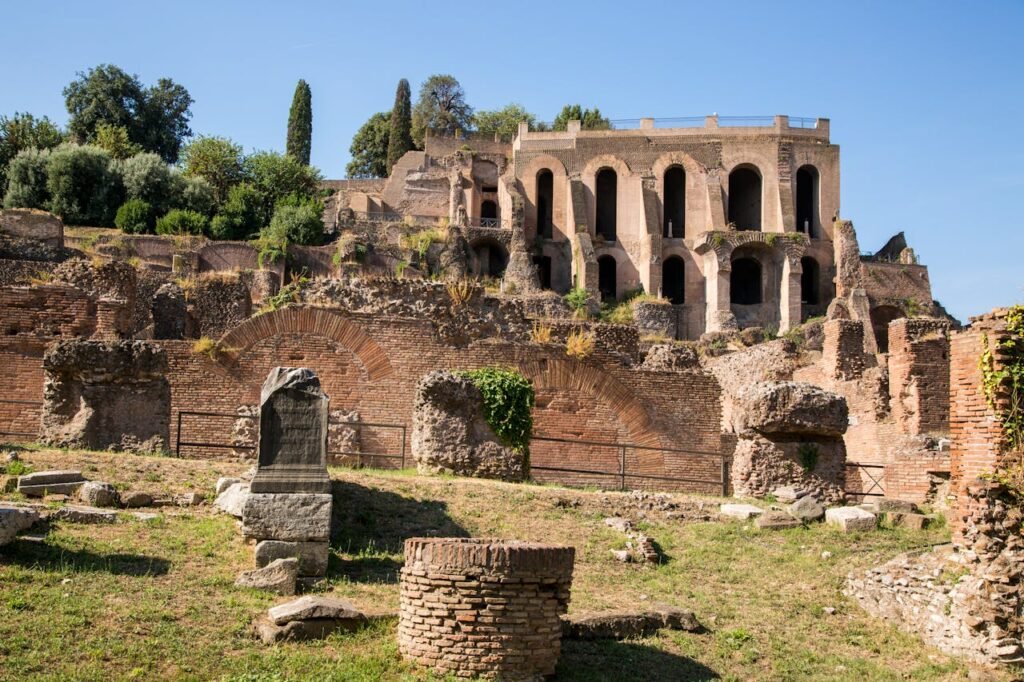
With Emperor Augustus the ruling power changed drastically as he made the hill the center of imperial influence in 27 BC. This choice became a precedent that would continue to enjoy centuries to come as new emperors added larger and larger structures to their already existing palaces. Domus Augustana, Domus Flavia and House of Livia are some of the best illustrations of Roman imperial architecture which included complex frescos, marble courtyards and elaborate mosaics.
The emperors of Rome still made use of the palaces well into late antiquity, and even the word palace is named after Palatine. The modern world was introduced to the wonders of imperial Rome after centuries of desolation, when Renaissance digs in the 16 th century started unearthing these magnificent ruins.
Palatine Hill in One Day: Itinerary
This chronological walking route allows one to enjoy the best of Palatine Hill and it uses the most time- and energy-saving path. The itinerary is structured in a way that it is a natural progression of the sites as they follow through the imperial history of Rome.
Palatine Museum
Start with the Palatine Museum, which is located in a former convent, next to the entrance of the site. This small yet exciting museum exhibits items found in digs at the hill such as pottery of early settlements, sculptures of the imperial era, pieces of frescoes, and architectural ornamentation of the palaces. This would be a good place to start giving necessary background to the ruins you are going to see all day. The chronological exhibits follow the development of the hill since Iron Age village up to imperial showcase, which will make you imagine how these spaces used to look in their glorious days.
House of Augustus
Then go to the house of the first emperor of Rome, Augustus, where are maintained some of the best frescoes of the early imperial times. The vivid wall paintings have mythological scenes, architectural illusions, and the fragile botanical motives in the typical Pompeian Second Style. These exceptionally well maintained chambers disclose the sophisticated taste of the emperor who changed Rome into a city of brick to a city of marble.
House of Livia
The House of Livia is only a short distance away and is the residence of the wife of Augustus and features some of the fine interiors of Palatine hill. The frescoes of Pompeian type here are wonderful, with elaborated garlands, mythological panels, and trompe-l’oeil architectural features, which produce the illusion of increased space.
Domus Flavia and Domus Augustana
The grandiose palace complex constructed by Emperor Domitian at the end of the 1 st century AD is the epitome of imperial architecture on Palatine hill. The Domus Flavia was the public wing, of which consisted a large throne room (Aula Regia) where the emperor held his dignitaries, a magnificent courtyard in the middle, an octagonal fountain, and a large basilica to conduct state business. The emperor also had his own residence, the Domus Augustana, which was located next to it and was designed as several peristyle courtyards on varying levels.
Stadium of Domitian
The place that is the long-garden-like building is called the Stadium of Domitian and it is located next to the complex of palaces. This was not a publicly-based athletic facility, but it was a confined area used as a site to conduct religious processions, entertain the emperor or perhaps equestrian shows.
Palatine Terrace Viewing the Roman Forum
It is on this high point that you can recognize several major monuments such as the Temple of Saturn, the Arch of Septimius Severus and the Via Sacra that leads towards the Colosseum. It is a perfect place to contemplate the glory of the ancient Rome and get some significant photographs.
How to Get There
The central positioning of Palatine hill ensures that it is accessible through a number of transportation means making you select the mode that fits best in your schedule.
- Metro
Colosseo Station (Line B) is the most convenient metro station which is only a 5-7 minute walk away at the main entrance of Palatine Hill. Get out of the station and go on the direction towards the Colosseum and then turn to the Via di San Gregorio which has the ticket office and entrance. Or, Circo Massimo Station (Line B) provides a picturesque walk of 10 to 12 minutes strolling through the Circus Maximus on one side (approaching Palatine Hill on the south side) and having a great view of the hill being erected over the old chariot racing arena. - Bus
There are a number of bus routes that pass by the Colosseum or Via dei Cerchi, and they make Palatine hill easy to access. Useful routes include 75, 81, 85, 87, and 118. - On Foot
Palatine hill is very accessible when walking to most central places in Rome. Palatine Hill is also right beside the Roman Forum and linked together by the same ticket. Starting at Piazza Venezia and the Vittoriano monument, it is about a 15 minutes walk through Via dei Fori Imperiali. Palatine memory can be reached, even by Trastevere in the other side of the river, in 20 25 minutes.
Nearby Attractions
Finally, pair Palatine hill with the following neighbouring sites, all reachable on foot and all ideal towards building a one-day itinerary that will be all inclusive of Ancient Rome.
Roman Forum
The Roman Forum is also right at Palatine Hill and it is a part of your combined ticket, in general, this is the ideal follow-up to your visit. The forum which serves as the political, commercial and religious center of Ancient Rome is marked by classical buildings such as the Temple of Vesta, Senate House (Curia) and Arch of Titus.
Colosseum
The most symbolic location to see in Ancient Rome is the legendary Colosseum, the largest amphitheater in the world and one of the most impressive architectural constructions ever built by human beings. The Colosseum is only 5 minutes away on Palatine hill, so it is possible to take guided tours of the arena floor, underground chambers and upper levels.
Arch of Constantine
The Arch of Constantine, which is situated between the Palatine hill and Colosseum, remembers the triumph of the Emperor Constantine on the battle of Milvian Bridge in 312 AD. This is a triumphal arch that incorporates relief sculptures of the old monuments, and it is intriguing how Roman imperial propaganda exists in such a palimpsest over a 300-year period.
Capitoline Hill & Museums
Another hill of Rome is Capitoline hill where the great Capitoline Museums, which were constructed by Michelangelo, are situated. The museums hold one of the best collections of classical sculpture in the world, such as the well known Capitoline Wolf and Marcus Aurelius on horseback.
Circus Maximus
This means that directly below the southern slopes of Palatine hill is the huge oval area of Circus Maximus, the main chariot racing arena of ancient Rome. Although there is not much left of the original building, the sheer size of the space is still astonishing, and the space has great views as one looks up into the imperial palaces standing above.
Frequently Asked Questions
Allow a minimum of 2.5 or 3 hours to see Palatine Hill at leisurely pace. The location is spacious, and the ground is to be walked slowly and cautiously.
Yes. The merging ticket admits the Colosseum, Roman Forum as well as Palatine Hill. The ticket is very efficient and serviceable to explore the ancient Rome at your own pace.