


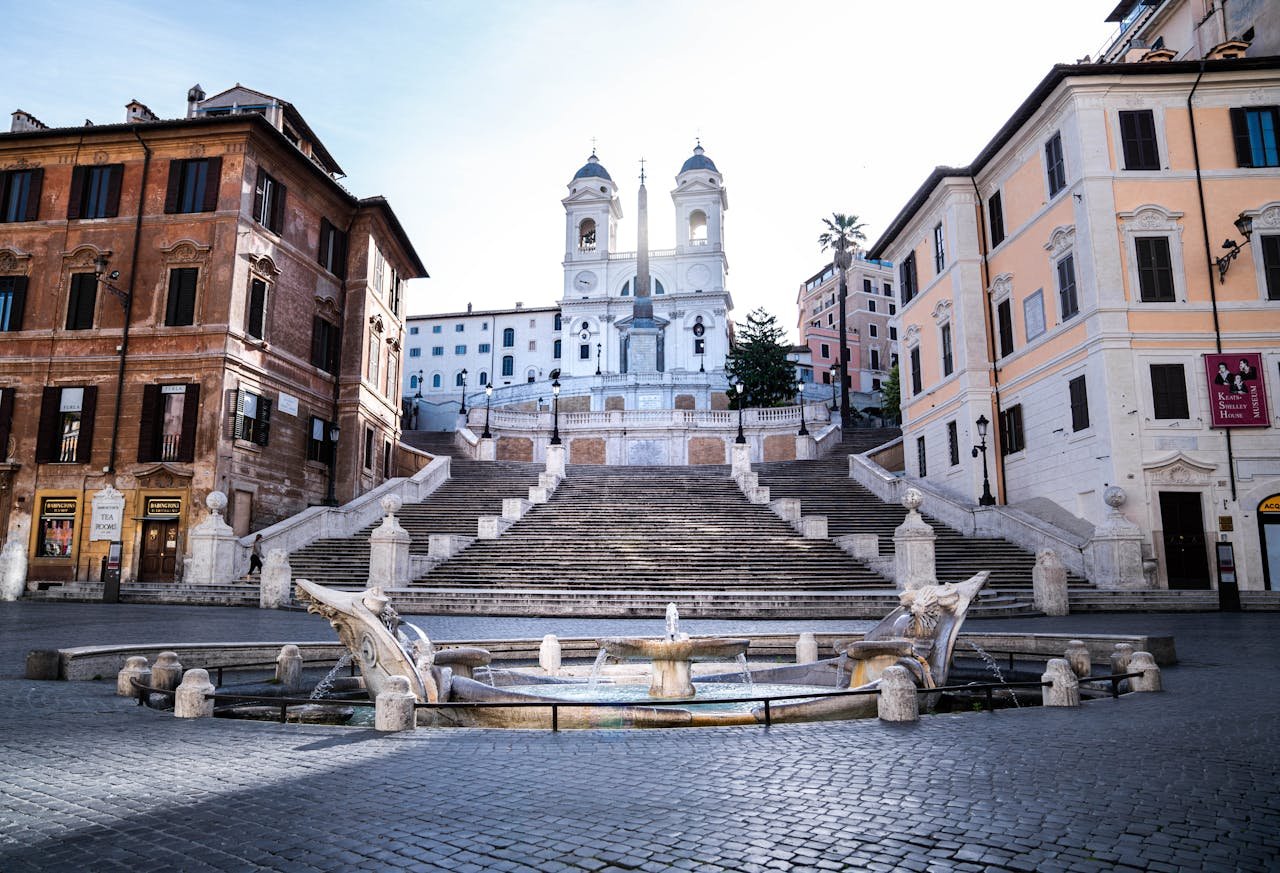
The Roman city along with its essence is best epitomized by the Spanish Steps. This broad Baroque stairway, which joins Piazza di Spagna to the mountain-top Trinita dei Monti church, has been used by artists, poets, lovers, and wanderers during almost three hundred years.
The Spanish Steps are given a special status in the life of the Romans. Part runway part outdoor salon part love rendezvous. The city is covered with designer shops, old cafes, and cobble stone streets, and here the past and the present of the city meet in the most impressive way.
Map
History
Spanish Steps were constructed in 1723-1725 by an Italian architect Francesco de Sanctis who won the competition organized in 1717. The steps are named after the Spanish Embassy in the Holy See, which stands adjacent to the building, which provided part of the funding by French diplomat Etienne Gueffier making the building be named Piazza di Spagna.
A practical purpose was the design: to join the square that was controlled by Bourbon Spanish at the bottom with the Trinita dei Monti church owned by the French at the top. It led to the creation of a Baroque masterpiece with sweeping volume design that would house large numbers of visitors.
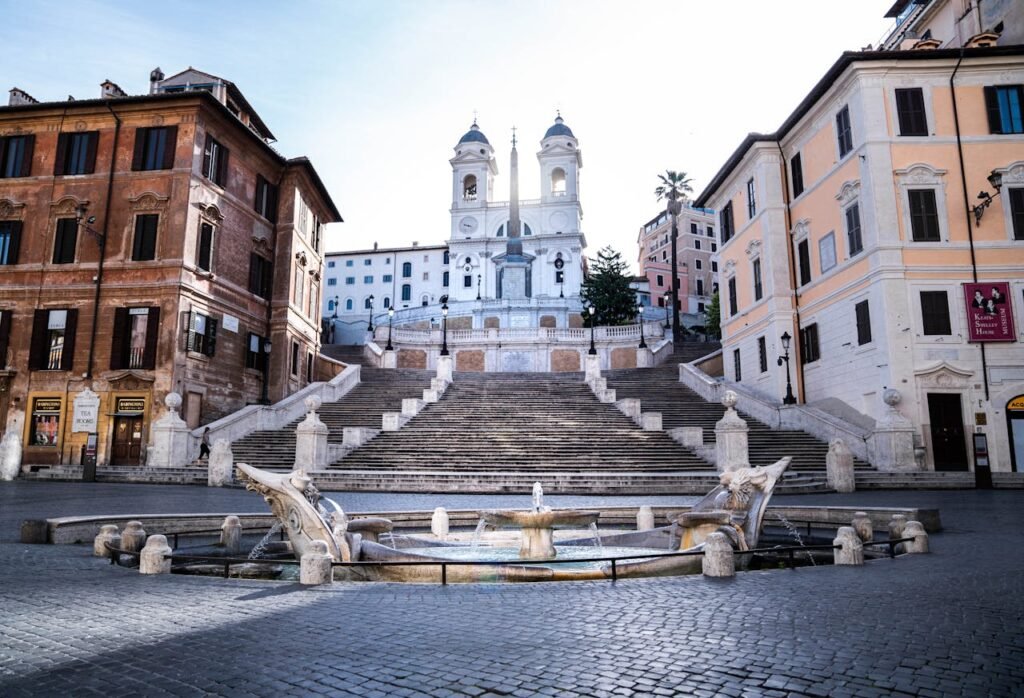
During the 18 th and 19 th centuries, the Steps was the center of expatriate community in Rome and the attraction of artists, poets, and Grand Tour visitors. In 18201821 the English Romantic poet John Keats spent the last months of life in a house on the foot of the Steps, and the neighbourhood welcomed Goethe as well as Byron and Hans Christian Andersen.
Spanish Steps in a Day: Itinerary
Piazza di Spagna
Start your tour with the foot of the Steps in Piazza di Spagna one of the most beautiful squares in Rome. Prior to the climb, have a look at the Fontana della Barcaccia (Fountain of the Ugly Boat) which was an Early Baroque fountain constructed between 1627 and 1629. This fountain has been attributed to Pietro Bernini, the father of the more famous Gian Lorenzo Bernini, but the son might have assisted in the decoration.
Climb the Spanish Steps
The stairs have 135 steps (although it is sometimes counted that it has 136 and it is then part of the adventure to count them yourself).
Trinita dei Monti Church
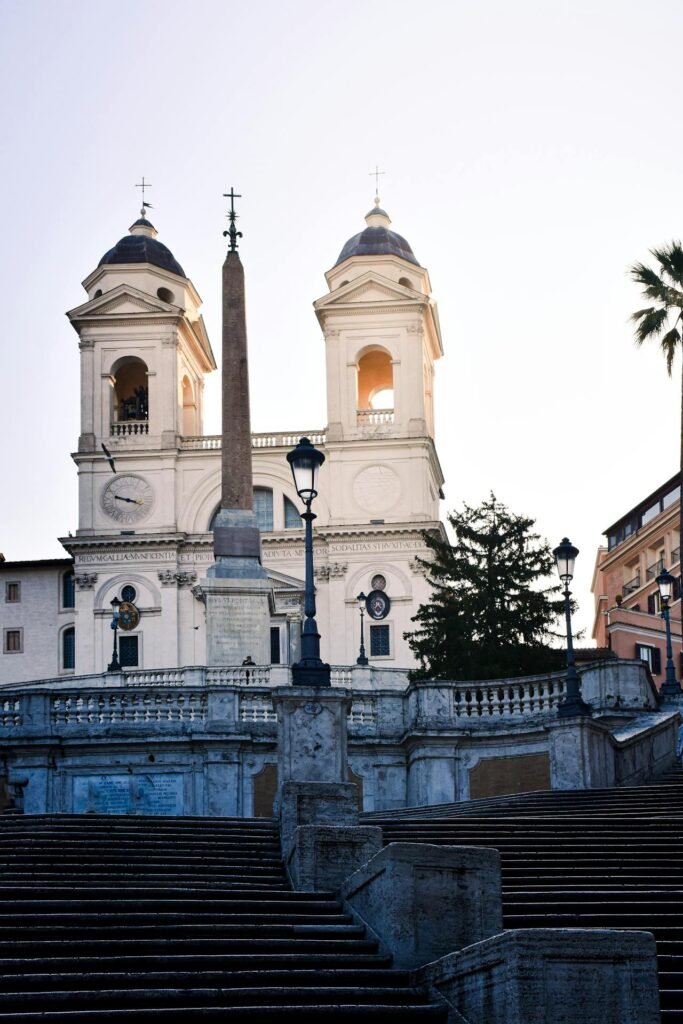
The Trinita dei Monti, a French church of the 16th century, whose architecture is Italian Renaissance, with two unique bell towers, is located on the top of the Steps.
The interior has a few fine pictures, among others, a picture of Daniele da Volterra, a pupil of Michelangelo. The Obelisco Sallustiano outside the church is a Roman obelisk made to appear like the Egyptian predecessors and relocated to its present location in 1789.
How to Get There
- Metro
The station Spagna on the red line (A line) leaves you right at the Piazza di Spagna- a two minute walk to the Steps. The most convenient choice to the majority of the travelers is the line A, which links to Termini station (the main railway hub in Rome), Vatican area (Ottaviano station), and central Rome. - Bus
A number of bus lines pass the neighbourhood, but the enormous buses of Rome are unable to negotiate the narrow streets that surround the Steps itself:
Lines 61, 62, 63, 83, 85, 117, and 119 stop nearby
Some of the helpful places to visit are San Claudio, Piazza del Popolo and Tritone/Fontana di Trevi.
Average bus stops are 5-10 minutes walk. - Walking
The Spanish Steps can be accessed by foot as they are closely connected with other great attractions in Rome:
Trevi Fountain: 10 minutes
Piazza del Popolo: 10-12 minutes
Pantheon: 15 minutes
Nearby Attractions
Trevi Fountain
The most renowned fountain in Rome is within a walking distance and therefore, it is easy to explore both the landmarks during a morning or evening walk. Get there early or late so you do not have to deal with the large crowds.
Piazza del Popolo
This big oval piazza is characterized by the existence of two churches, an ancient Egyptian obelisk and is the entrance point to one of the primary shopping streets in Rome, Via del Corso.
Pincio Terrace and Villa Borghese
The most popular park in Rome is a green area, museums (including the great Galleria Borghese) and panoramic terraces with the city view.
FAQs – Frequently Asked Questions
There are 135 steps on the staircase, but certain sources have it at 136.
Yes, the Steps and the piazza are open places that one can visit at any time.
The Steps can be found 24 hours a day and 7 days a week.