


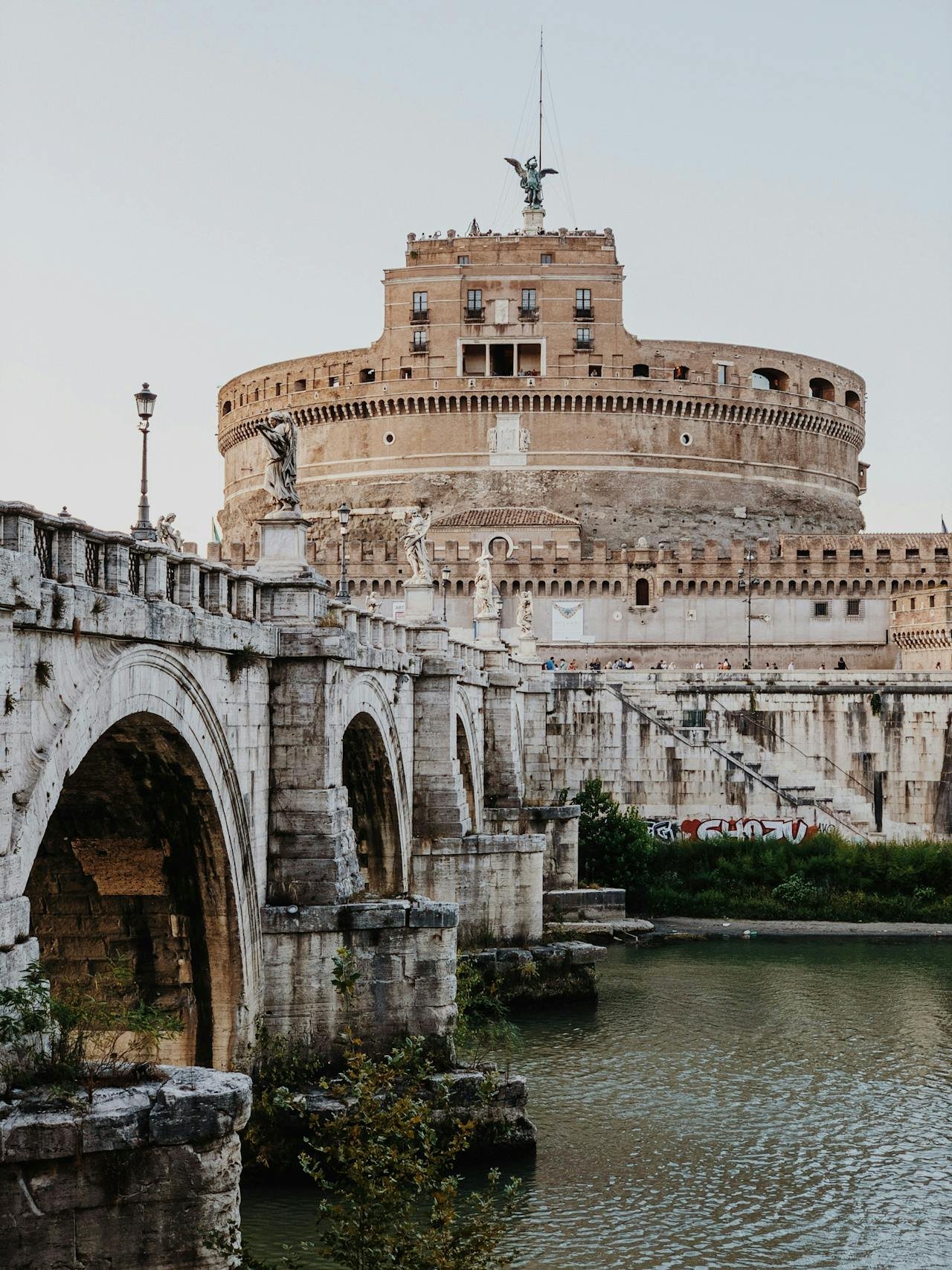
Castel Sant Angelo is one of the most interesting monuments of Rome, which, soaring up the river of Tiber, rises to magnificence. The building has played numerous functions during the history of its existence, which takes almost 2,000 years. Imperial tomb, middle ages castle, papal refuge, Renaissance prison, and recently the global museum. It stands only a few steps away, and it is a must-visit when someone goes sightseeing in Rome in one day. It may be its dramatic background, breathtaking sceneries, or strategic position, but one thing is sure to make you come here first, and that is this guide will help you discover all the things that will make your visit to be memorable, rather than ordinary.
History
This grand building was commissioned by Emperor Hadrian in 135 AD as his grand mausoleum to continue with the vision he had of a great mausoleum to match the one made at Augustus. It was used as a final resting place of the Roman emperors and their families and it functioned in centuries. The role of the castle changed with the changes in the fortunes of Rome. By the middle ages, it was already turned into one of the strongest military fortresses, and its strong walls and location put it on the front line as a defensive building.
The most interesting chapter of the building commenced when the building was a papal refuge. The castle was made strong by popes and Passetto di Borgo was an underground pathway that was built to join the castle and the vatican. This was an important escape route when Pope Clement VII fled to safety within the walls of the city in the year 1527 in a Sack of Rome. The Renaissance and the Baroque periods used the castle, which was a notorious prison, where philosophers and sculptors such as Giordano Bruno and Benvenuto Cellini were imprisoned.
Today, It is a museum, the Museo Nazionale di Castel Sant’Angelo, in which one can see papal apartments decorated in the renaissance, a collection of ancient weaponry, visit old prison cells, and a terrace with astonishing views of Rome.
Inside
Spiral Ramp & Mausoleum Chamber
The path you are on is that imperial remains took with the ancient Romans. The initial ramp of the spiral, created by Hadrian, ascends up the core of the building. There is an immediate attachment with the origins of the building due to its old brick structure and the slowly sloping path. In different places you will see peepings of the huge cylindrical centrality that comprised the foundation of the mausoleum. Even the chamber, deprived of the original marble and ornaments, still has the effect of grandeur of Roman funerary architecture.
Papal Apartments
The sharpness of the contrast between the simple old-fashioned parts on the one hand and the rich papal rooms on the other side of the central axis is noteworthy. The religious pictures of the frescoed ceilings and papal heraldry are painted in the bright colors which have been preserved throughout centuries. Furniture, decorated doorways, painted grotesques (decorative wall paintings) are carved in a very intricate way, covering literally every surface. The Sala Paolana of Pope Paul III has frescoes by Perino del Vaga especially beautiful, especially those by Perino and his pupils.
The Passetto di Borgo
You can see some of the parts both out of the castle and at several locations within the Vatican City. Displays of information give its dramatic history, such as the dreadful escape of Pope Clement VII in the siege in 1527. The high way that is strengthened and paved extends over almost 800 meters.
The Armory & Prison Cells
It is in these gloomy areas that the darker moments of the castle are manifested. There are weapons in the armory that represent the medieval as well as renaissance. Swords, crossbows, primitive firearms, and armor belts that were used to protect the fortress walls. In close proximity to it, there are ex-prison cells that recount tales of imprisonment and pain. Prisoners of famous and forgotten stature were kept in small austere rooms with little light. Benvenuto Cellini, the esteemed Renaissance sculptor, had graffiti that can be seen to date in his jail term.
Angel Terrace
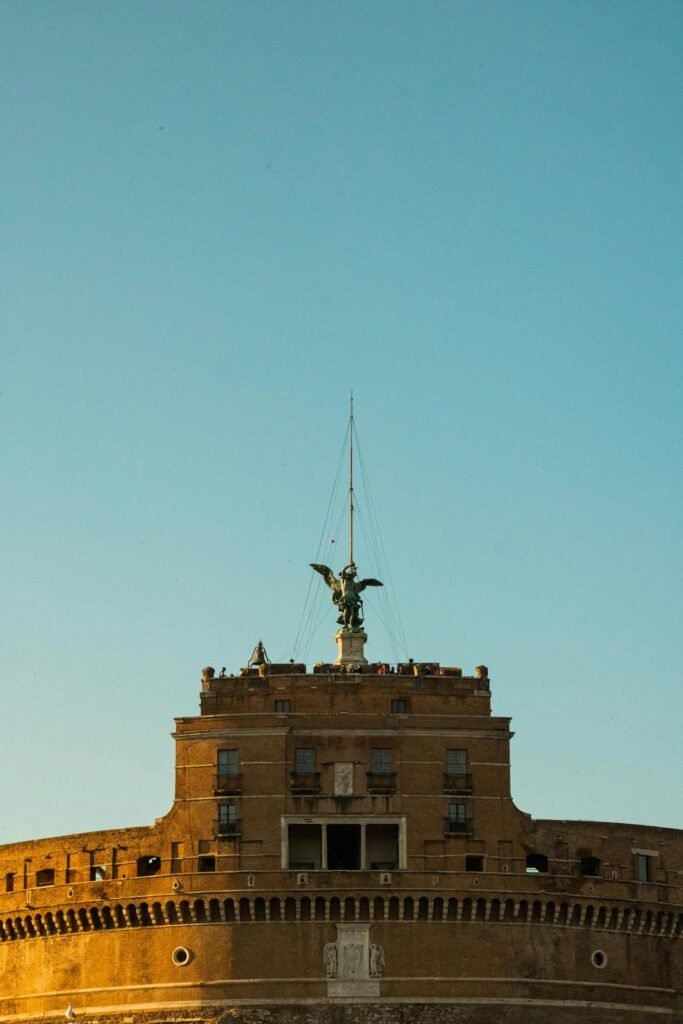
This is the point that any travelers is looking forward to. You find yourself out on the highest terrace, and Rome is on all sides around. The castle is crowned with the statue of Archangel Michael made of bronze holding his sword. An allusion to the angelic appearance which Pope Gregory the Great here is said to have seen in 590 AD, when the city was beset with plague. It is the panorama that covers the magnificent dome of St. Peter which appears to be within the reach of the arm and the vast expanse of rooftops of the Vatican city, the Tiber that is cutting through it, the beautiful arch of Ponte Sant’Angelo located at the lower level and the ancient center of Rome in the horizon.
Museum Collections
In the castle, there are many rooms which display both rotating and permanent collections. You will find sculptures of ancient Rome, ceramics of the middle ages, paintings of the Renaissance period, and a stunning collection of military equipment of various centuries. Some ramparts are lined with bronze cannons, and there are display cases which contain elaborate suits of armor. The exhibit aids in depicting the past of not only the castle but also the artistic and military history of Rome in general.
Nearby Attractions
Vatican City
The obvious one is the presence of Vatican City that is right across the river Tiber and up the Via della Conciliazione. St. Peter Basilica with its overwhelming dome and Michelangelo Pieta take at least an hour to have a proper visit. Vatican museums and Sistine chapel require significantly more time. Usually three or four hours at least. One could plan to visit Vatican in the morning (to avoid the crowds), lunch in the vicinity and Castel Sant’Angelo in the late afternoon. Alternatively, visit castle in the morning and spend the afternoon in st. peter square.
Piazza Navona
This long square, erected above the old Stadium of Domitian, is swarmed with power. It is anchored by three fountains such as the famous Fountain of the Four Rivers of Bernini. The piazza has cafes, restaurants and gelaterias. Ideal as an afternoon break or a lunch break. Street musicians and artists contribute to the bright atmosphere. The stroll across Castel Sant’Angelo is an exploration of beautiful winding streets, uncovering levels of history of Rome.
Campo de’ Fiori
This square is a busy place in the market where flowers, produce and local products are sold. An eye-catching piece of true Roman life. During evening it turns into a successful night life destination and the outdoor seating is made in many bars and restaurants. The market is open Monday till Saturday mornings, on Sundays the square is quiet and yet pleasant to walk in.
How to Get There
- Metro: The closest Metro Line used is the Metro Line A in Rome. Both of the Lepanto and Ottaviano stations are within walking distance of about 15-20 minutes.
- Bus: The bus system in Rome is very comprehensive and has many alternatives. Lines 23, 40, 62, 271, 280, and 982 all break at easy walking distance of the castle. The 40 and 62 are quite handy since they are the ones that link the major train stations to the Vatican area.
- Tram: Tram Line 19 ends at Piazza Risorgimento, which is close to the entrance of Vatican. It then takes a nice 12-15 minutes walk to Castel Sant Angelo with a stroll through the land between Vatican City and the Tiber.
- On Foot: The walk takes ten minutes, starting at Vatican City, along Via della Conciliazione and across Ponte Sant’Angelo. Take the walk of the historic center through its romantic streets that start at Piazza Navona. Approximately 15 minutes of Renaissance and baroque buildings. The way out of Campo de’ Fiori leads to the old streets and obscured piazzas, about 15 minutes each.
FAQs – Frequently Asked Questions
Visitors take 1.5-2.5 hours to view the castle depending on their rate and interest. Allowing more than three hours, should you visit all the rooms, read all the information-panels, and take ample time on the terraces bathing in views. To see the major highlights through a specific visit (including mausoleum chamber, papal apartments, and Angel Terrace) and spend an hour and a half is enough.
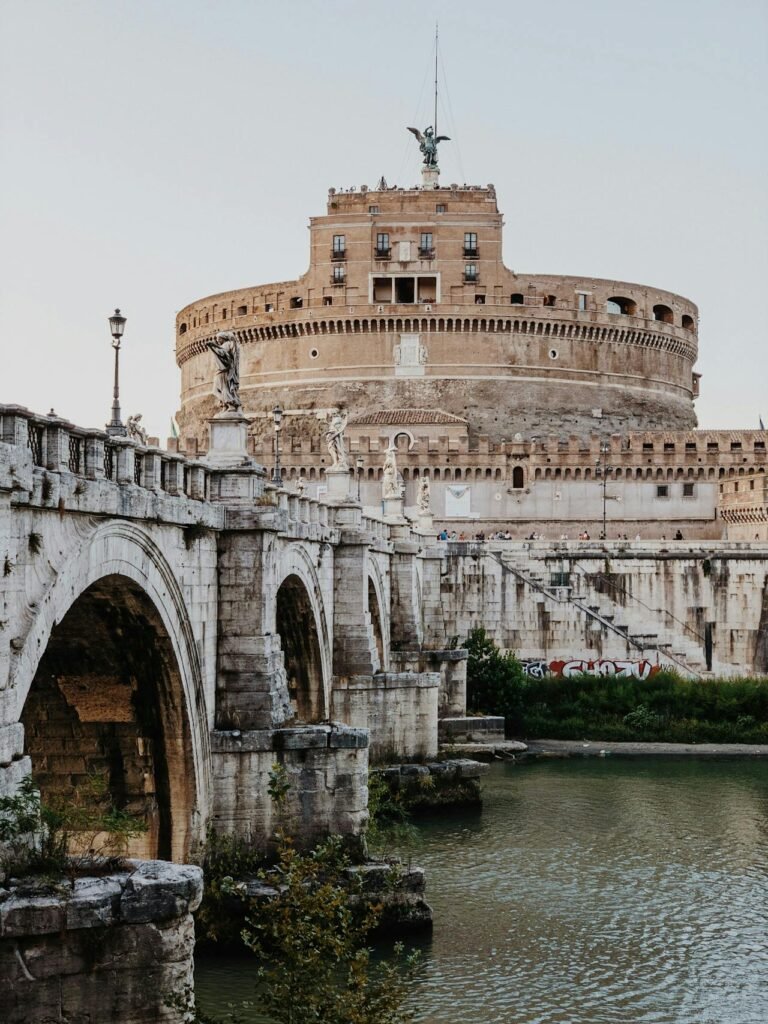
The Angel Terrace offers some of the best shots of the skyline of St. Peters and Rome, yet it is important not to ignore Ponte Sant’ Angelo. Being on the bridge with the castle behind your back particularly at the golden hour or when the castle is lit produces postcards worthy of the bridge. The ceilings of the Sala Paolina have frescoes, and the antique design of the spiral ramp provides great control in interior photography.