


One Day, 0 Euros, Ultimo Barcelona
Barcelona is friendly to all budget travelers. You are able to absorb the culture of the city without having to spend a single euro as the best moments are free.
- One Day, 0 Euros, Ultimo Barcelona
- Walking – Gothic Quarter and El Born (08:00-09:00)
- Viewpoint Cathedral and Plaça de la Seu (09:00-10:00)
- La Rambla (10:00-11:00)
- La Boqueria Market (Free to Explore) (11:00-12:00)
- Break in Parc de la Ciutadella (12:00-13:00)
- Walk Toward the Beach (13:00-14:00)
- Barcelona Beach Time (14:00-15:30)
- Strolling around the Gracia Neighborhood (15:30-17:00)
- Montjuïc Free Viewpoints (17:00-18:30)
- Magic Fountain of Montjuic (18:30-19:30)
This guide gives us an idea on how to spend a day in Barcelona without incurring expenses. Look outside the masterpieces of Gaudi, stroll Gothic streets, savor the dazzling Mediterranean and have a glimpse of the true neighbourhood life.
The reason why Barcelona works well when it is free
The city is pedestrian friendly. Gothic Quarter is a block-crowded centuries-old history. There are modernistic structures in big streets. There are parks all over the hills and beaches that run miles. Plaza art is free, and thus you can experience world-art without a ticket.
There are street entertainers in La Rambla. Vendors in the market create a visual spectacle at La Boqueria you are free to window shop. Evening walks in the neighborhoods are very active.
Who This Itinerary Is For
This guide’s aim it at low-end travelers in search of the best value and those who are visiting Barcelona for the first time and need the bare minimum Barcelona experience. You will do well on this plan. However, when you love to walk cities, explore architecture and history, and prefer to discover something unexpected.
Highlights
Create tours around the Gothic Quarter and the streets of Rome ruins. Then, experience the vibration of the popular boulevard in the location of La Rambla. Take a look around the exterior of the Sagrada Familia without having to pay an entrance fee. See the free higher terraces of Park Guell. Spend some time on Barceloneta Beach and enjoy the sunset in the Mediterranean. Busy up the night at the fashionable El Born.
Walking – Gothic Quarter and El Born (08:00-09:00)
Begin your day at the time when Barcelona has not yet crowded. In the morning, the Gothic Quarter reveals a different scene: the darkness stretches over the ages-old stone, the shopkeepers keep their shutters closed, and you can hear only the sound of your own footsteps bouncing off the walls, which are 1400 years old.
In the morning you experience the city as though you are the only one. Start at Plaça de Santa Maria del Mar early in the morning as the facade of the basilica is bright. Take a walk to Gothic Quarter using Carrer de Montcada. The street is lined with medieval palaces. Their courtyards are enclosed in wooden doors with others slightly open. Peek inside when you can.
Or come to the Gothic Quarter by Via Laietana and on to the Carrer de la Llibreteria, then turn right. This way leads directly into the labyrinth. At spots, the streets reduce to arm-width. Structures are leaning towards one another. Washing dangles in balconies. You get the impression that you have gone 600 years back.
Navigate to Plaça del Rei. This was the centre of the medieval Barcelona. Three sides are still dominated by the royal palace. Columbus also came to the Americas, after which kings used to welcome him here. Get into the middle in front of the 14 century arches, and turn slowly. It has not been disturbed by any intrusions in modern times, and the city has preserved space just the way it was.
Afterward, see the Roman walls. Just nearby, go to Plaça Nova which is close to the cathedral. Here, there are ancient stones of four meters high. In fact, Romans constructed them in the 3rd century to protect Barcino, the first Roman settlement. As you do, feel them and have 1,700 years of history under your fingernails. In other words, builders literally placed Barcelona on Roman foundations.
Spin around the following 20 minutes. The Gothic Quarter is a place that encourages spontaneity. As you will find there are squares buried in every few blocks. Between the buildings, there are little plazas, some having one tree and one bench, others having medieval fountains still flowing. Carrer del Bisbe is the most photographed place in the area, which is a neo-Gothic bridge that joins the buildings at an elevated level. Be early, arrive before 8.30 and take photographs without crowds.
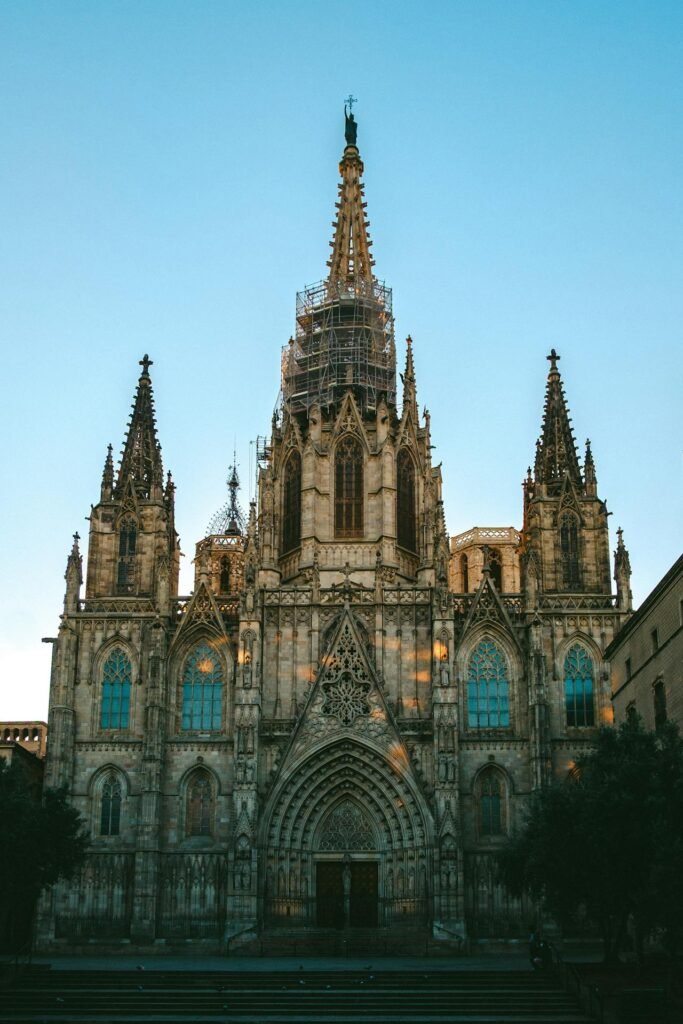
Overall, the design conveys volumes about Barcelona. The builders placed Roman stones on the ground floors. The architects depicted construction of the middle ages on the middle levels. Designers added Renaissance touches on the higher levels.
Small courts are concealed in every corner. Therefore, look for open doorways. Sometimes gothic palaces turn into apartments people leave the doors of the streets open all day long. Enter steadily into court-yards. There are spiral staircases. There is cascading of plants. These semi-public places characterize Barcelona.
By 9 am you’ll have covered a lot. The Gothic Quarter is under half a mile square; and you can walk around it in the short space of 15 minutes. But why rush? You have been down the main streets that are indispensable, you have been in the Middle Ages, you have taken pictures of deserted lanes. The multitudes on La Rambla seems another city.
You have already visited the historic soul of Barcelona, have passed two kilometres in the breathing history, and have taken possession of the best light and the streets with no one.
Viewpoint Cathedral and Plaça de la Seu (09:00-10:00)
The square in the cathedral opens its eyes to you. In front of the gigantic Gothic facade opens Placa de la Seu. Musicians in the street are adjusting their music. Tables are set outdoors by Cafe workers. The energy of the morning is developed slowly.
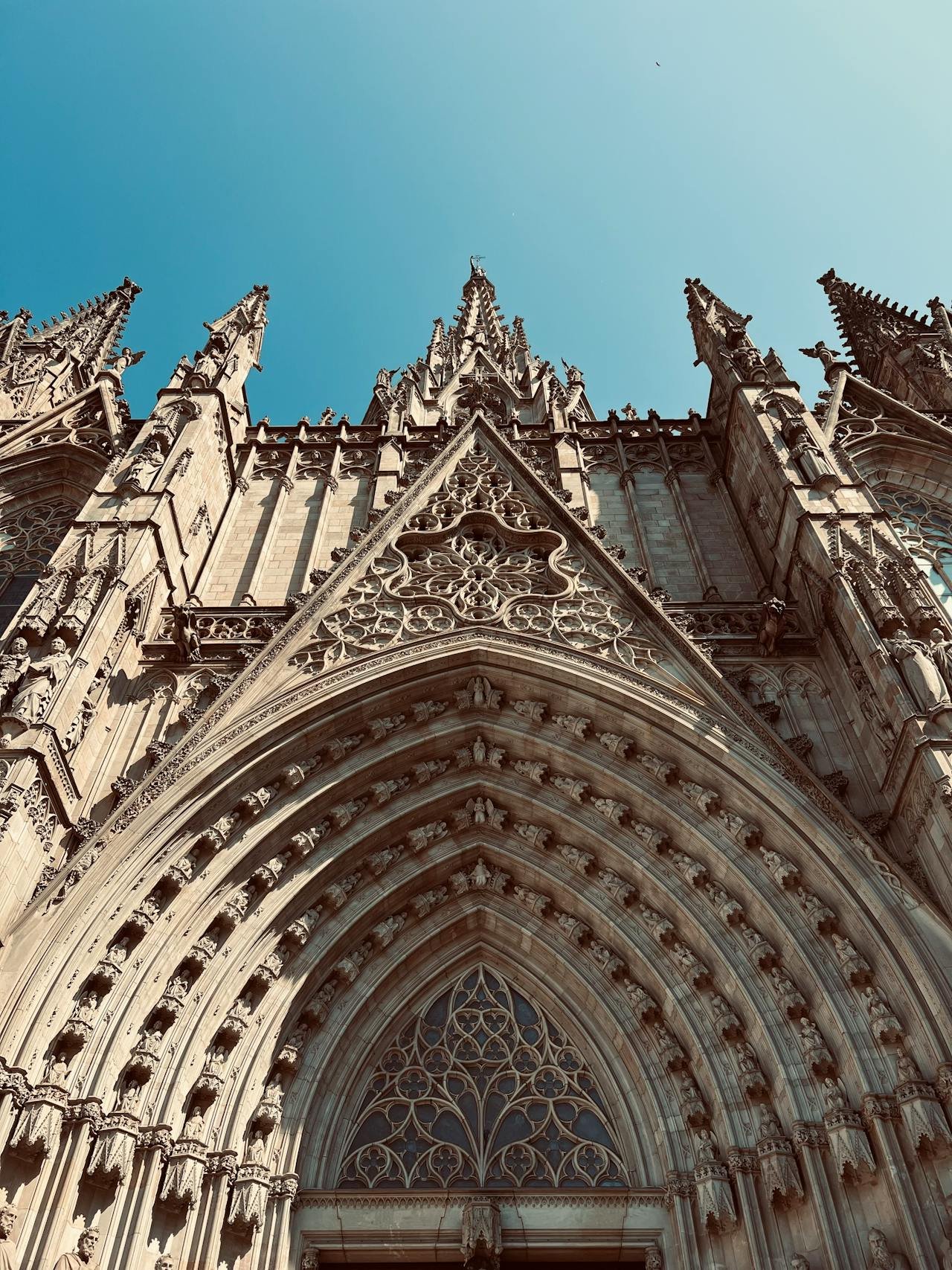
The square is dominated by Barcelona Cathedral. You don’t need to enter though. The exterior narrates the whole story. The Gothic front is 70 meters in height. Construction began in 1298. Workers didn’t finish until 1913. There are 615 years of architectural development in a single building.
Examine the specifications out of the square. All around, gargoyles overpower in all directions. Notably, each of them portrays various animals. Medieval constructors made these water spouts as dragons, demons, and mythical creatures. Dozens of niches contain stone figures. Erosion over hundreds of years provides them with a quality that cannot be found in modern imitations.
An even greater picture is in the side view. Go around Carrer del Bisbe. The flank walls are surrounded by flying buttresses at the cathedral. It is these engineering wonders that enabled Gothic constructors to build up to soaring heights.
Artisans made the cathedral up of ancient Roman columns. You can observe them concreted on the walls. A flock of white geese inhabits the cloister (which you can see through the gates). According to the medieval tradition, people needed 13 geese. They represent the age of Saint Eulalia when she was martyred. Barcelo keeps this custom 700 years later.
La Rambla (10:00-11:00)
La Rambla is the victim of its popularity. Everyone tells you to skip it. I’m telling you the opposite. Walk it proper. La Rambla is what Barcelona promises.
Majority of the travelers hurry along the middle. They avoid selfie sticks and street entrepreneurs and reject the whole boulevard as a tourist trap. But they are deprived of all that is good. La Rambla needs another strategy.
Start at Plaça de Catalunya. It is a huge square that links the ancient Barcelona with the modern Eixample. Take a slow stroll along the center which is lined by trees. Very slowly. You’re not commuting. You’re observing.
The boulevard breaks up into places. In each part, it has its own style. The higher part around Placa de Catalunya contains newspaper and flower stands. The vendors create bouquets geometrically. The colors form natural installations of arts. Take pictures of the exhibits. Speak to the vendors in case you speak Spanish. These stalls have been occupied in decades.
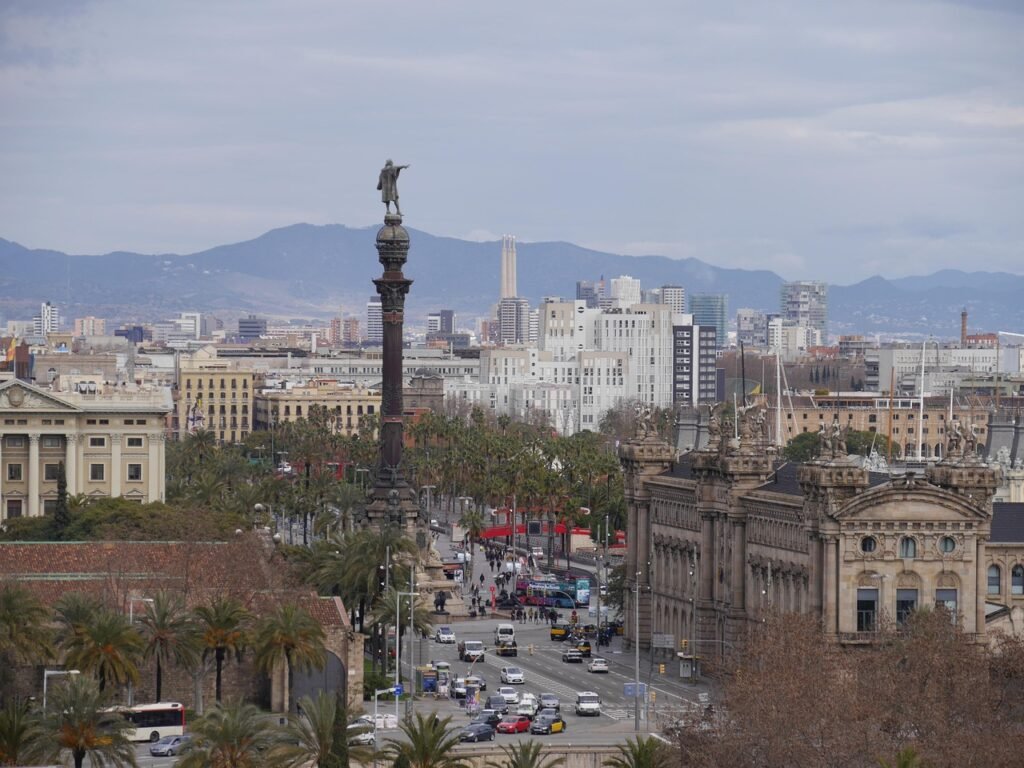
It has living statues on the way. Others develop extensive costumes and make-up. One of the Roman soldiers is portrayed in silver and is motionless. A floating yogi contradicts the law of physics. The quality varies wildly.
It has side streets every 50 meters. These are the true worth of La Rambla. Turn into Carrer de Ferran. Stores offer fans, ham legs, and so on. This street leads to Placa Reial. This is a beautiful square with only meters to the mess of La Rambla. This is where Gaudi designed the lampposts. His earliest commission in Barcelona.
Go back to La Rambla and go down. Liceu opera house is located at the central part. Its exterior demonstrates limited grace. season of opera is between September and July. Check the poster boards. There are free concerts that occur in the foyer.
La Boqueria market is on your right. We’ll explore it next. The Modernist entrance arch is the first to be noted. The front pavement mosaic is a circular one, created by Joan Miro. Majority of the people pass across it without examining it. Don’t be most people.
La Boqueria Market (Free to Explore) (11:00-12:00)
Sensory overload hits high in La Boqueria market. Colors attack you at first sight. The sellers put fruits in neat pyramids. Red strawberries. Yellow bananas. Purple dragon fruit. Each stall is an art, a piece of edible art.
The markets in Spain are social centres. This is where locals shop at least once every week. They greet vendors by name and discuss recipe ideas. They squeeze the products and discuss their quality. You are witnessing food culture. Spain does not have weekly grocery hauling. Spaniards buy fresh daily. Markets make this possible.
Notice what locals buy. They stock their bags with seasonal vegetables. Greens, tomatoes, peppers. Basic recipes in domestic cooking. This can be compared to tourist purchases. Ready-to-eat products are purchased by tourists. Locals buy raw ingredients.
The ready-to-go food booths make up the right side of the market. These booths prepare eggs, seafood and grilled meats. Tempting smells fill the air. The prices get close to restaurant levels. You can eat here. Many do. But you’re not spending today. Appreciate the aromas. Watch the cooking. Move on.
At around 11:30 the energy of the market is highest. Shoppers crowd every aisle. Vendors shout prices. There is intermingling in Catalan and Spanish. The noise level rises. The temperature climbs. Maximum intensity is achieved in the market.
This is the intensity which characterizes the experience. Life is concentrated in small spaces in markets. Everything happens at once. Selling, buying, talking, moving, cooking. You can feel the pulse of Barcelona here the fastest.
Break in Parc de la Ciutadella (12:00-13:00)
Your body needs rest by noon. There is a need to recover four hours of walking. The ideal place in order to reset is Parc de la Ciutadella. Get out of La Boqueria and head east. Head toward Arc de Triomf. The entrance of the park lies right behind. It will be around two kilometers.
Through enormous entrance gates in. The park opens before you. The amount of green space is 70 acres. To build this park, Barcelona destroyed a military fort in 1888. Nature, rather than military presence, was the choice of the city.

The Cascada Monumental is a 30 meter high monument. Water falls in numerous levels. This fountain is one that Gaudi worked on as a student. His initial input to the landscape of Barcelona. Sit on the steps below. Hundreds gather here daily.
The park buildings are aesthetically pleasing. The forests of the old arsenal are occupied by the Catalan Parliament. It is red in its brick, as opposed to the green environment. The Natural History Museum is also located opposite.
Cuitadella puts your body back to life in half a hour. Your feet stop aching. Your mind clears.
Walk Toward the Beach (13:00-14:00)
Begin afresh in the park, and turn towards the east, towards the Mediterranean. The beach is at a distance of two kilometers and exhibits numerous faces of Barcelona.
Exit Ciutadella adjacent to the Arc de Triomf, a red-brick Arch that was constructed in 1888 to host the Expo. Pass through the arch and take the boulevard which runs directly towards the sea.
The buildings evolve as you pass by with modernistic buildings. The Vila Olímpica, constructed in regard to the 1992 Olympics, emerges on the right. The city repurposed the waterfront and transformed former industrial districts to residential communities and redeveloped its relationship with the sea.
The street art becomes more common. There are massive murals on the walls, abstract designs, and social messages. The law allows artists to create a population culture in Barcelona, where the street-art movement is as strong as any metropolitan in Europe.
Pull up in front of a golden metal structure, which is a fish sculpture by Frank Gehry and rises close to the beach. Made during the Olympics its scales shine under the sun.
Palm trees surround the last area, and visitors see the promenade. The waves are crashing, seagulls are screaming; the sound of urbanity is disappearing and the sounds of the beach are heard. Barcelona lies at the convergence of the mountains and the sea, which reflects in a small distance of 100 meters, allowing one to walk through ecosystems.
Barcelona Beach Time (14:00-15:30)
Before you the Mediterranean is diffused. Barcelo Beach is extended on both sides over miles. You’ve reached the sea.
The nearest and the most popular one is Barcelona Beach. It is also the most vibrant and tourists fill the sand, there are vendors selling drinks and snacks and music by beach bars. It is very high, but anarchic energy.
Go southward into Nova Icaria where there is a cooler air. Travelers are less, more local families and the sand is clean. Even a ten-minute walk is going to make a difference.
Swimming is free, there is no entrance fee to the Mediterranean and waves are accommodating to everyone. It is a good walk or better yet without having to swim. Waves surging around your feet cool the legs, and the rhythmical movement relaxes. Numerous sightseers merely walk and wade -that is all.
Barcelona lifestyle is embodied in the beach. All in the city, sun, sea, and relaxation. This mixture is rare in other cities; the majority of them have to travel a long way to access a beach. Barcelona has incorporated the seashore in its city life – only a 90-minute stroll out of the Gothic Quarter.
Strolling around the Gracia Neighborhood (15:30-17:00)
Get out of the beach before 4 pm and head to Gracia which is where most of the tourists fail to explore.
Stroll either on Carrer de Balmes or, when you are exhausted, the metro to Fontana. I would suggest walking since it would allow you to witness the transformation of modern beachfront to the traditional residential streets.
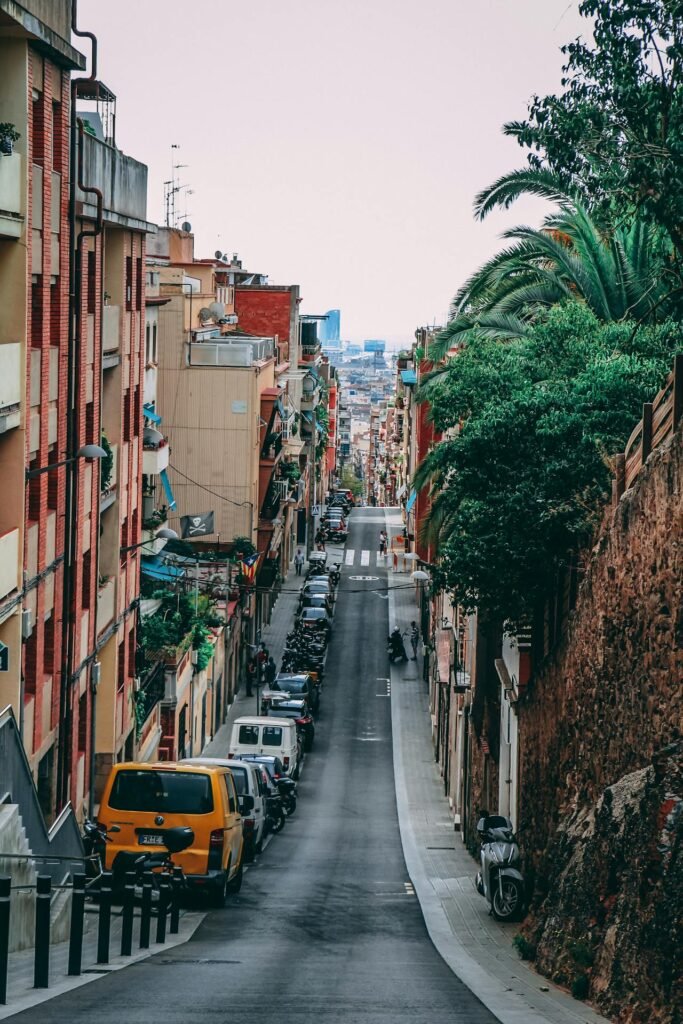
Start at Plaça de la Vila de Gracia which is the main square of the neighborhood. It is a clock tower of 1862 with cafes and welcoming locals in the center.
The plaza culture is the main focus of Gracia. There are dozens of small squares in the neighborhood, each of which has its own atmosphere: Plaça del Sol is the home of party-goers, Plaça de la Virreina is the home of families. Pass to see the differences.
Modernist constructions conceal all over Gracia. Casa Vicens is located in Carrer de les Carolines, which was the first house project of Gaudi. It is also influenced by the Mudejar and its exterior is covered with colourful tiles. The building transformed into a museum in 2017, although one can observe its architecture without having to enter the building.
Montjuïc Free Viewpoints (17:00-18:30)
You’ve walked 10 km. Now you start climbing. Montjuic is a hill 173m high above Barcelona. The better up you go the better the view is.
Begin at Plaça d’Espanya. The walk begins with the Venetian Towers. Builders made these columns of red brick and outlined the ascendancy. They constructed them in the 1929 International Exposition and copied Campanile di San Marco of Venice. Walk between them.
It is in the hillside. It is an enormous structure that we cannot neglect. Today you shall not visit but the exterior.
Keep on climbing beyond the museum. There are different perspectives of Montjuic and each has its angle. Olympic Stadium is in the middle of the mountain. It was constructed in 1992 Olympics and it is free to walk around.
The castle tops the top of Montjuïc. It dates back to 1640 and contains military history.
The sunset is near, the golden hour starts. Light turns magical. The buildings are lighted up; the Mediterranean is enlivened with orange and pink. It is what photographers refer to as the decisive hour, and they are correct. Everything looks better.
Magic Fountain of Montjuic (18:30-19:30)
Down to Plaça d’Espanya. The Magic Fountain waits. It is the most common free evening attraction in Barcelona that attracts thousands of people each night.
Arrive early. The best spots fill up fast. Stand on museum steps to have better views or stand directly by the fountain to gain the immersive experience. Both work. Choose what fits your desiring taste of photography or even feeling.
The fountain dates back to 1929. It was constructed by Barcelona in the International Exposition. The engineers developed the most advanced technology in water and the system remains in operation after 95 years. Such longevity demonstrates the dedication of the city to good public works.