


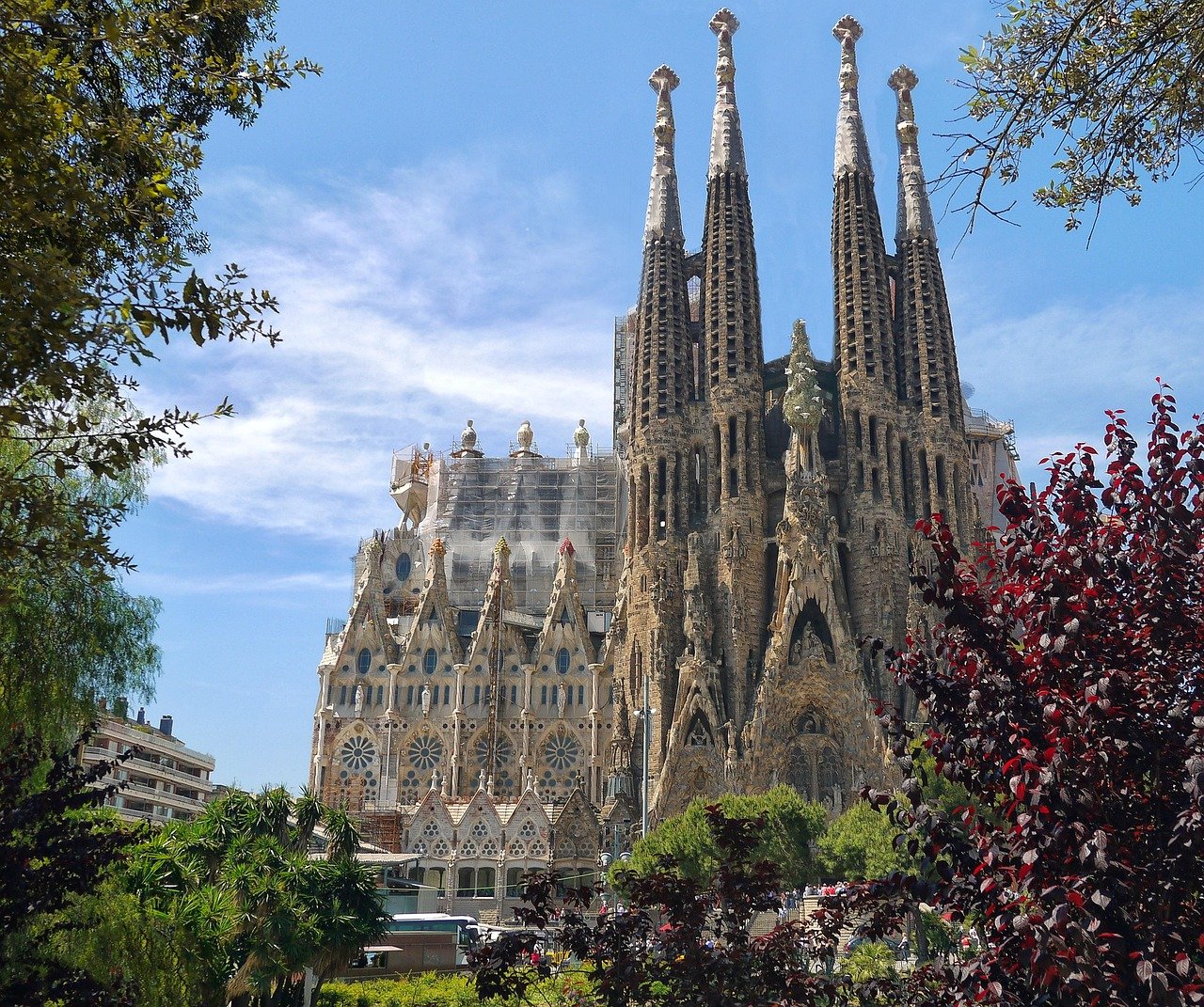
A lot of travelers come out of Sagrada Familia exhausted rather than rejuvenated. Very long queues, incorrect arrival times, and a full day in Barcelona may hurry the experience. Consequently, they fail to see the specialty of the basilica.
This is a guide to visit the Sagrada Familia in a relaxed and significant manner. Having only a single day in Barcelona, you will be able to have a relaxing trip. The guide includes information on a tip of timing, strategies of pacing, and itinerary choices that are realistic.
Sagrada Familia is not such a fast visit. It has stained glass through which light enters and exits the building as the day progresses. The overwhelming mass is able to saturate you. The symbolic details are present in each column and each ceiling. The basilica is a place that is emotionally and intellectually stimulating, inside. It is helpful but more important to feel.
Map
History
It began construction in 1882 (by architect Francisco de Paula del Villar). In 1883, Antoni Gaudi took over the project and transformed it into an avant-garde one. He considered the basilica as his mission in life, and spent the last years of his life working on it. He stayed on the location and perfected everything.
His design is also based on the geometry of nature, the columns are the branches of trees, the rays of light are the leaves on the canopy of the forest. Each facade is covered in Biblical symbolism. The Nativity Façade glorifies birth and life; the Passion Façade bravely challenges suffering and death: Glory Façade alludes to eternal glory.
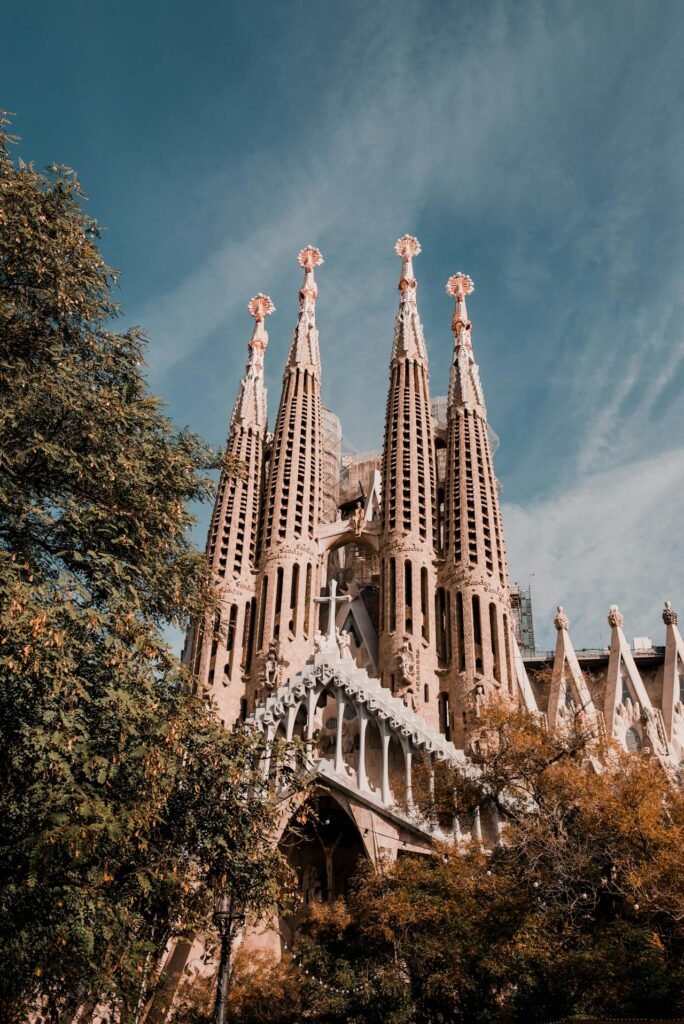
It is still under construction, and it has no government assistance other than private donations. The architects use the original plans and models created by Gaudi which were destroyed in the Spanish Civil War but they have been rebuilt. The disproportion is present due to the fact that the building is literally incomplete. It will be finished sometime around 2026 but the incompleteness of that has a purpose: it is an expression of how Gaudi saw the building as an ongoing faithful process. You are looking upon a 140 years old work in progress.
How Much Time Do You Really Need?
Arrange to spend quality time, rather than minimum hours. The following is the realistic breakdown of the duration of each component of the visit. You can choose to visit the tower. It needs extra 30 minutes. The ideal total is 1.5-2 hours. There are a lot of travelers who attempt to fit everything within 30-45 minutes. Such a hurry may make you feel tired.
When to Visit without Crowds?
Choose wisely. The earliest periods to arrive in the day are the most advantageous, when crowds are less and soft morning light filters through eastern windows, and just in the afternoon, when warm golden light falls upon the interior and crowds somewhat reduce.
Crowded times to visit would be during late morning hours between 10am and 12pm when tour groups visit, and during peak hours between 12pm and 2pm when heat subjects people.
How to Visit Not Feel Rushed
This is the point where the majority of visitors fail. They try to see everything and race. They read every sign. Here’s a better approach.
Find places to pause and sit. Pews line the interior. Sit down. Look up. Watch the light move. Make time for yourself five minutes. The vast majority of the visitors do not stop walking. There are three things to pay attention to: stained glass light, the ceiling vaults, and the forest of columns. These form the needed Sagrada Familia experience. Everything else is bonus.
The column details are missed by most of the people at eye level. They do not pay attention to the fact that columns divide like trees. They pass by the smaller chapels. These are latent dynamics that are rewarded. Read a few signs for context. Then put the guide down. Just observe.
Choose 3-4 focal moments. There is perhaps the main nave ceiling, the Nativity Facade by the use of glass, one apse chapel and the crypt. Engage in all of these as opposed to scanning it all.
One-day Barcelona Itinerary
One day requires choices. These are three methods.
Option 1: The Sagrada Familia visit has to be ticked at 9:00 AM and 1.5-2 hours. At 11.00 AM, passage through Avinguda de Gaudi up to Hospital de Sant Pau. At noon have lunch in Gracia neighbourhood. Spend your afternoon in Gothic Quarter, La Rambla or beach.
Option 2: First of all explore Gothic Quarter. Have lunch at 1:00 PM. 3.00 PM Visit the Sagrada Familia 1.5-2 hours. At 5 pm, see the sun going down at Park Guell or Bunkers del Carmel.

Option 3: will make the Sagrada Familia your one and only big sight. Begin with pastries and coffee in Sant Antoni. Go to the basilica 10: 00 a.m. take 2 hours. Have a protracted lunch at 12.30 PM in Gracia. Use the afternoon to do the relaxed walks around the neighborhood, go to market, or visit the beach.
Nearby Attractions
Keep your day manageable. The locations of these spots are near the Sagrada Familia.
Another Modernist masterpiece is in Hospital de Sant Pau, which is within walking distance (10-15 min). Walk the exterior grounds. Stunning, not as busy, and relaxing following Sagrada Familia. Budget 30 minutes. The path that connects the two sites is Avinguda de Gaudi which is lined with trees. Visit such cafes as Flax and Kale or Federal Cafe. Ideal for coffee or lunch.
Gracia is a neighborhood that is located 15-25 minutes on foot or short metro. Experience the real Barcelona in local shops, Placa del Sol and tapas bars where no one will notice a tourist among the locals. Wander without agenda. Passeig de Sant Joan is a lovely street with bicycle paths, seats, and vitality of the neighbourhood. Perfect for decompressing. El Born is characterized by the medieval streets, church of Santa Maria del Mar and restaurants. Best visited in afternoon in case Sagrada Familia visited in morning.
Gracia lunch and afternoon in El Born go well with Morning Sagrada Familia. Afternoon Sagrada Familia in Gothic Quarter works after morning.
How to Get There
There are several modes of transport that are available to the sagrada familia. Select depending on the place of stay.
The most widespread one is the metro. Both lines L2 (purple) and L5 (blue) end at the station of Sagrada Familia. The basilica is right right out of the exit. Trains run every 2-5 minutes.
The buses 19, 33, 34, 43, 44, 50, and 51 have stops in the neighbourhood of the basilica. This would be handy in case of originating in areas with no direct access by metro. Same ticket as metro. Walking is another option. It is a 15-20-minute south of the Gracia neighborhood. Planning 10 -15 minutes, Passeig de Sant Joan.