


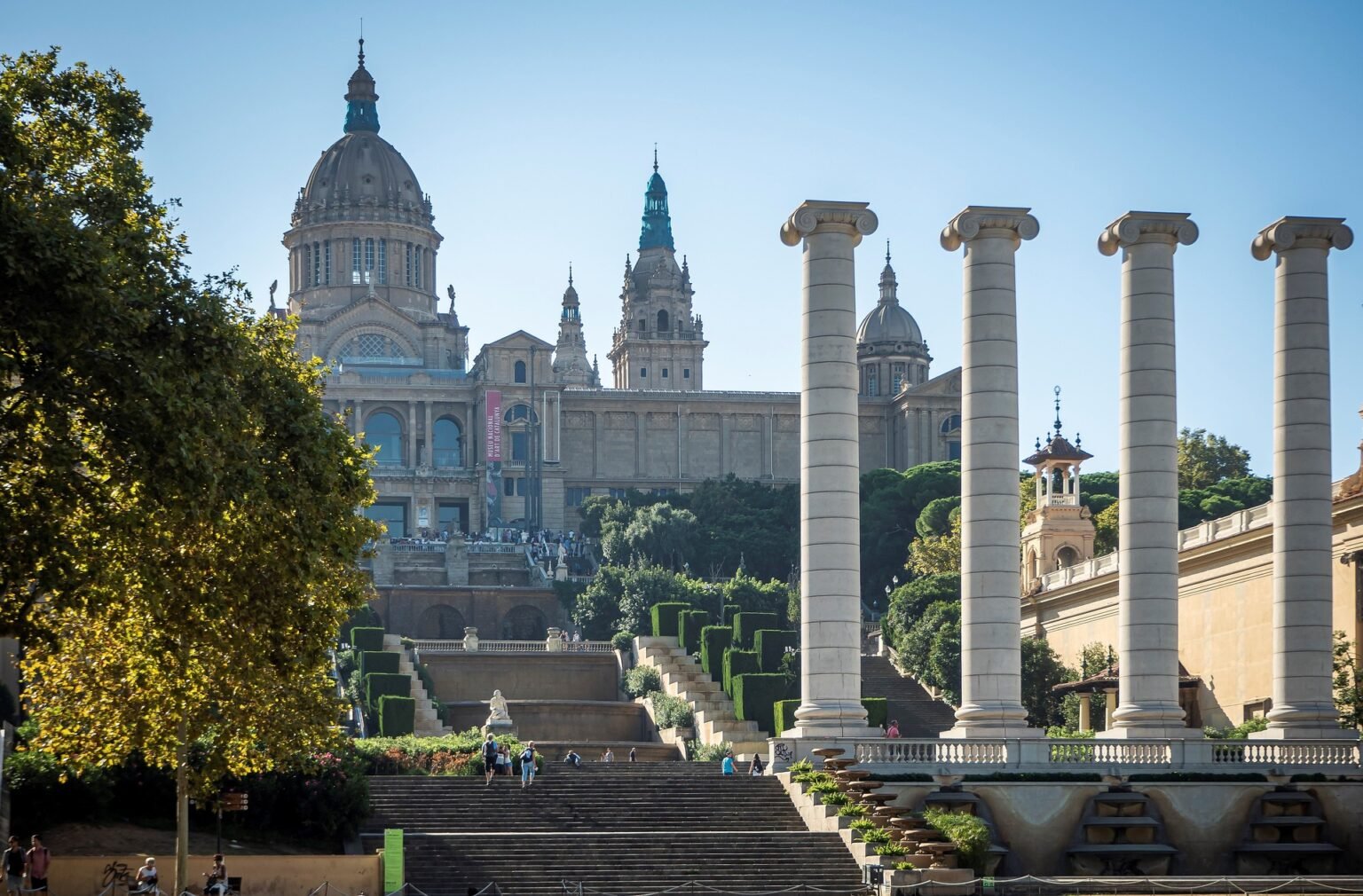
National Art Museum of Catalonia (MNAC) is one of the most remarkable museums of Barcelona. Yet travelers often skip it. The building looks massive. The collections are across centuries. Most tourists believe that they should have a complete day indoors.
They’re wrong.
You do not have to see all that. This guide will direct you on a tour of the highlights in MNAC in 2-3 hours. You will have the finest Romanesque frescoes. You will have breathtaking city scenes. And you will also be able to spend time in the external areas of Montjuic and other wonders of Barcelona.
MNAC is located on the hill of Montjuic in the great Palau Nacional. The museum features Catalan medieval art up to the early 20 th century. It possesses a Romanesque collection that is appealing to art historians all over. The Gothic and Modernista parts complete the trip to the artistic development of Catalonia.
This museum is a necessity of art lovers. The cultural setting is valued by history enthusiasts. Tourists such as tourists take pleasure in the architecture and scenery. When you are in the mood to have slower cultural experiences, this museum serves it right.
Map
History
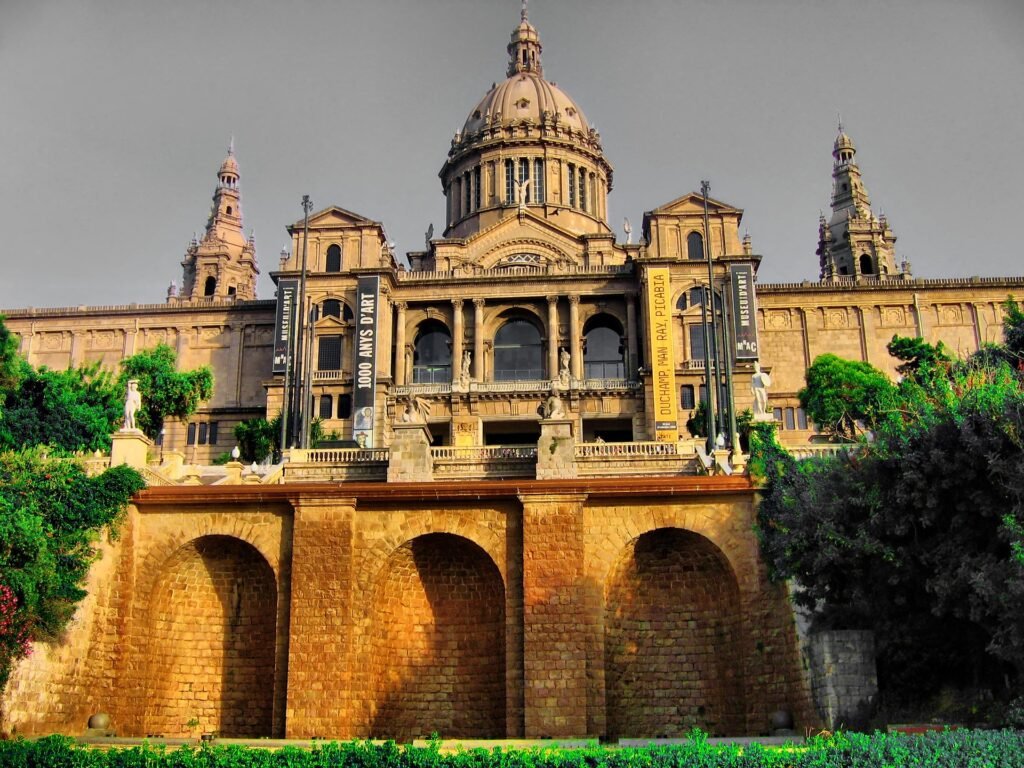
The International Exposition in Barcelona inaugurated National Palace in 1929. It was built in a massive structure in the style of Spanish renaissance by the architects Eugenio Cendoya and Enric Cata. The palace was the center of the skyline of Montjuic.
The museum formed gradually. The building was opened in 1934 and it started to store art collections. The Romanesque was the revolutionary one. Historians had found medieval frescoes rotting in isolated churches in the Pyrenees. Teams removed whole paintings from walls with a lot of care. They painted them on canvas in the strappo method. Those masterpieces that they rescued turned into the crown jewels of MNAC.
The museum grew during the 20th century. In 2004, it absorbed Barcelona Museum of Modern Art. Collections merged. Galleries reopened. Nowadays, MNAC holds more than a millennium of Catalan artistic identity under a single chronological account.
This conservation is a very important work. Numerous ancient church locations have been ruined or destroyed. MNAC preserves the pieces of the Catalonia medieval heritage. The museum links the modern Barcelona with the Romanesque roots. It narrates tales which would otherwise disappear.
What Makes MNAC Unique as opposed to the other museums in Barcelona?
MNAC brings something that the other museums in Barcelona do not provide. The Romanesque frescoes have no other location of the size. These are colorful medieval paintings that tend to conceal in mountain chapels. In this case, you see them on the level of eyes in diffused light.
The museum narrates a whole story. Vincent Walks centuries in logical fashion. Romanesque fades away to Gothic. After medieval comes renaissance. Modernisme caps the journey. Not many museums arrange collections this evidently.
MNAC does not attract large crowds as compared to Picasso Museum or MACBA. The galleries feel spacious. The terrace provides the Barcelona scenery without the traffic jam of Part Park Guell.
How long do you require to spend at MNAC?
A visit session lasts 90 minutes at least. You will have the Romanesque touches and one or two more spots. This is applicable when you are pressed in time.
The ideal visit lasts 2-3 hours. You will also be visiting the principal collections at leisure. You’ll take a terrace break.
In Case You Have Only a Few Hours
Romanesque Art Collection
Start here. The largest treasures of MNAC are in the Romanesque rooms. The frescoes of the Sant Climent de Taull are overwhelming the main hall. Christ Pantocrator looks into the apse with Byzantine penetrating eyes. It glowed with the colors even 900 years later.
Go down through the side chapels. Both frescoes that Pyrenee churches have rescued are included. Medieval artists employed the art of the middle ages in simple figures to educate illiterate audiences about Bible stories. The feeling spans over centuries.
And the wooden altar frontals miss not. These painted panels gave adornment to small mountain churches. Their folk-art nature endears the visitors when they are intimidated by the formal religious art.
Romanesque 45-60 minutes.
Gothic Collection Mainstreams
The Gothic galleries depict the expansion of Catalonia during the Middle Ages. Altarpieces were larger and fancier. Gold backgrounds shimmer. Saints multiply. Detail increases.
Pay attention to Jaume Huguet and Bernat Martorell. They have Catalan Gothic at its best in panels. The haunting images that the anonymous Master of Pedret created are worth watching.
Spend 20-30 minutes here. Stop at those pieces which strike your eye.
Renaissance & Baroque
These collections record the relationship between Catalonia and European trends in general. The quality varies. There are some paintings which are worth noting.
It is worth seeing: the examples of the Italian influence and the portraits of Catalan nobility. Pass when you are in a hurry: religious clunks and excessive gloom paintings.
Give 15-20 minutes to those who may be interested, 5 minutes to those who may not.
Modern Art Rooms
The chronological tour ends in the Modernisme and early 20 th century sections. You will know names in case you have traveled to Barcelona. It is Ramon Casas who painted the cafe society. Catalan landscapes were photographed by Santiago Rusinol. Like in the furniture and decorative art, the organic forms Gaudi employed are revealed.
When you are feeling energetic, then spend 20-30 minutes here.
Most Ideal Times to Visit
The least number of visitors is during weekdays mornings. Arrive when doors open at 10 AM. Until a half-past eleven you will have galleries almost to yourself.
Tuesday-Thursday are the most appropriate. There are locals and tour groups during the weekends. The museum is closed on Mondays between October and April.
During summer, tourists increase during the day. The city provides better conditions during May, June, September, and October. During the winter months, they guarantee space and reduce the outdoor attractiveness of Montjuic.
One day Barcelona tourists: morning MNAC, afternoon Montjuic. To do Montjuic-based itineraries: begin with the outdoor places, and go to MNAC in the middle of the afternoon when you have to get indoors.
Nearby Attractions
The location of MNAC is close to the best locations in Montjuic.
The hill of MNAC is topped by Montjuic Castle. The castle provides the most panoramic scenes of Barcelona. Walk up (a 20 minutes walk, steep) or ride the cable car.
Joan Miro Foundation is located on the southern slope of Montjuic, 15 minutes away of MNAC. The contemporary structure contains the colorful works of the artist. Both museums are coupled by art lovers. The vast majority of visitors who come on a one-day basis make a choice of the two.
Green rest below MNAC is in Jardins de Laribal and Mossen Costa i Llobera Gardens. Shaded paths wind downhill. Cactus gardens take out the visitors.
Magic Fountain of Montjuic is located at the very bottom of the hill and underneath MNAC. Water, light, and music are combined in evening shows. Look at the schedule and then make the plans. They also hold winter shows during weekends.
Poble Espanyol (Spanish Village) is a reconstruction of the Spanish architecture within a single complex. Some visitors are satisfied with the open-air museum. Others find it artificial. Located 15 minutes west of MNAC.
How to Get There
Metro
The nearest subway station is Espanya (L1 and L3). Exit onto Placa d’Espanya. Walking time: 10-12 minutes moderately people walking uphill.
Bus
Bus 150 is a route that passes through the entrance of MNAC. It proceeds around Montjuic. The museum is also served by Bus 55 at different points of the city.
Walking
The way is 12-15 minutes long walking out of Placa d’Espanya. You will take escalators that are placed close to the Magic Fountain.