


I won’t sugarcoat this. Seville deserves more time.
- How to Use This Itinerary
- Before You Start
- Breakfast (08:30-09:15)
- Seville Cathedral (09:15-10:45)
- Giralda Tower (10:45-11:45)
- Santa Cruz Barrio (11:45-12:30)
- Real Alcazar of Seville (12:30-14:30)
- Lunch Break (14:30-16:00)
- Strolling River Guadalquivir (16:00-16:45)
- Triana Neighborhood (16:45-18:00)
- Coffee or Gelato Break (18:00-19:30)
- Sunset Walk or Viewpoint (19:30-21:00)
- Optional
This city breathes history. Every corner hides a story. The air is filled with orange blossom and jasmine. Flamenco beats vibrate in the dark in the narrow streets.
The truth? The historic centre of Seville is very small. It takes 20 minutes to walk between the cathedral and Triana. The large locations are concentrated. No metro rides. No long bus journeys.
A day makes you lose your soul to Seville. You will behold the cathedral which was 100 years long in construction. Thou shalt walk through gardens where was King walked. You will have a taste of tapas as locals do.
Know Before You Go
This is a guide that is based on depth, rather than quantity. You’ll move with purpose. You will get to know the true beat of Andalusian life.
Will you see everything? No. Do you know why travellers in love fall in love with Seville? Absolutely.
You will be familiar with this city by the sunset. The towers of light in medieval times. The taste of salmorejo. The beat of castanets somewhere in a concealed tablao.
I can say it only takes a day to experience the magical atmosphere of Seville.
How to Use This Itinerary
This handout is recommended to first-time visitors who are not used to spending much time in the city. I created it to be the perfect vacation of travelers who aim at having the most impact and the least stress.
It is a totally walking route. You’ll cover about 6-7 miles. The pace is moderate. We build in rest stops.
Start early. The 8.30 AM start makes you have breathing space. You will be crushing out audiences at large destinations. You will have a full evening of the energy.
Special book two things ahead: Seville Cathedral tickets (about to skip queues) and Real Alcazar tickets (enabling entry). Book these 2-3 days ahead.
Swaps are possible. Hate climbing stairs? Skip the Giralda. Want more tapas time? Cut the Triana walk short. Exhausted after lunch? Skip the river walk and rest.
Seville does not have the best moments that are planned.
Before You Start
The historic center of Seville is located on the eastern side of the river Guadalquivir. The design is self-explanatory and easy to understand.
Everything is rooted in the cathedral. It elevates itself in the core of the old town. Its Giralda tower can be seen almost everywhere. Start with the landmark of this country.
There are three neighborhoods that are important to you in a single day. The cathedral is surrounded by Barrio Santa Cruz. This is postcard Seville. White walls. Hanging flowers. Hidden courtyards. The medieval streets of the Jewish quarter constitute a lovely maze.
El Arenal borders the river westwards. This was the historical port district. Here the culture of bullfighting exists. The Torre del Oro is the southern border.
Triana is located across the river on the West bank. Working-class roots. Ceramic tradition. Authentic tapas bars. This is the place where Sevillanos really live.
The whole pedestrian core is approximately 1.5 miles in perimeter.
Breakfast (08:30-09:15)
Start light. Unhealthy breakfast keeps you seated on a chair when you should be walking. Search a conventional pastry-shop or cafe.
Get it like a Sevillano: tostada con tomate (toast with tomato and olive oil), cafe con leche (coffee and milk) and fresh orange juice. In some of the cafes, they have churros con chocolate.
Streets around Plaza Nueva, Calle Sierpes (pedestrian shopping street) and any cafe with locals inside are the best areas to have a breakfast.
Seville Cathedral (09:15-10:45)
You are standing in front of the biggest Gothic cathedral of the world.
The construction of this building took 100 years. It stood on the foundation of a large mosque. The constructors retained the courtyard and minaret of the mosque. Then they put on a cathedral so great it was illogical.
The central nave is 130 feet above. The ray of light goes through stained glass. The room it occupies is immediately awe-inspiring. The tomb here is that of Christopher Columbus. Four kings carry his casket. The symbolism runs deep.
It has the largest wooden altarpiece in the world, the main altarpiece (retablo mayor). There are 44 relief panels covered with gold leaf. It took 80 years to carve these scenes by craftsmen.
Capilla Real (Royal Chapel) is the place where Ferdinand III rests. In 1248 he conquered Seville under Moors.
45-60 minutes here is realistic. Don’t rush. but, also, do not hang about in all the side chapels. Move through the nave. Pause at the altarpiece. Visit Columbus’s tomb. Circle the chapels quickly.
Giralda Tower (10:45-11:45)
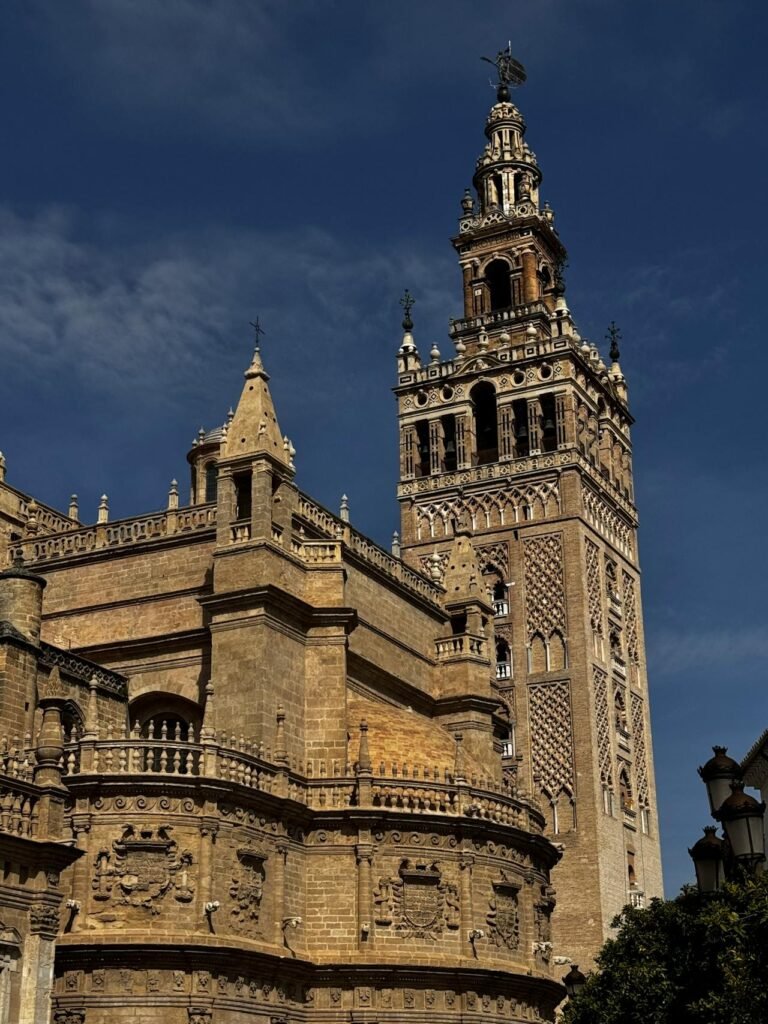
The tower of Giralda is located on the cathedral. This is your decision point.
There are 35 ramps to climb (no stairs). They spiral upward 104 meters. The climb lasts 15-20 minutes according to the fitness and the crowd.
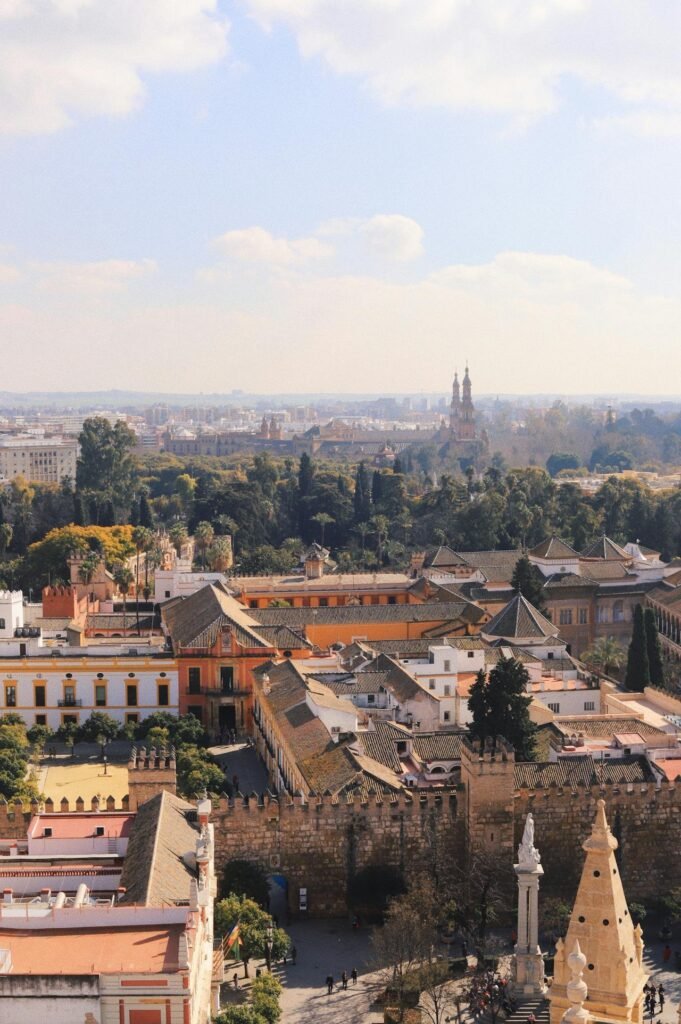
The payoff is in panoramic views all around Sevillian roofs. You look out upon the whole urban plan. The white buildings. The river. The bullring. On the sunny days, the rural world outside. The ramps are not as difficult as the stairs but require effort.
This was the minaret tower of the mosque. On these ramps, Muslims rode horses to invoke prayers. And now you walk in areas that were formerly ascended by horses.
Santa Cruz Barrio (11:45-12:30)
Step into the Jewish quarter. The temperature is reduced by 10 degrees. Narrow streets block the sun. The rest of the light is reflected in the white walls. There is something new in every turn.
Don’t follow a map here. Seriously. Just wander.
Be aware of the courtyards (patios). These are concealed by Sevillanos behind walls. Tiles. Fountains. Flowering plants.
Orange trees line the street. During spring the smell is overwhelming. During winter, locals do not pick the oranges. They are bitter. Locals use them as marmalade.
The grilles of the iron windows are not a decoration. They’re history. Lovers used to talk with the help of these bars.
The plazas are opened abruptly by small squares. Plaza de Dona Elvira. Plaza de los Venerables. Sit for five minutes. Watch local life happen.
The center of the neighborhood is Callejon del Agua (Water Alley), Calle Vida (Life Street), and Plaza de Santa Cruz and are worth discovering.
You will find flower pots fixed on walls. Hanging geraniums. White walls and red flowers. This is the typical aesthetic of Seville.
Groups of tourists are congregated in Patio de Banderas. Walk past them. There is no one in the best corners.
The time is different in Santa Cruz. You might spend 20 minutes here. You might spend an hour.
Going out of the Plaza del Triunfo. The Real Alcazar awaits.
Real Alcazar of Seville (12:30-14:30)
It is the masterpiece of Seville. Not the cathedral. The Alcazar.
You are going into the oldest royal palace in Europe. Spanish kings remain here, when travelling to Seville. The components of this complex date back to the 10th century.
The Alcazar is a mixture of Islamic, Mudejar, Gothic and renaissance architecture. You can find 1,000 years of art development in a single place.
This was the main palace commissioned by King Pedro I in 1364. He hired Moorish craftsmen. They designed rooms that are to rival the Alhambra of Granada.

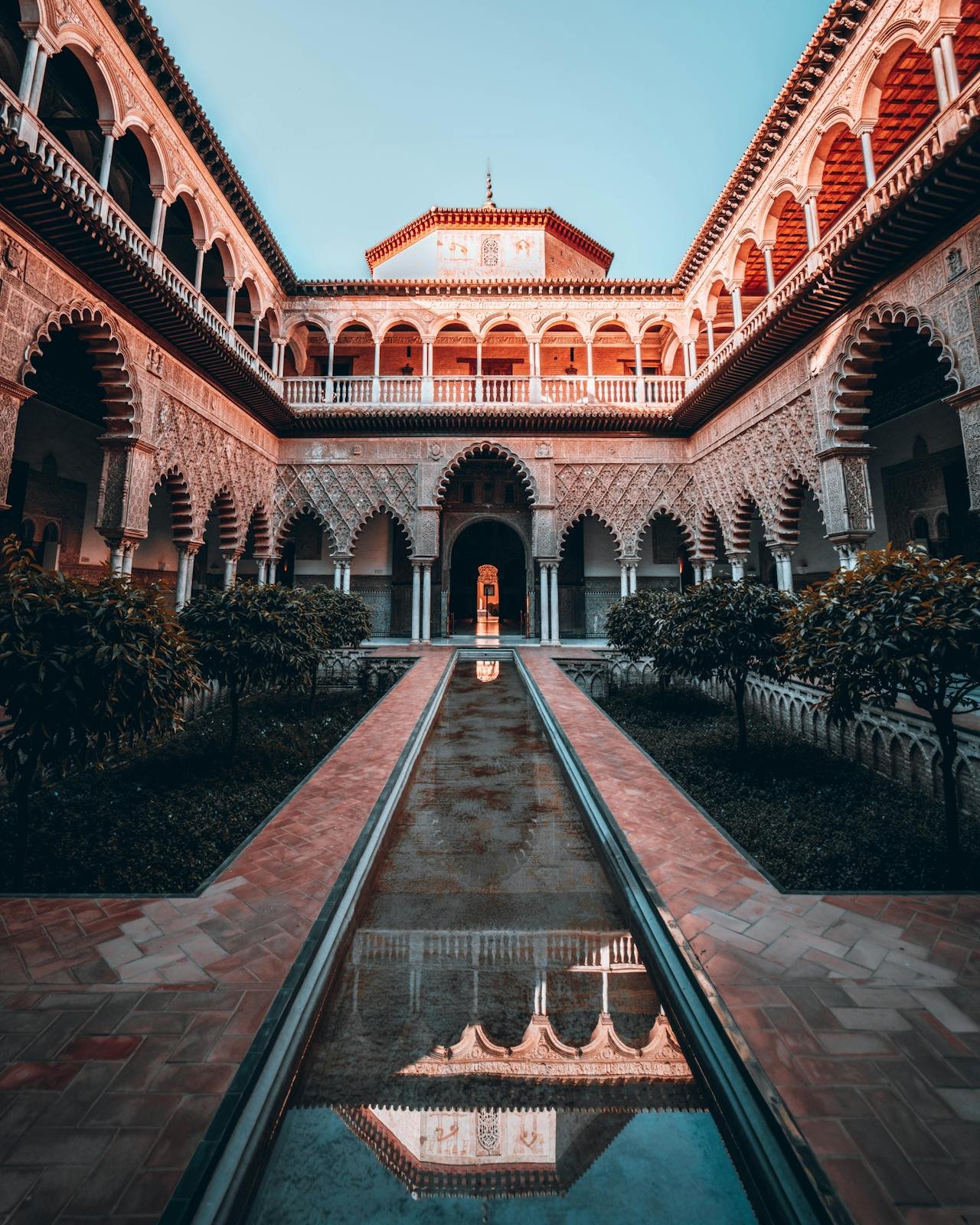
The Patio de las Doncellas (The Courtyard of the Maidens) has reflecting pools, finely decorated tiles, as well as carved plaster. Such a court characterizes Mudejar beauty.
The Salon de Embajadores (Hall of Ambassadors) is the royal palace. A golden dome soars overhead. Geometric patterns are shown on every surface.
The patio de las Munecas (the Dolls Courtyard) is small and subtle. There are carved faces (the “dolls”) in the columns.
The gardens also require the same time. Get out of the palace into acres of beauty. Cypress trees. Orange groves. Fountains. Peacocks roam freely.
Balance palace and gardens taking 45 minutes to be indoors then 45 minutes outdoors. This makes you experience the full experience without being tired.
Plan for 90 minutes minimum. You can easily spend three hours here. But remember you have one day.
Lunch Break (14:30-16:00)
The most convenient lunch spots in the neighbourhood of the Alcazar are the streets along Calle Mateos Gago, Plaza del Salvador and cross streets along Calle Sierpes.
Salmorejo is a cold tomato soup which is thicker than gazpacho with jamon and hard-boiled egg as its toppings. It’s refreshing in heat. Order espinacas con garbanzos which is the special tapa of spinach and chickpeas in warm spices in the city of Seville. Order jamon iberico, Spanish ham. Fried fish in a light batter, small fishes and squeezed lemon are known as pescaito frito which comes out crisp.
Walking of the resume after 4 PM during summer. It is possible to begin at 3.30 PM in spring or fall. Winter allows 3 PM.
Strolling River Guadalquivir (16:00-16:45)
Exit your lunch spot. Head west toward the river. The walk takes between 10 and 15 minutes to most lunch places.
Torre del Oro (Golden Tower) is one of your destinations. This watch tower was used to protect the river port in the 13 th century. The tower was named after golden tiles which were used to cover it. Now it’s plain stone.
It is possible to enter the naval museum. I suggest skipping it. The exterior tells the story.
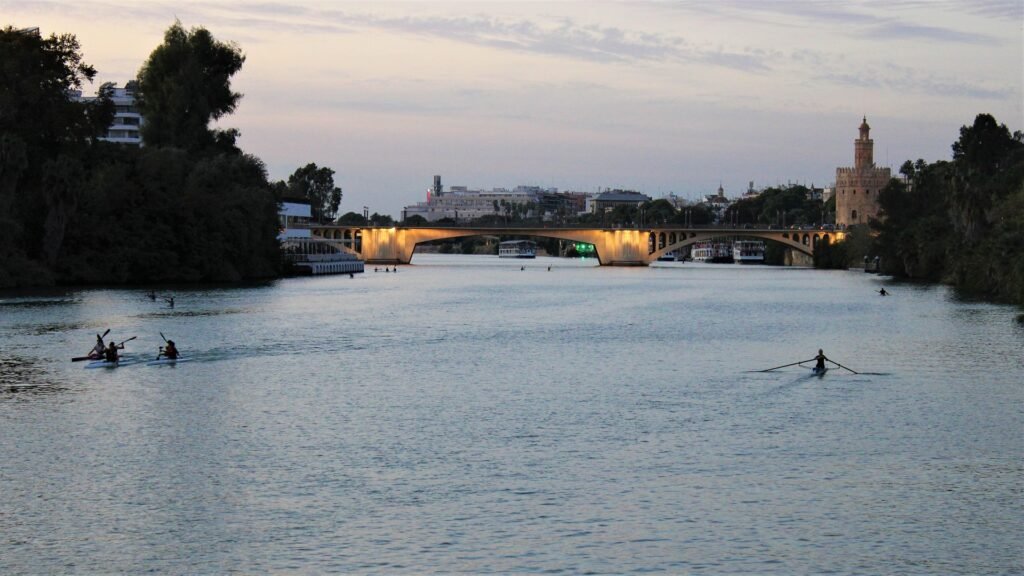
The river views matter here. This is the river that linked Seville with the Atlantic. The ships went out of this to the Americas. Wealth flowed back. It is through this water route that the city was developed into its golden age.
Look across to Triana. That’s your next destination.
Move northwards in the riverside prominade. There is shade of palm-trees. Benches offer rest spots.
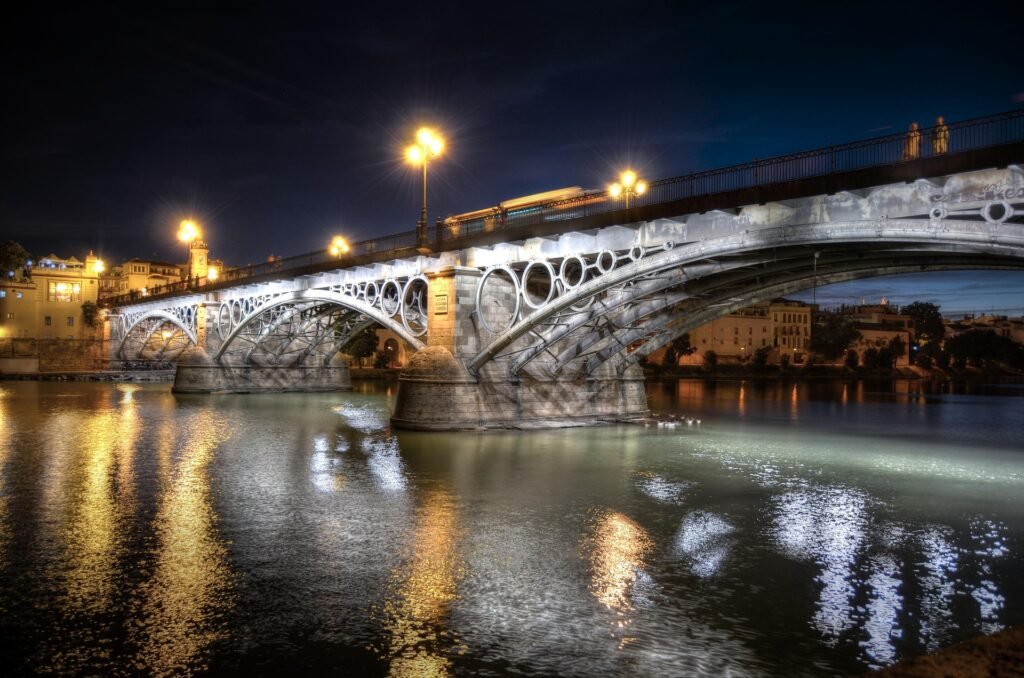
Triana Bridge was built in 1852. Iron construction. The original concrete bridge between the two sides of Seville.
Triana Neighborhood (16:45-18:00)
Cross the bridge. You have gotten into other Seville.
Triana feels grittier. More authentic. Less polished. And this is where the working people have always resided.
Triana is the tradition of ceramics. The community manufactured the best tiles in Spain throughout centuries. Kilns lined the riverbank. Craftsmen mastered their art over the years.
Triana is made up of Calle San Jacinto as its artery. Walk this street. Notice the shops. Ceramic shops remain in existence. You will find tiles, pottery and tablewares in the classic designs.
Mercado de Triana (Triana Market) would take 15 minutes. This redesigned market hall has food stands and tapas bars. The vibe is local. Prices are reasonable.
It has inside fresh produce stalls, jamon bars where they slice the meat by hand, cheese bars and small bars where they serve locals.
The marketplace is pumping, busy, and as tangible. This is Seville without tourism make-up.
Iglesia de Santa Ana is the oldest church of Seville on the southern end of Triana. Built in 1276. The interior is plain though touching.
Betis Street is located on the east side of the river, Triana. There are bars and restaurants along this strip. The cathedral is opposite the views of the water. Prices are higher here. You had better leave this street to another day.
Coffee or Gelato Break (18:00-19:30)
You’ve walked 4-5 miles by now. Your body needs fuel and rest.
In Seville coffee culture is based around espresso beverages. Strong coffee. Small cups. Cortado (espresso mixed with a drop of milk) is consumed by locals all day long.
The culture of gelato is an Italian influence that is still very strong in Spain. The historic center is punctuated by good gelato shops. Quality varies.
Sunset Walk or Viewpoint (19:30-21:00)
Seville is transformed during the sunset. The light changes to golden then pink, then purple. White buildings glow. Shadows soften.
You have options here. Choose based on energy level.
Plaza de Espana is located 20 minutes south of the core. Constructed in 1928 to the Ibero-American Exposition. The scale is massive. Brick construction that is semi-circular. Spanish provincial alcoves made of ceramics. A canal with rowboats. Fountains. Tile bridges.
The Plaza de la Encarnacion is the location of Metropol Parasol (Las Setas). Locals call it “The Mushrooms.” Wavy wooden canopy. Viewing platform on top. The design is controversial. Some love it. Some hate it. Anyway, the sunset sceneries are magnificent.