



There is a moment when you decide to turn a corner in the Centro Storico of Rome and see the weathered arches of the Colosseum and something changes. This amphitheater was constructed under the Flavian dynasty (between 72 and 80 AD) and it essentially predetermined the way the civilizations shape the area where people gather and entertain them.
Quick Facts Table
| Location | https://maps.app.goo.gl/YvB2gMkW7X8JzGPu5 |
| Opening Hours | 8:30 AM – 7:15 PM |
| Recommended Visit Duration | 2 hours |
| Nearest Metro Stop | Colosseo (Line B) |
| Best Time to Visit | 8:30 AM – 10:00 AM or 4:00 PM – 6:00 PM |
History & Significance
In 72 AD, Emperor Vespasian started building the most recognizable amphitheater of Rome and finished this architectural masterpiece when his son Titus was the Emperor in 80 AD. Raised using the location of the hated Golden House of Nero, the Colosseum offered literal and metaphorical remedies to the populace as they literally and figuratively turned an imperial palace into a place of entertainment.
The first games were gladiatorial fights, wild animals hunts, and simulated naval battles that were enjoyed by more than 50,000 people every day. The spectacles came to dominate Roman culture and lasted almost a half millennium until the ban of gladiatorial fighting in 404 AD.
Not many are aware that the Colosseum also had an ingenious water system that made the arena reason the naval battles called naumachiae. The stone of the structure, the travertine is also deliberately selected and quarried in certain volcanic areas as a structural element and symbolic meaning.
Highlights of Architecture and Design
The Colosseum is a masterpiece of Roman architecture, which demonstrates the engineering masterpiece that has been able to attract visitors almost two thousand years. It is represented by its iconic front with four successive orders Doric, Ionic, Corinthian and Composite that symbolize various architectural traditions in a perfect harmony of one order.
As you stroll across the arches, you will see the complex blocks of travertine inlaid with the exquisite precision, without the use of mortar. The 80 distinct arches featured in the amphitheater formed an advanced system that could accommodate 50,000 spectators to walk in and out of the amphitheater a symbol of Roman creativity.
The details on the inside are not less amazing: the underground rooms of the hypogeum were used to have mechanical mechanisms and wild animals, and the sitting system was an expression of the rigid social stratification that was inherent to Rome. Efforts to restore have been effective in preserving original elements of decoration, even when visitors can imagine bright statues and painted surfaces which once covered these stone tunnels.
Tickets & Passes
How to Get There
It is easy to get to the legendary Colosseum of Rome and there are various transport services that can cover various types of traveling.
By Metro eliminates the trial and error in navigation. The Line B station of Colosseo puts you right on the entrance of the monument, which is the most effective one with first-time visitors.
By Bus is flexible. Roads 81, 87 and 118 serve Piazza del Colosseo, but these are busy during high season.
The Roman Forum is the centre of the history of Ancient Rome, and a slow but pleasant 15-minute walk allows one to feel the history of the place. In the same way, it takes about 20 minutes to walk in beautiful historic streets between Piazza Venezia and Piazza Castelfranco.
Photography & Viewpoints
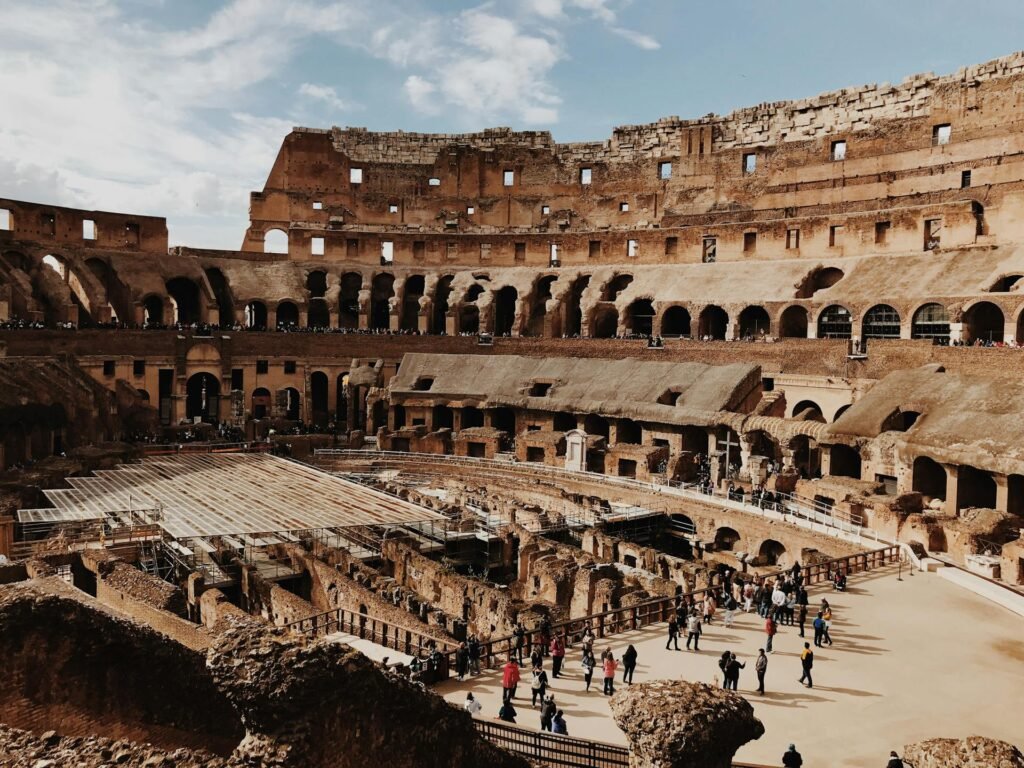
Get the grandeur of the Colosseum on golden hour get there before 6:30 AM and have clear shots of morning that are made by soft light bending the old arches in the best way. As an alternative, it is just as beautiful in the late afternoon when the silhouettes are created against the amber sky of Rome, usually at 5:00 6:30 PM, depending on the time of year.
To experience the freedom of photographing the building, explore the north perspective of Colle Oppio Park, where the view is not crowded with people, and the angles of the main entrance are crowded. This higher viewpoint shows the architectural sophistication of the amphitheater without struggling tour groups.
Instead, visit streets close to Via dei Fori Imperiali to fine-tune on the architecture and the taste of Rome. These are less popular methods that give you a unique imagery that adds to your visual storytelling as opposed to the mundane postcard shots.
Nearby Attractions
Having had the experience of seeking what the amphitheater has to offer, I would suggest going beyond the old walls to get a better understanding of the multifaceted history of Rome.
Roman Forum: This area of archaeological discoveries shows the political and business heart of ancient Rome where emperors used to hold speeches and merchants to trade.
Palatine Hill: It provides a sweeping panoramic view of the city skyline and the whole forum, with lavish imperial palaces and the history of architectural development of centuries.
Arch of Constantine: Sentry to the Colosseum: This triumphal arch pays tribute to the military triumph of Constantine and has highly detailed sculpture on it.
San Clemente Basilica: A tourist secret with the complexes of Christian, medieval, and ancient Roman buildings under the Renaissance church facade.
Food & Dining Nearby
Flavio al Velavevodetto is a traditional Roman food restaurant in a small cozy atmosphere, whose recipes are well tried and tested over the course of generations with the family tradition.
To modern Italian cooking, Aroma Ristorante presents creative methods, combined with traditional ingredients, with a demonstration of the evolution of Rome, without neglecting the traditional basis of cooking.
When the urge strikes and one desires something fast, Fatamorgana Gelato prepares homemade gelato with organic ingredients. Their products go beyond the average frozen desserts that have an unusual blend of flavors that celebrate the Italian gelato traditions and celebrate innovativeness.