


The beauty of Barcelona is all over. Nevertheless, having just one day, it is all about being clever to get around.
Barcelona spreads over only 101 square kilometers and its historical core where the majority of the guests spend their time is even smaller. The Gothic Quarter is located in walking distance of Las Ramblas. Sagrada Familia and Park Guell are two areas that are interlinked by a metro line. The Mediterranean beaches are only fifteen minutes to the south by rail.
The fact is that the transport system in Barcelona is considered to be one of the best in Europe. The Metro is 12 lines and serves nearly all places that you might be willing to explore. The bus cuts through those neighborhoods that are not served by the trains. The tram service (tramvia) provides scenic routes which in themselves are the destinations.
Walking
I have spent sufficient time navigating its medieval streets to realise that there are cities that require the usage of a car, a metro ticket, or a sightseeing bus. Barcelona isn’t one of them. Majority of the attractions that the city has to offer are nearer than you believe.
The following is something that surprised me when I, in fact, measured it: Casa Batllo (the apartment building of Gaudi in Eixample) to La Rambla is a 15-minute walk. Around 12 minutes is the Gothic Cathedral to Ciudatella Park. The vast majority of key attractions that seem to be located miles apart are in fact linked by surprisingly short distances.
Metro
The history of the Barcelona Metro can be traced back to 1924 when the original line (today L3) thumped its way into service carrying out the streets of the city. And that five point two kilometer road led Lesseps to Plaza Cataluna.
The actual growth of the network was achieved when Barcelona received an award to host the 1992 Olympic Games. The city had to change itself, and the metro became the skeleton around which the change was tied.
Hours of operation are pleasurably sensible: the majority of the lines are open between 5:00 AM until midnight, Monday to Sunday. The frequency is 3-4 minutes. During off-peak time, that is increased to 5-7 minutes. I have been informed that it is better to visit in the Sagrada Familia (L2, L5) or go to Park Guell to visit Gaudi (L3) in order to not be surrounded by wall to wall crowds of summer tourists.

Every metro line has acquired its own character during decades. The L3 (Green Line) cuts right through the centre of Barcelona between the industrial areas of Zona Universitaria to the catalene vibrations of Placa Cataluna to the bohemian vibrations of Lesseps. L2 (Purple Line) will take you to the Gothic Quarter and the Cathedral and, by chance, I found that alighting at Jaume I placed me in the most silent spot of the old city, with actual people residing in it.
I was most frequently in the L4 ( Yellow Line ). It links the heart of the city with Barceloneta beach, going through the neighborhoods that are perceived to be real and inhabited. The L5 (Blue Line) is the architectural sight-seeing that no one needs an admission fee to; it cuts through Diagonal (where the Casa Batllo by Gaudi and the La Pedrera are only steps away from the stations) and finishes in the industrial center of the city.
Access of Major Destinations
- Barcelo-el prat Airport: The L9 straight to central station (25 minutes).
- To Sagrada Familia: Both line L2 and L5 arrive on Sagrada Familia station.
- To Park Guell: L3 will bring you to the Lesseps station and a 15 minutes walk uphill.
- To Montjuic (castle, museums, Olympic stadium): Take a L2 (Parallel) then transfer to the Funicular: this is on some T-Casual packages.
The TMB (Metropolitan Barcelona Transportation) offers a smartphone app, which is better to download in advance. It displays live train locations, pre-counts arrivals and a journey planner which really works.
No-cash payment (credit/debit cards and mobile wallets) is available in all turnstiles of metro stations, but I still suggest obtaining a physical T-Casual card.
Bus
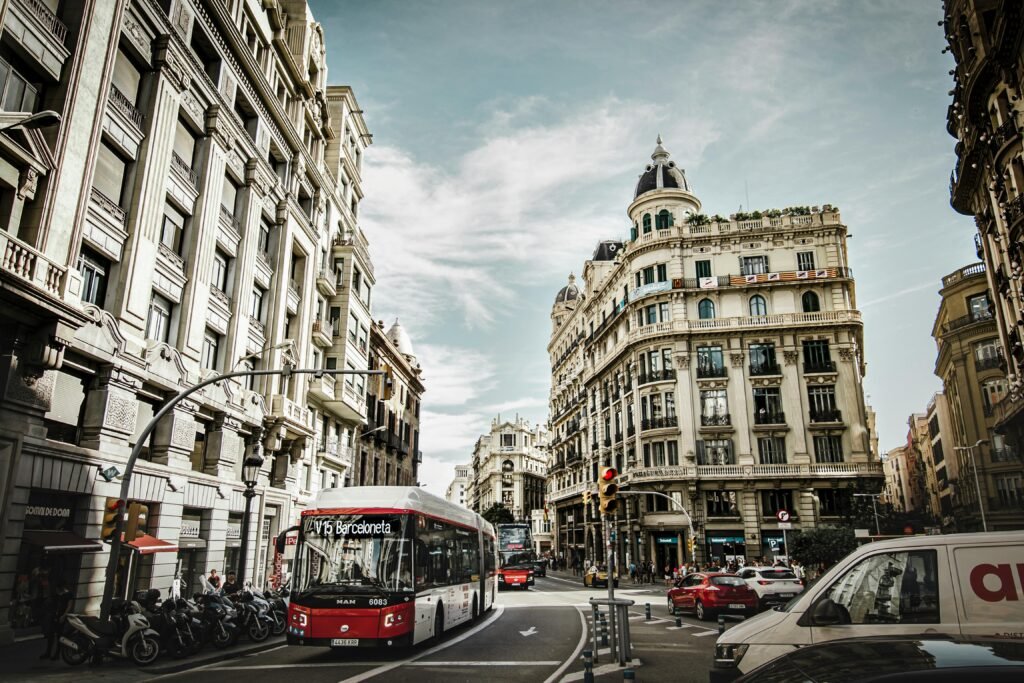
These cars meander through areas where the actual Barcelona resides, and they go up and down the hilly paths of Gracia and they follow along the shorelines of Barcelona all the way north to Badalona.
Popular Expressions
D20: The line that will take one to mountainous destinations and other areas like Vallvidrera.
V17: Your ticket to the perspectives and less noisy areas of the city.
24: The horse that links great neighbourhoods on the diagonal.
59: Ideal surfing and museum ship cruises.
Trams
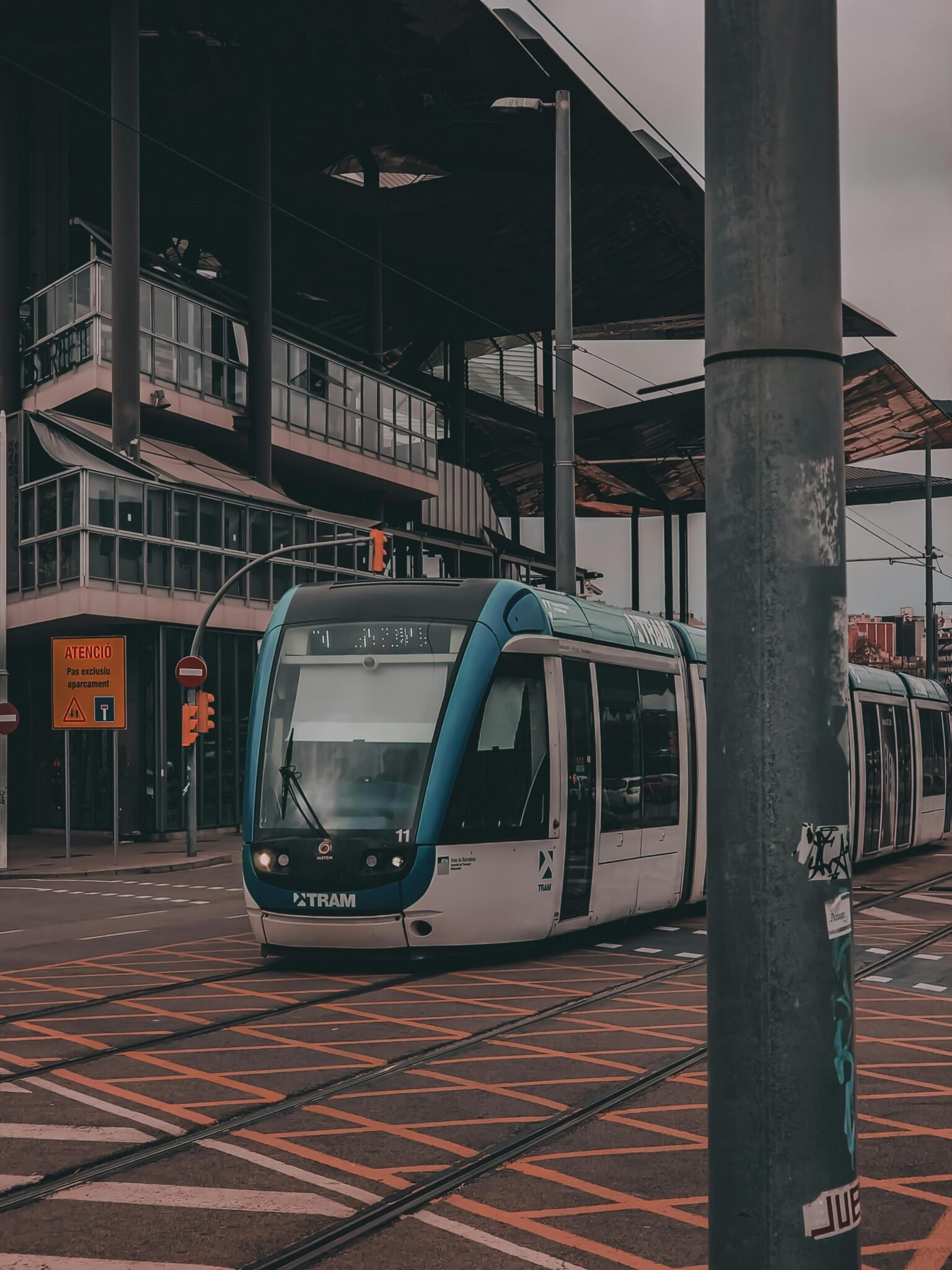
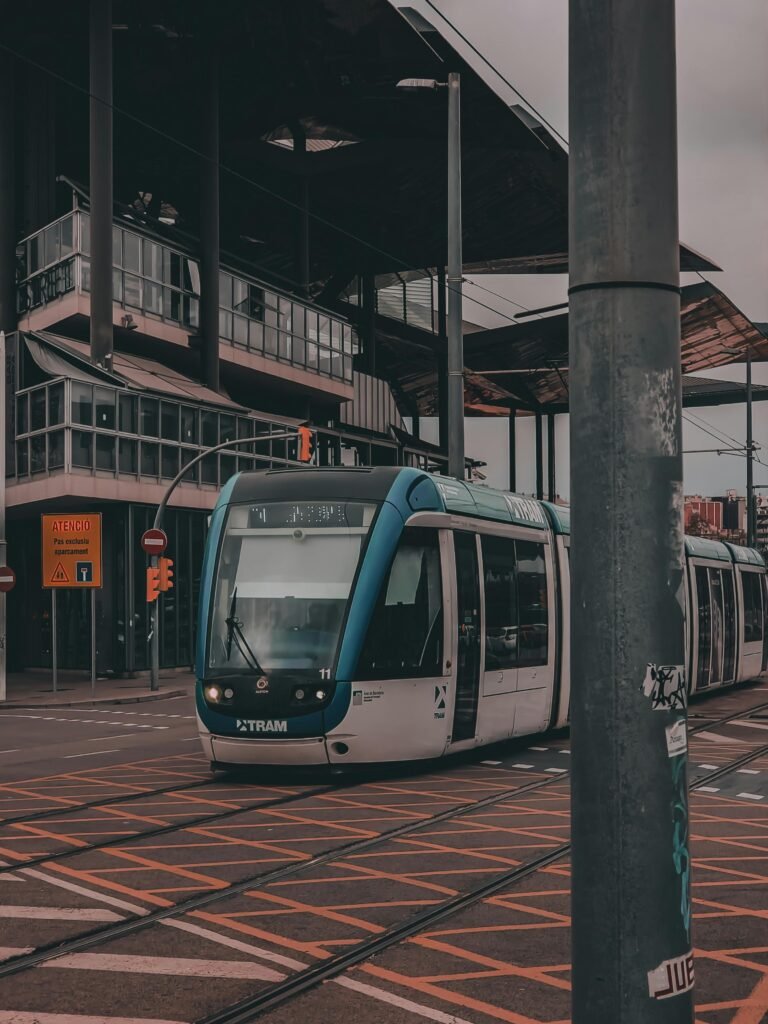
The tram service of Barcelona has two main areas of operation and they are: the Sant Marti area and the popular Diagonal Avenue. They are like lifelines along some of the most habitable regions of the city connecting the dwelling quarters to parks, markets and local meeting points. The trams are also modern, comfortable and frequented frequently to an extent that you hardly have to wait over 10-15 minutes.
Routes to Explore
T1-T5 are all connected in the same way with Sant Marti which is best suited to exploring the lost plazas and neighborhood cafes.