


You have just arrived at the Charles de Gaulle (CDG) Airport on a one-day trip in Paris? The faster you will get to the city center, the more time you will have to spend in the city wandering along the Seine, visiting the Eiffel tower, or having a croissant in one of the local cafes.
CDG is the busiest and biggest international airport of Paris that serves millions of people annually in three terminals, located to the northeast of the city on 32.37 square kilometers (8,000 acres). As you stand here with rolling suitcases and jetlag you may be overwhelmed with the huge terminal halls and the heavy traffic out there. However, in order to have an efficient and an enriching visit, the first step is to select the proper mode of transport.
RER B Train
The RER B train is the best choice when you want to save money and yet not spend much time on it. I have used this road at least 30 times and it is not glamorous, but it is efficient, reliable and it takes you into the very centre of Paris.
The train will have direct routes between CDG and other main stations such as Gare du Nord, Chatelet-Les Halles and Saint-Michel Notre-Dame. The trip would take approximately half an hour to get to the central Paris, but you would wish to allow an additional couple of minutes to get around the station and wait at a station.
The RER station covers terminal 2 and 3. Arriving at Terminal 1, you will have to take a free train CDGVAL that comes to Terminal 3. It only takes about 5 minutes. The terminals should have bright blue signs that mark Paris par train or RER B.
The station is located between Terminals 2C, 2D, 2E and 2F at Terminal 2. The escalators will lead to the ticket machines and platforms following the Gare SNCF signs.
Tickets can be purchased at the automated machines of the station. They take credit cards but with a chip card, it becomes easier. The machines can be programmed in English language, and thus you need not be afraid to have a rusty French.
The first major stop (approximately 25 minutes of the airport) is Gare du Nord. Get off at this point in case you are on your way to Eurostar, the metro 4 or 5 lines, or the 9 th, or 10 th arrondissements.
Chatelet-Les Halles is located in the very central position and it is linked to a web of metro lines (1, 4, 7, 11, 14). It is the largest metro station in Paris so whenever you need to change direction, then this is normally the last best option. Even the station may overwhelm with its met-levels and corridors but simply follow the signs of your metro line.
Saint-Michel Notre-Dame is ideal in Latin Quarter and Ile de la Cite, 5 th and 6 th arrondissements. It even is more agreeable than Chatelet when one has no hurry. Less big and easier to maneuver and next to the Seine.
Trains operate at 10 to 15 minutes during the day, with starting time of around 4:50 AM and continuing till just before midnight. The trains themselves are also double-decker and reasonably spacious, albeit these trains are not designed with big suit cases in mind. Find a place close to the doors at the lower level in case you have bags.
RoissyBus
The RoissyBus can do what the RER B cannot: it could be a seat in the airport to one of the most beautiful areas of Paris, with enough space to carry your luggage and no changes necessary. Providing you are at all in the environs of Opera, the Louvre, or the large boulevards of central Paris, this is usually the more intelligent option, as compared to the train.
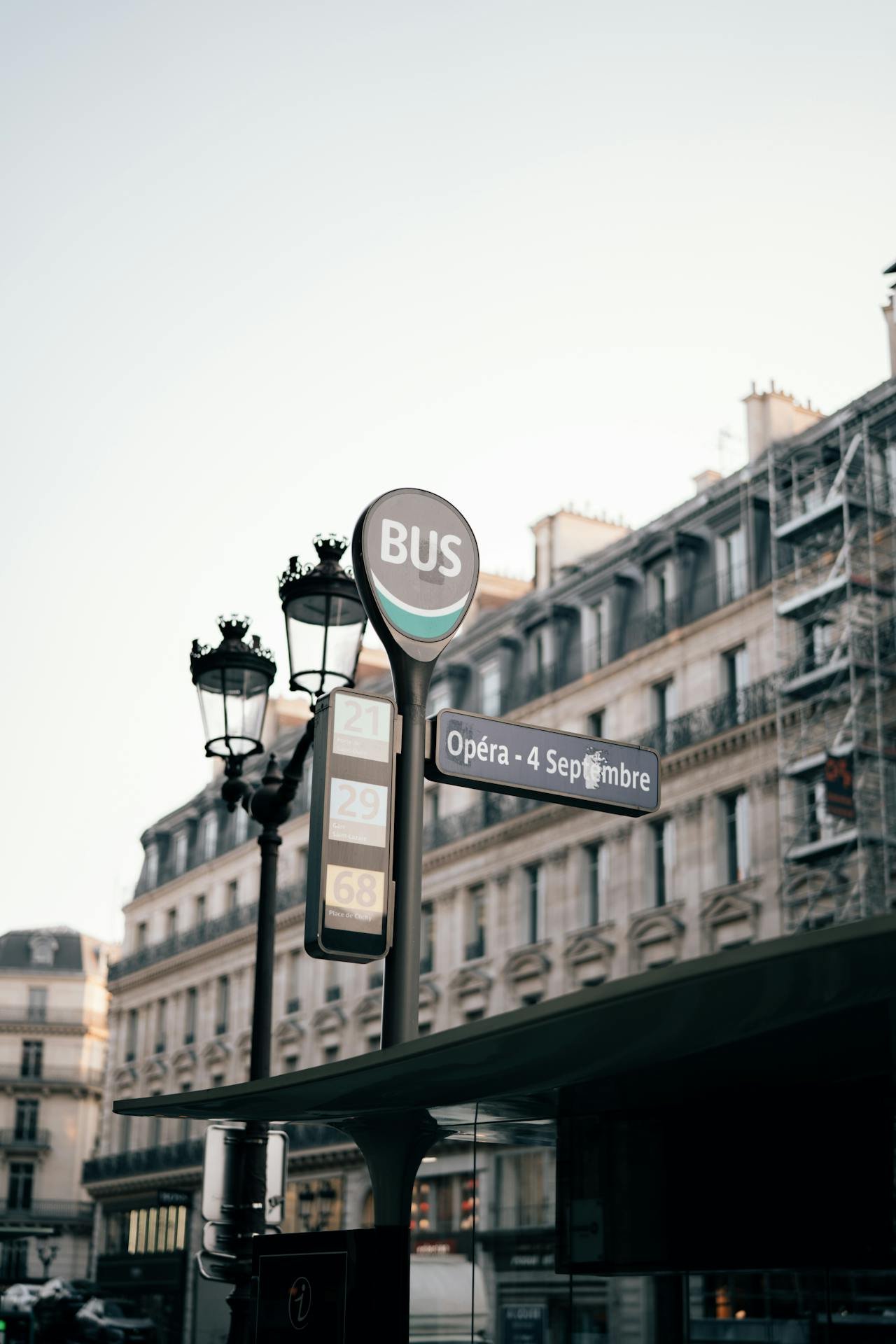
The bus leaves you at Place de l’Opera which is in front of the Palais Garnier opera house. The trip is between 50 minutes and 60 minutes, but I will always allow myself an hour more when commuting on working days when a Parisian traffic may cause that hour to become 75 minutes and above.
All the three terminals are served by the RoissyBus and that is why it is more convenient than the RER in case you are arriving at Terminal 1. Find symbols which indicate RoissyBus or Bus Paris.
- Terminal 1: The arrivals level, Gate 34. The bus stop is right outside.
- Terminal 2: There is a stop in every sub-terminal. At 2A and 2C, head to Gate 9. At 2B and 2D, it’s Gate 11. Terminals 2E and 2F have a common point of Gate 8. You can lose your way, just inquire of any airport personnel.
- Terminal 3: Take the way at the arrival level and go. It is a tiny terminal, you can hardly fail to notice it.
Tickets: The simplest way to do it is to purchase it online using either the RATP or Ile-de-France Mobilites platform or application before landing.
The automated machines at the bus stops also sell tickets. They use credit card, and have English menus but the machines may at times (during rush hours) fail to provide paper to print the tickets. Buses operate at 15-20 minutes frequencies between 5.15 AM and 12.30 AM.
Assuming that you are staying in either 1st or 2nd arrondissements or 8 th or 9 th arrondissements, the direct drop of at Opera will spare you the hassles of having to travel with luggage using the metro. The hotels located in the vicinity of Rue de Rivoli, Place Vendome or in the surroundings of the Grands Boulevards are all walkable or accessible by a short taxi.
Taxi
It is the easiest one, particularly when you are coming late in the night, a group of people, or at places where the metro cannot reach easily.
Paris in 2016, with its introduction of flat rate taxi rates at CDG, now does away with the previous issue of seeing the meter increase in traffic snarl-ups. You pay now EUR55 to any place on the Right Bank (north of the Seine) or EUR62 to the Left Bank (south of the river). There is no traffic surprise, no traffic bargaining regardless of how congested the road is and how many roads the driver chooses to use.
Each terminal of CDG has official taxi stands that are well marked off-they have yellow signs of Taxi or Taxi Parisien on their way out of the arrivals.
Terminal 1: Leave at the 24 th Gate on the arrivals level. The taxi queue is directly in front.
Terminal 2: Every sub-terminal is provided with its own stand. You just have to follow the taxi signs at the baggage claim. They’re impossible to miss. The 2E and 2F queues are usually the longest as most of the long-haul flights will arrive at these points.
Terminal 3: The stand will be located at the arrivals exit. It is the least busy terminal and therefore queues are not long.
You pay EUR55 in case your hotel or apartment is north of the Seine which covers some of the most popular areas in Paris such as the Marais, Montmartre, Opera, Champs-Elysees and Gare du Nord. To the south off river Saint-Germain, the Latin quarter, Montparnasse, Eiffel Tower region charges EUR62.
Private Transfers
Local Buses (350 & 351)
Local buses 350 and 351 are the cheapest mode of transportation that you can use to get to the city after arriving at CDG in case you have time to wait.
Bus 350 serves CDG to Gare de l’est in northeastern Paris. The trip will require approximately 70 minutes in the absence of a traffic jam, but expect to spend 80-90 minutes in the rush hours. Gare de l’Est is a major train station and metro line 4, 5 and 7 and therefore you can easily get to other parts of the city.
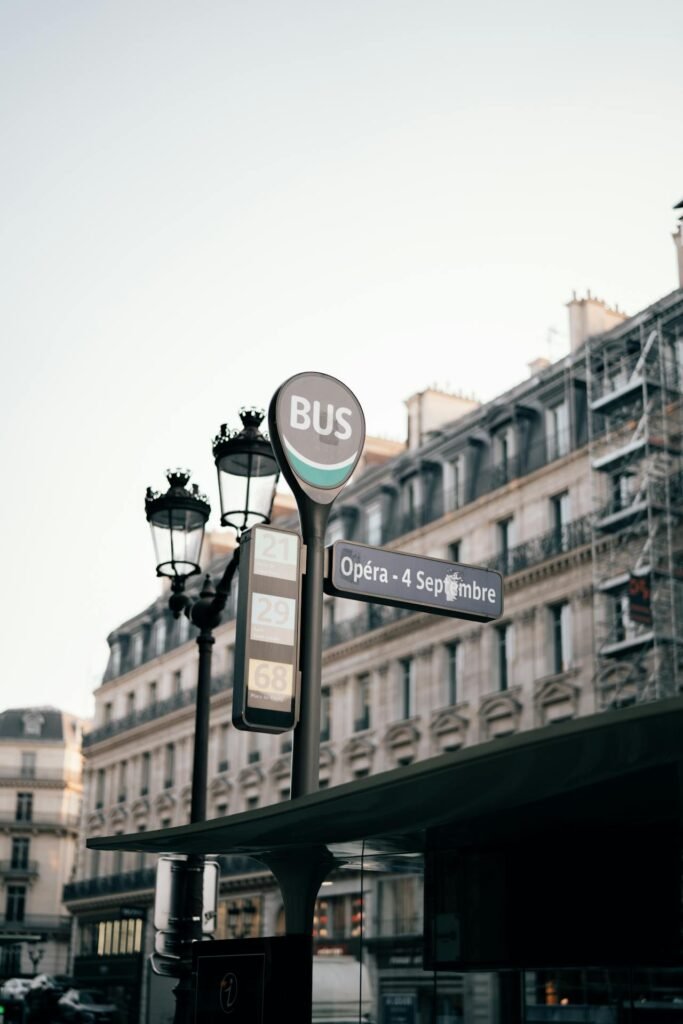
Bus 351 travels to Nation in eastern Paris, making an equivalent 70-90 minutes. Nation is the crossroad of metro 1, 2, 6, 9 and RER A the most well connected sites of Paris.
Finding the Buses at CDG
Terminal 1: Take out the arrivals level and find the RATP bus stops out there. The local bus terminals are independent of the RoissyBus signeposting to “Bus RATP” or Bus 350/351.
Terminal 2: The stops differ according to sub-terminal. They are usually located outside the arrivals doors at most of the terminals, though not always clearly visible. The standard Paris bus stop signs (the yellow ones) should be sought as opposed to the blue airport shuttle signs.
Terminal 3: This bus stop is at arrivals and opposite the RoissyBus stop marked at a different point.