


Depending on only one day in Paris, you can enjoy centuries of food culture starting with buttery croissants to luxurious meals on the banks of the Seine. It does not take weeks to get to know the food culture of the French capital. Actually, you can spend a whole day in Paris and still explore the flavours that have made the place a food heaven to the food lover around the globe.
It is a guide that is based on that rhythm. We will guide you on what to eat and when, and you will be in control of living one day without missing out on any moments that count. You will find suggestions on every meal, planned snack breaks. Not only those where there is a queue of sightseeing visitors winding down the block.
Morning
Go into any decent cafe or boulangerie and you will find the same basic menu: croissants, pains au chocolat (or chocolatines depending on the person you are talking to, but in Paris it is pain au chocolat), and fresh baguettes. Take a croissant and a cafe creme. A proper cup of expresso mixed with milk that is steamed. The croissant must be light in your hand although it is large, and its surface is of rich golden colour with the lamination visible. You can see that it will have separate layers when you tear it open, and smell pure butter, not margarine.
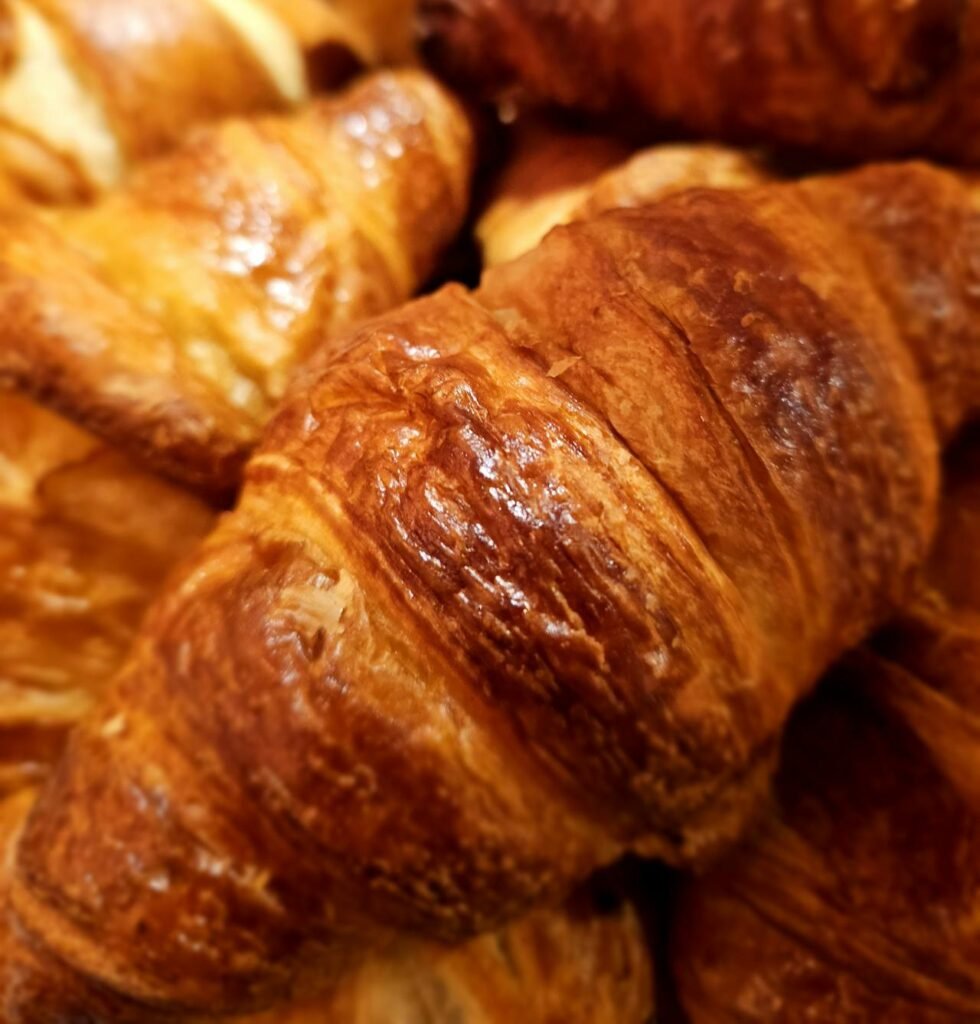
You can have something more substantial, like a fresh baguette that has been baked that morning, and butter and jam on it. Parisians tend to have it in the form of tartine, which simply means a slice of bread with butter and preserves. Jam is usually apricot or strawberry, homemade, where you are fortunate, and the butter is invariably salted.
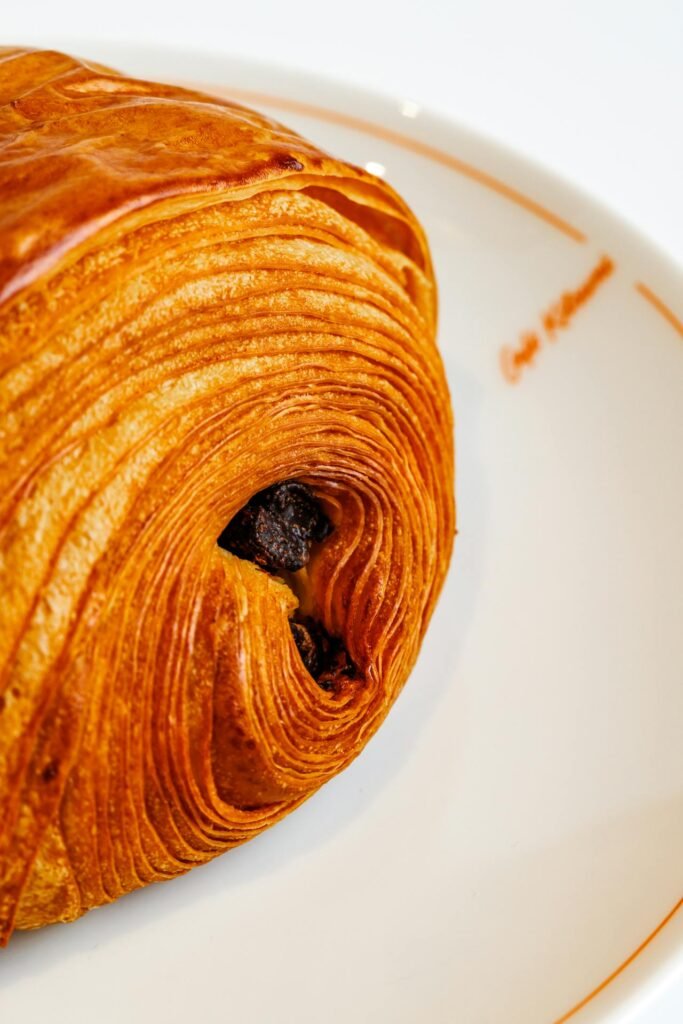
The other staple is pain au chocolat. The batons are two chocolate dark chocolate batons that are covered with the same laminated dough used in croissant, but are a bit more dense due to the chocolate mass.
Midmorning
It is mid-morning and you have digested breakfast and Paris is fully awake. It is time to visit one of the food markets in the city, where the sellers have been operating since the dawn and people are carrying out their daily shopping. Visitors with minimal time have two markets to visit: Marche des Enfants Rouges in the Marais (Paris oldest covered market, dating back to 1615) and Rue Cler in the 7th arrondissement, an open air market street that appears to be a village center that has been transported to the heart of a capital city.
These are not tourist markets posing as such. They are markets that Parisians shop in to get their vegetables, cheese, meat and even flowers. However, they also just happen to be very good ready-to-eat stuff that makes the ideal snack to have in the middle of the morning.
The Parisianest thing to do here is a jambon-beurre, the sandwich which is found on every boulangerie, and in most of the market-stalls. A fresh baguette in half, a good salted butter smeared on, followed by some slices of Paris ham of thin slices.
The other market snack that is necessary is a crepe and you would see crepe stands that are usually placed close to the market entrance or market streets. A good street crepe is prepared in large circular griddle on command. You will see the vendor pour his or her batter, rake it thinly with a wooden rake, leave it to cook maybe 45 seconds, and then turn it. The simplest one is crepe au sucre. Just sprinkled sugar of granulated form on top when the crepe is hot, and then folded in quarters. The sugar melts partially and forms little crystals against the warm slightly elastic crepe. It is sweet yet not saccharine
Lunch
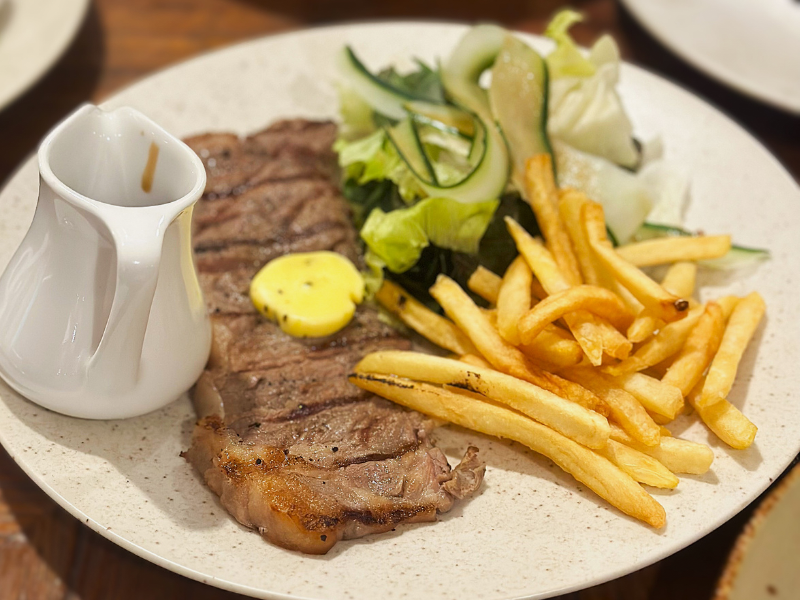
The French steak frites is probably the most typical Parisian lunch. An entrecote (rib steak) or bavette (flank steak) is a good bistro steak, which is cooked to your liking. In France, that is preferred more in saignant (rare) or a point (median). The meat is served plainly seasoned, occasionally with nothing more than salt and a pat of herb butter melting on it. The frites are thin, they are twice fried to be crispy on the outside and fluffy inside and are served in a small basket or on the plate itself. Most of the locations will have it accompanied by a side of Dijon mustard or a plain green salad.
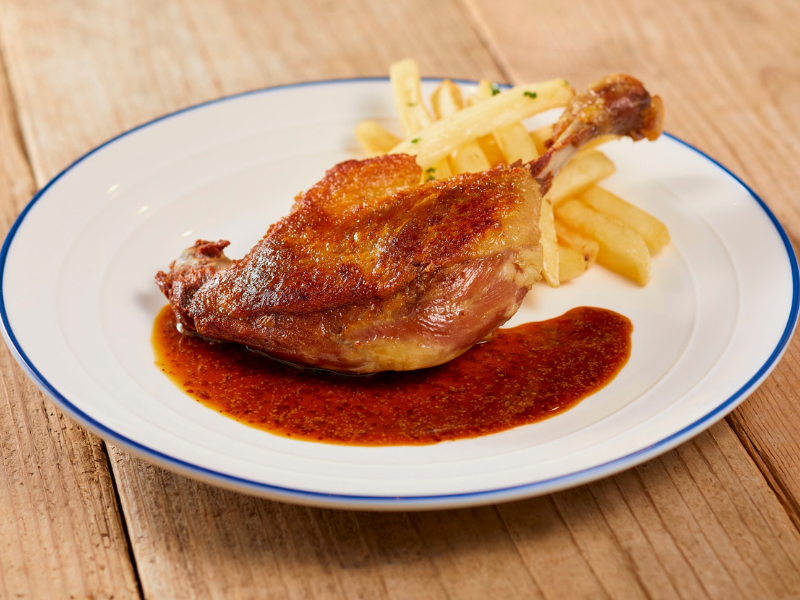
Duck confit is heavier with a greater content of satisfaction. The duck leg is salted and is left to cook slowly in its own fat until the meat detaches off the bone and the skin crisps up in a final sear before serving. It is a Southwest French preservation method that was adopted in Paris several decades ago. You will tend to have it with potatoes. Roasted in duck fat (the most delicious type) or gratin.
In case you are in need of something lighter and faster, quiche Lorraine will do. A well made quiche Lorraine only has eggs, cream, bacon and at times a little nutmeg in a pastry shell. Quiche is served in many cafes and bistros in Paris in slices, sometimes in glassed cases at the counter. This is the selection in the event that you happen to have an even stricter time block or in case the food of heavier main meals seems excessive.

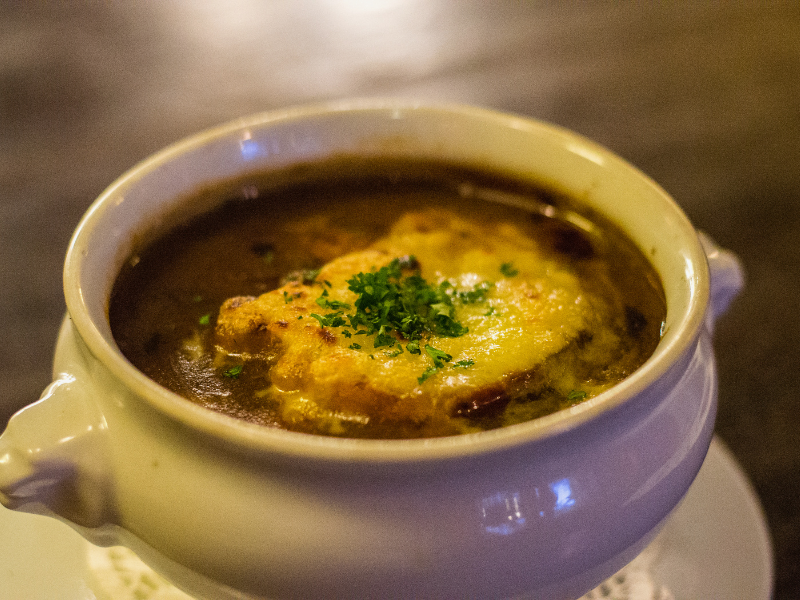
Soupe a l’oignon (French onion soup) is highly flavoured. It is made of the beef stock that has been simmered with cooked down caramelized onions that are soft and sweet. The soup is served in separate crocks, with a large piece of toasted baguette and a slice of Gruyere, which is broiled until the cheese is melted, bubbling and forms a golden crust. You cut the cheese with your spoon and the warm savory broth below heats up.
Afternoon
Macarons have been the highest exported pastry in Paris and though you can taste poor ones all over, a well-done macaron is worth hunting down. Laduree and Pierre Herme are the two names that made the modern macaron name.
The macaron has to crack slightly when you bite it and then become tender when you chew. The stuffing must be plentiful yet not too much. When it is too sweet, or the shell is tough and crunchy right through, it is either too stale or has been made badly.

The other necessary patisserie product is eclair au chocolat. An eclair is a pate a choux shell made of the same dough that is used to make cream puffs. Piped into long form, baked until hollow and crisped and filled with pastry cream and coated with a shiny chocolate glaze. The standard one is the chocolate version, but you will also find coffee, vanilla, and caramel.
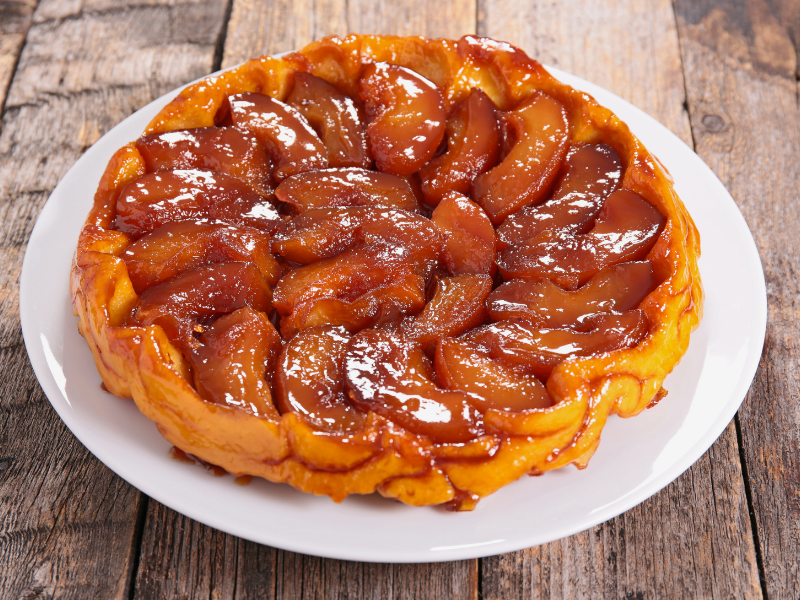
In case you are looking to have something more to share or enjoy at a slower pace, tarte tatin or creme brulee go well with espresso. Tarte Tatin is an inverted caramelized apple pie. The apples are baked in butter and sugar till soft and amber-colored, and pastry is put on them, and baked.
Creme brulee is literally cold. The cold foundation of a custard comprising of cream, egg yolks and vanilla mixed into a thin film, which is caramelized sugar that cracks with the spoon.
Evening
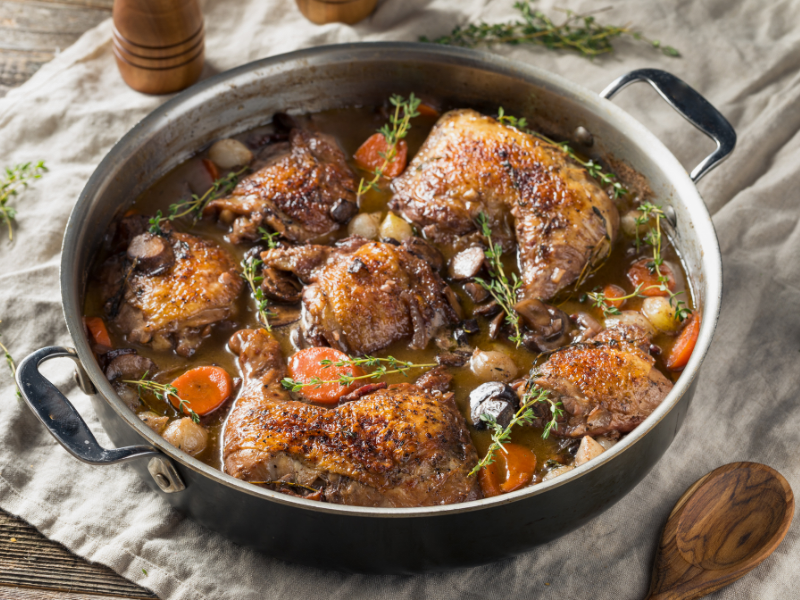
Coq au vin is chicken that has been braised in red wine usually Burgundy wine though other regions use their own local but with bacon, mushrooms, pearl onions and aromatics. It must not be too harsh but it must be there; and the long cooking softens it to something deeper and more intricate. It is traditionally eaten with some boiled or roasted potato, or even fresh pasta, in order to absorb the sauce.
Boeuf Bourguignon is the same method except with beef in place of chicken and it is even richer. Marinated in red wine, and braised with carrots, onions, garlic, and herbs, the pieces of beef chuck or shoulder are left to cook until the meat is so tender that it almost melts away when you press it with a fork.

In case you are not full after the main meal or you want to have one of the most clearly French bits of the meal, order a cheese platter (plateau de fromages). In France, one eats the main dinner then cheese before a dessert and it is accompanied by bread and in some cases with a little green salad. An average serving consists of three or five types of cheeses, which are various styles and types of milk.