


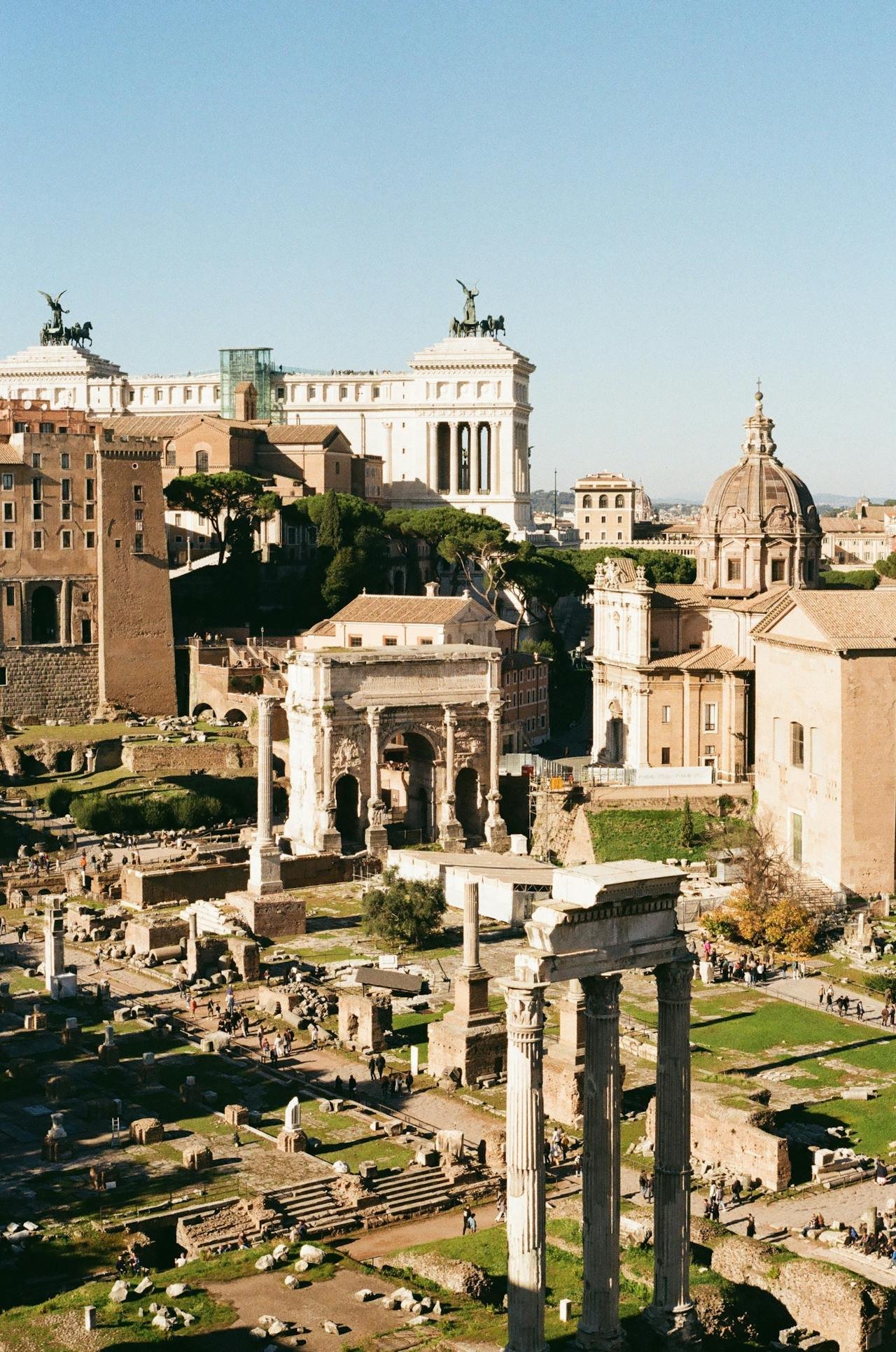
The Roman Forum and Palatine Hill have to be on your list of places to visit in case you have only one day to see the centre of the ancient Rome. It is a massive archaeological location, which was the heartbeat of the Roman civilization where emperors ruled, senators argued, priestesses doused holy fires, and common people assembled to shop, worship, and celebrate victories. And through this wonderful valley between the mythical hills of Rome the election, the criminal trials, the triumphal processions, the daily play of a thousand years of an empire that made the western civilization took place in a thousand years.
However, it may be overwhelming to walk through the Forum nowadays. Lacking an obvious path of walking, tourists tend to waste their time wandering through the maze of confused ruins, not seeing the most important objects or not knowing what they are witnessing. It is a walking guide to help you navigate through this complicated jumble of ancient monuments step-by-step, some history facts and useful pieces of advice to ensure you make the best out of your visit and make an unforgettable time travelling through the past.
Map
History
The story of the Roman Forum starts with an unlikely background of a swampy valley between the Palatine and Capitoline Hills. It was drained by the first kings of Rome circa 600 BC with an engineering wonder known as the Cloaca Maxima one of the first sewer networks in the world that is still in operation today. This change transformed useless wetland to the most important space of the ancient world.
Started as a mere market place it was later to become the political, religious, and commercial hub of Rome. In this case, victorious generals showcased their booty in front of applauding masses. Such orators as Cicero gave thunderous speeches at the Rostra. People came to vote, resolve court cases, go to temples to worship, and do business at the great basilicas. Emperors also constructed monuments in their honour with each emperor trying to outdo his predecessors.
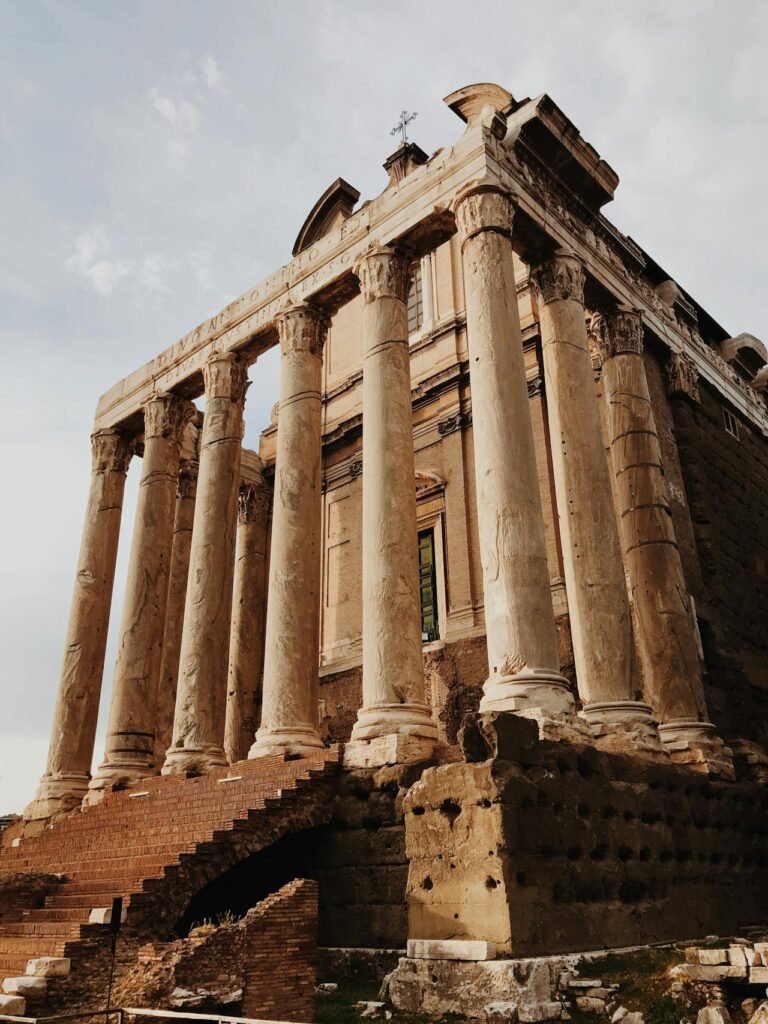
On the Paliadium, Rome changed monarchy into republic, into empire, and the layers of temples, basilica and monuments were built in the course of the course of the millennium. The Forum became progressively neglected after the Western Roman Empire collapsed in the 5 th century. Churches sprang up in the ruins, where cattle were grazed by farmers where senators had been previously taking their strolls, centuries of rubble buried a good part of the old city.
Grave archaeological digs started in the 18 th and 19 th centuries gradually unearthing the treasures beneath. Joining millions of other visitors every year nowadays, the Forum treads the same old streets upon which Julius Caesar, Augustus, and many millions of Romans have once trod.
Combining Roman Forum and Palatine Hill
The Roman Forum and Palatine Hill are united by one ticket and make a unified archaeological site. It is not only practical but also indispensable to visit them both as they can be compared to an insight into ancient Rome.
Palatine Hill Route Suggestion
Estimated Time: 1-1.5 hours
Palatine Hill Terrace Viewpoint
When climbing out of the Forum, have a stop at the terrace lookout point to have the best views of the ruins. It is a great position to follow your complete road through the Forum and admire the design of the civic centre of ancient Rome below you. On the east the Colosseum is dramatically elevated.
Palace of Domitian/ Domus Flavia
The main attraction of the Palatine is the expansive Palace of Domitian which was finished in the year 92 AD and served as the imperial residence over three centuries. The compound was subdivided into a area of the populace and the area of the elite, Domus Flavia and Domus Augustana respectively.
The general wing (Domus Flavia) had large reception rooms including the throne room where the emperor greeted guests and held the state affairs. The scale is impressive, though in great part destroyed. These rooms used to flaunt guests with color marble, waterfall and emperor glory.
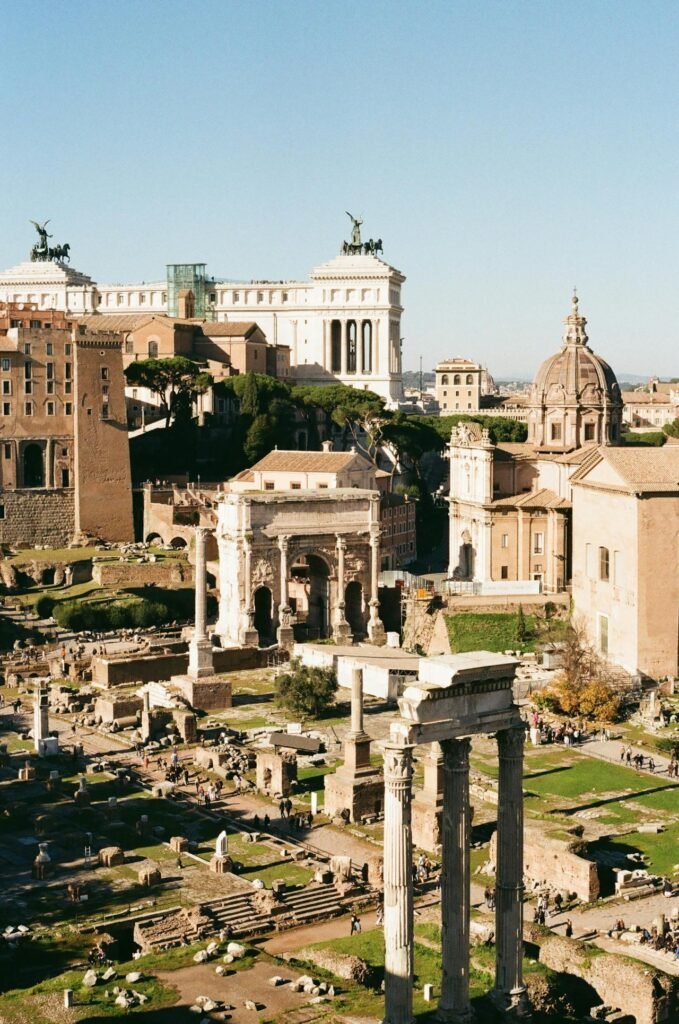
Stadium of Domitian
This long oval open area stretched on the eastern side of the palace (approximately 160 x 48 meters) and confuses historians. It was too small to do chariot racing even though it was in the shape of a circus. Majority of scholars think that it was a personal garden and horse road of the imperial family. Hippodrome garden, like the one Pliny the Younger talks of in the aristocratic villas.
This was the place where many sculptures currently in Palatine Museum were found. The Ostrogothic king Theodoric later in the 6th century, attached at one end a small amphitheater.
Palatine Museum
This is a little, yet interesting, museum, which is housed in an old convent constructed on the ruins of the empire. Two floors are used to display the artifacts that can be found in the hill, such as sculptures, frescoes, and the domestic objects of both the earliest settlements in Rome to the imperial times.
The first floor is devoted to the history of the hills and some traces of the Bronze Age settlements that were made before the establishment of Rome. In the upper storey, there are wonderful painted decorations of Augustan period. Room VI is not to be overlooked on account of its imperial treasures.
Ideal Time Breakdown
- Roman Forum: 1.5-2 hours
- Palatine Hill: 1-1.5 hours
- Total Visit: 2.5-3.5 hours
How to Get There
The Roman Forum is located in one of the most convenient places in Rome. There are various ways to travel and arrive within a few minutes walk.
- By Metro
The closest and the easiest access is through Colosseo Station (Line B) which is only 1-2 minutes of walking distance to the main entrance. You leave the station and do not go far, you will immediately see the Colosseum; the entrance to the Forum is at Via dei Fori Imperiali. - By Bus
Some buses pass by the Colosseum or by Via dei Fori Imperiali:
Within easy walking distance, there are stops in lines 51, 75, 81, 85, 87.
The most convenient stop is the Colosseo one. - By Tram
Colosseo can be served by tram 3 which is a picturesque ride around historic areas of Rome. It is a nice approach to come, particularly when one is coming in the Trastevere region. - By Walking
Taking Piazza Venezia / Capitoline hill: Via dei Fori Imperiali takes 15-20 minutes.
Monti neighborhood: 10 minutes Beautiful walk through the oldest part of Rome.
Nearby Attractions
The best way to spend your day in ancient Rome is to visit the Forum with the following adjoining places:
Colosseum
The legendary amphitheater is located right next to the Forum. The majority of the visitors buy the two jointly on a ticket. The underground areas and arena floor at the Colosseum have to be reserved separately.
Capitoline Hill & Museums
The western exit of the Forum leads to the civic centre of Rome in a five minutes walk. The Capitoline Museums are the locations storing the fragments of the Colossus of Constantine, the Capitoline Wolf and the masterpieces of ancient sculpture. In the piazza, created by Michelangelo, there are great sceneries.
Via dei Fori Imperiali
This is a grand avenue that cuts through the Imperial Forums constructed by Caesar, Augustus, Trajan and so on. Most of the ruins of imperial forums are located at a lower level of the street, but the scenery is magnificent, and there is the roadside column of Trajan available everywhere.
Basilica di San Clemente
This multi-layered church is a ten-minute stroll away at the Colosseum: a 12th-century basilica over a 4th-century church over a 1st-century Mithraic temple over buildings of Roman times. It is the best archaeological stratification of Rome.
FAQs – Frequently Asked Questions
Allow Plan 1. 5 -2 hours on the Forum itself, and 1-1. 5 hours on Palatine hill. An extensive integrated visit lasts between 2.5 and 3.5 hours. Less than two hours do not give you time to see important monuments.
The location has irregular old paving, loose gravel roads, and certain slopes particularly the one leading to Palatine Hill. It is not a very demanding activity but needs reasonable mobility and proper footwear. There are places that are limited to access by wheelchair or strollers.
The majority of the visitors come close to the Colosseum and go through the Forum before climbing Palatine hill. This is in line with the natural topography (uphill) and leaves the panoramic views until the end. But, going in by the entrance, Via di San Gregorio, of Palatine Hill, this sequence is reversed, in the event that you like to go down the Forum.