


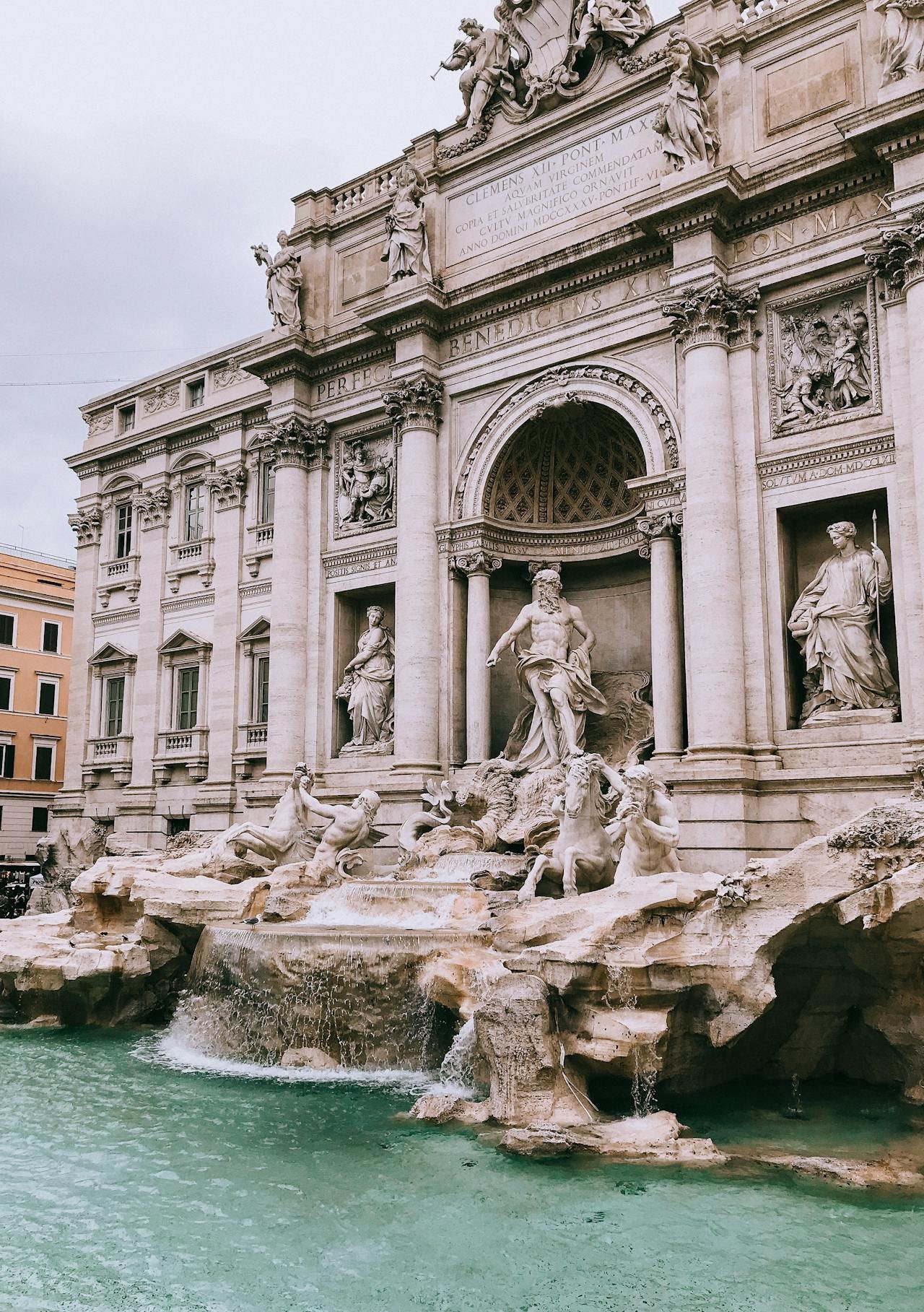
Trevi Fountain is no doubt one of the most beautiful places in the whole of Rome, and the busiest. When you are in Rome and only have one day to see the sights, it is important to organize your time of visit. This guide will make it possible to feel the fountain in its purest beauty with beautiful light, fewer people around and with the best photo opportunities. We will also discuss some insider timing knowledge, strategies on avoiding the crowds and an easy walking pathway that will link to all other great sightseeing sites in Rome. Be prepared to take advantage of enjoying the best of this masterpiece of the Baroque.
Map
History
The history of Trevi starts in 19 BC when aqueduct known as Aqua Virgo was constructed, and it is amazing that it continues to feed the fountain even today. In 1730, with it being the part of a larger papal scheme to beautify Rome and to honor its antique waterways, Pope Clement XII commissioned the present fountain.
This marvel in Baroque was planned by architect Nicola Salvi but he would not live to see its completion. The work was completed in 1762 by Giuseppe Pannini, and made the vision of Salvi a reality. The central figure of the fountain is Oceanus, the god over all waters who is riding his shell like chariot and dominating the seas. Beside him are allegorical characters of Abundance and Health, and the wild sea horses bring to mind the changing temper of the sea at some time serene, at others turbulent.
Best Time to Visit
Most appropriate times to visit (Minimum Crowds)
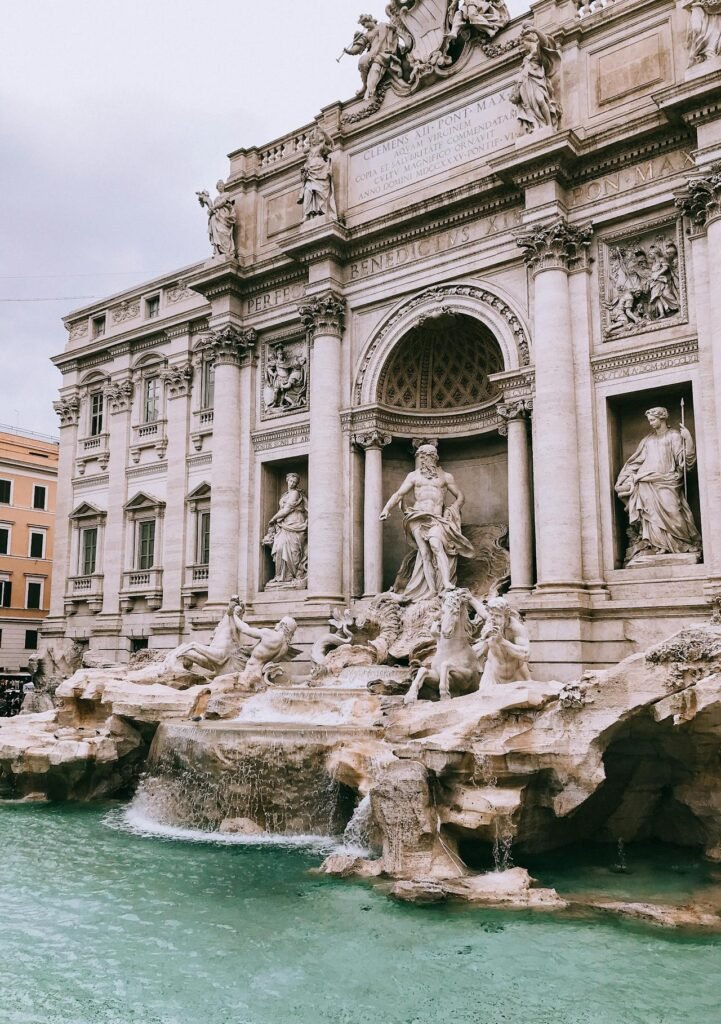
It is really marvelous in the morning (6:00-8:00 AM). You will be able to see the fountain in almost solitude as the sun is rising producing a golden hue on the white travertine. The light of the morning sets up ideal photo situations, and you can literally hear the water cascading, not due to the fact that there are crowds.
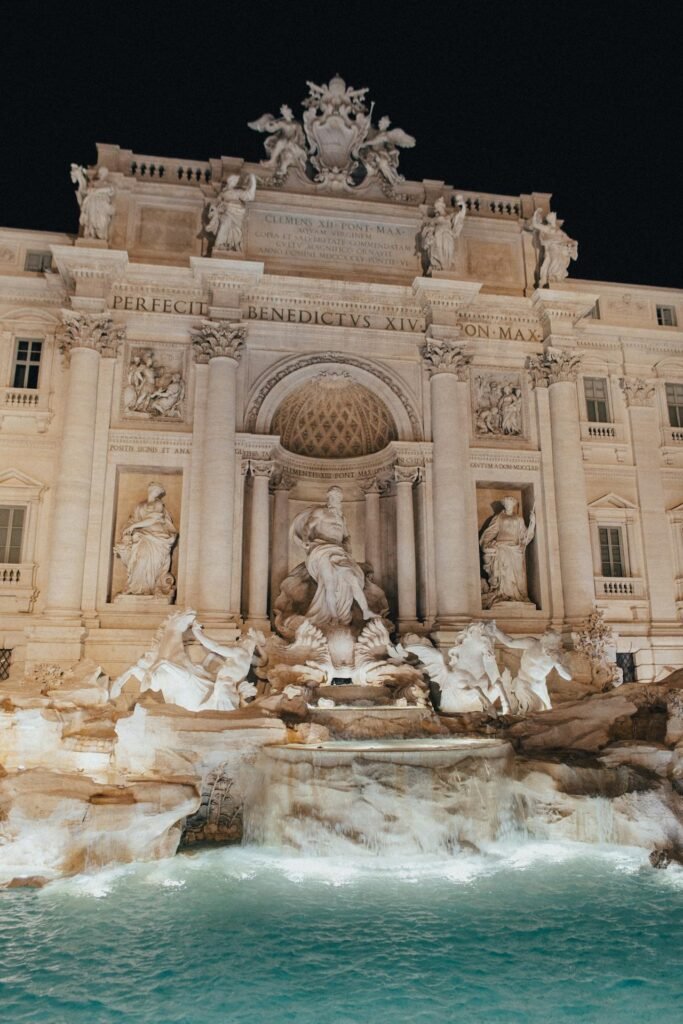
Late night (10:30 PM-1:00 AM) is another totally different, yet as breathtaking experience. The theatrical lighting of the fountain on a dark sky makes the fountain dramatize a romantic effect and almost theatrical.
Good Alternative Times
Winter afternoon early can be a surprise, with approachable crowds, particularly when it is a weekday. The natural low season of tourism starts in November and goes all the way up to February (excluding the Christmas holidays).
You have rainy days as your armour. The first drops cause most tourists to run away indoors leaving the fountain in a significantly quiet state. Carry an umbrella and see one of the most scenic views of Rome without having to go shoulder to shoulder.
Times to Avoid
The period of 10 AM to 7pm throughout the year is maximum congestion. Tour groups come in waves, selfie sticks are everywhere, and it is almost impossible to find space at the edge of the fountain. This mayhem is enhanced by the weekends as well as the arrival day of the cruise ships at the nearby Civitavecchia port.
Peak tourist density is caused by the public holidays and summer seasons (June to August). You cannot help but visit in such periods, and so you should change your expectations.
How to Get There
It is easy to get to Trevi Fountain and a variety of means of transportation can be used, based on where one starts:
- By Metro
The closest station (Barberini Station Line A) is only five to seven minutes away. Get out of the station and go east on Via del Tritone and turn right into Via della Stamperia which will take you directly to the fountain.
Spagna Station (Line A) has a a little longer and more picturesque 10-minute sidewalk stint, a walk through beautiful historical alleys. Through this path you pass by the Spanish Steps along the way and you can see two very big attractions on a single efficient morning stroll. - By Bus
Various buses come close to the Via del Tritone or Piazza Barberini with routes 52, 53, 62, 63, 83, 85, and 160. The fountain is a short walk through the adjacent streets out of these stops. - On Foot (Highly Recommended)
The ancient heart of Rome is not very large in size and a stroll through its streets will give the real picture of the city. The fountain is located on a short walking distance with the major landmarks: Spanish Steps (10 minutes), Pantheon (eight to 10 minutes) and Piazza Venezia (12 to 14 minutes). Strolling also allows you to find out surprising piazzas, craft stores, and gelato of the best way.
Nearby Attractions
Make the best out of your one day experience in Rome by including these excellent attractions with the Trevi Fountain:
Spanish Steps (10 min)
This is a well-known 135-step staircase with amazing photographic views, particularly at the summit of the stairway looking down at the city. Go in the morning before people have arrived to enjoy having beautiful light on the steps and the church at the top.
Pantheon (10 min)
The most preserved ancient structure in Rome is a masterpiece in architecture which has the largest unreinforced concrete dome in the world. There is an oculus opening on the top which is a beautiful source of light. It opens every day at 9 AM and so it is ideal to visit it after an early visit to Trevi fountain.
Piazza Navona (15 min)
This is a long baroque square with Bernini splendid fountains, outdoor cafes, and street entertainers. Its oval form is used according to the ancient Roman stadium outline giving the modern vivid scene a historical background.
Quirinal Palace (10 min uphill)
The president of Italy has his or her official residence on top of Quirinal hill with an overview of Rome. The outside is always awe-inspiring and the palace is sometimes opened to the visitors to have a sight around its beautiful state rooms.
Frequently Asked Questions
Yes, completely free. No entrance fee, no tickets and no reservations. It is open 24 hours but lighting and crowds change considerably with the time of the day.
An average visitor has an average of 15 to 30 minutes at the fountain. This gives time to see it in various perspectives, capture a photo, toss a coin and experience the ambience. In peak seasons, you may have to take more time to push on to the sidelines to take pictures.
Those who toss the coin, Yes, the coin-tossing is a legalized practice, innate.